



Blue Ghost’s lunar mission may be over, but scientists are just starting to sift through the data collected during the 14-day operation. One data point with big implications for future lunar missions is Voyager’s demo of its anti-Moon dust tech.
Voyager Technologies’ Clear Dust Repellent Coating (CDRC) is a passive, electricity-free technology designed to keep lunar regolith off equipment. NASA is studying the substance under its Regolith Adherence Characterization experiment.
Why it matters: Dust is a much bigger problem in space than it is in your house. Lunar dust is highly abrasive and clings easily to surfaces, challenging the success and longevity of space operations; regolith accumulation damages equipment over time. Dust is especially problematic for solar arrays, which can’t harness the sun’s power if they’re coated.
Unplugged: Voyager’s technology is unique for being entirely passive, requiring no electricity to function—unlike dust-mitigation systems like NASA’s Electrodynamic Dust Shield. CDRC has already demonstrated its ability to reduce lunar simulant dust accumulation on various materials in lab tests.
The experiment on the Moon’s surface includes a sample of spacesuit fabric coated with Voyager’s CDRC. This experiment studies how lunar dust breaks down materials critical to space operations. Engineers aim to provide insights on how to extend lunar-equipment lifespans.
Vast Announces New Lunar Programs Division
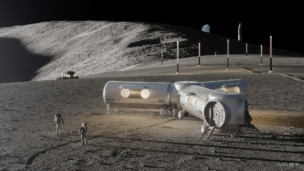
Vast announced a Lunar Programs division, building on its commercial space station and satellite development work to support NASA’s Moon Base ambitions.
Exclusive: Astrolab, Interstellar Mapping Hunt Lunar Water
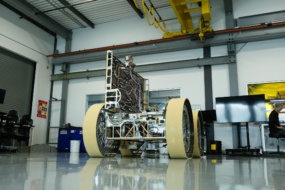
A new partnership between Astrolab and Interstellar Mapping is one giant leap for mapkind.

Exclusive: City Labs Plans Second Nuclear Demo
Following the success of City Labs’ first nuclear-powered betavoltaic demo, City Labs is planning a demo of its radioisotope heating unit.
Zeno Power Books its First Nuclear Mission to the Moon
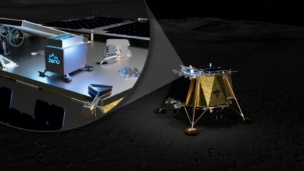
Zeno Power is ready to pull its first all-nighter. On Wednesday, the nuclear-energy startup announced a commercial payload agreement with Firefly Aerospace ($FLY) to send a radioisotope heating unit (RHU) on a Firefly mission launching to the Moon NET 2028. The mission—flying on Firefly’s CS-8 CLPS mission—aims to demonstrate Zeno’s ability to keep a 5W…

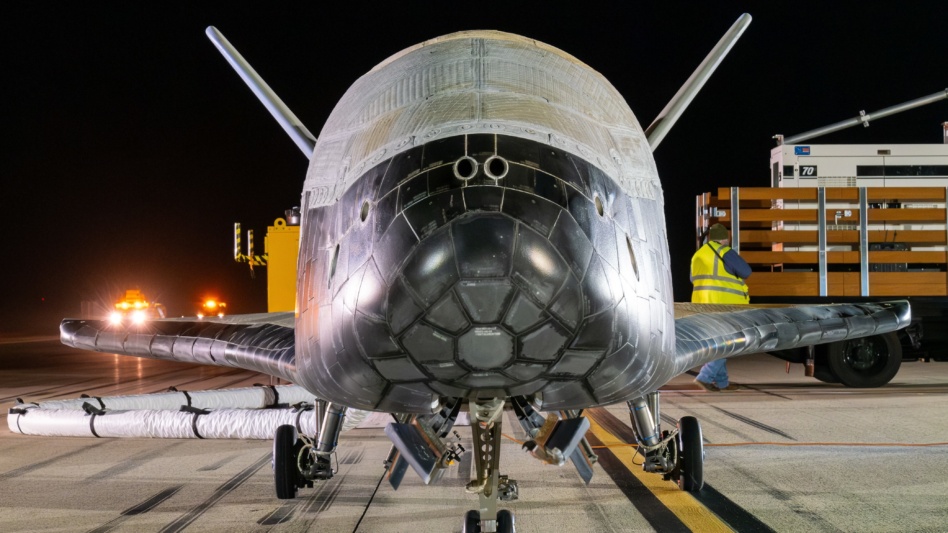
The US, Russia, and China continue to lead in military space capabilities, but that’s not stopping the rest of the world from boosting investments to boost security in orbit, according to a new report from the Secure World Foundation.
During the past few years, civil and military leaders around the globe have called to increase sovereign space capabilities, and many nations have reorganized their military structures to place more emphasis on space, according to the report, which details the publicly known space-based assets and counterspace capabilities of the world’s foremost militaries. There is a widespread acknowledgement that future conflicts will take place, at least partially, in space.
The big three: The US, Russia, and China have the most mature military presences in orbit, and all three nations have increased their military space postures in recent years. Along with India, they are the only countries that have previously demonstrated their ability to destroy a satellite on orbit.
Keep reading