


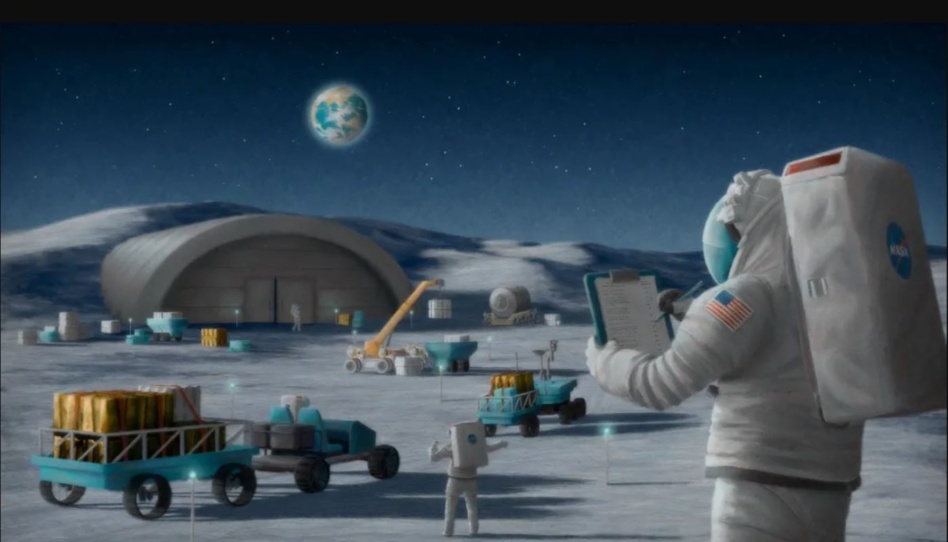
Sierra Space secured a one-year, $3.6M NASA contract to study how its inflatable space station technology could provide logistical infrastructure for future lunar bases.
The contract—part of NASA’s NextSTEP-2 Appendix R set of studies—tasks Sierra Space with examining how it would upgrade its LEO space station technology to withstand the lunar environment, given the Moon’s sharp regolith and extra gravity.
Survive and thrive: As part of NASA’s Artemis program, the US has committed to returning astronauts to the Moon and—unlike last time—sticking around for a while. As a result, future astronauts are going to need a lot more space in which to live and work.
For the logistically minded, that means environmentally controlled warehouses, rover garages, tunnels between bases, and trash facilities.
Sierra Space will spend the next 12 months studying how to retrofit its inflatable LIFE habitat technology for the Moon—an environment where less is more, in terms of what you pack.
“You can only bring so much mass, and so getting that volume-to-mass ratio just right [with] inflatables, you can’t beat it,” Sierra Space’s senior program manager Austin Kareiva told Payload.
Inflatables allow future lunar missions to pack light, and still build large infrastructure. The company’s LIFE habitat is three stories tall, providing ample space for astronauts to work comfortably. For extended lunar missions, finding a cheap way to build large infrastructure will be paramount.
Bulletproof: Down the line, Kareiva says the inflatable technology can even support missions to Mars and beyond, and the company is working on building its expertise in that direction.
In April, Sierra Space tested the protective layers of its LIFE habitat structure by firing NASA’s .50 caliber two-stage light-gas gun at the structure’s outer shield to test the habitat’s resilience against orbital debris. On future deep-space missions, this technology may prove vital to keep astronauts safe from faster-moving particles well beyond the atmosphere.
“We have that core technology, and then we can adjust those materials—whether it’s spacing or thickness—to make sure that our habitats or shelters are protected,” Kareiva said. “Let’s get stuff to the lunar surface, see what works, see what doesn’t, and then figure it out for Mars.”
JAXA Taps ArkEdge for Two Lunar Navigation Demos
Today’s Moon explorers won’t have the luxury of GPS-like tech for navigation. But JAXA is trying to change that for future lunar visitors.
Vast Announces New Lunar Programs Division
Vast announced a Lunar Programs division, building on its commercial space station and satellite development work to support NASA’s Moon Base ambitions.
Exclusive: Astrolab, Interstellar Mapping Hunt Lunar Water
A new partnership between Astrolab and Interstellar Mapping is one giant leap for mapkind.

Space Weather Losses to Double by 2035, Report Finds
A new report from Mission Space estimates that solar storms will cost $20.65B in 2026, rocketing to $44.27B by 2035.

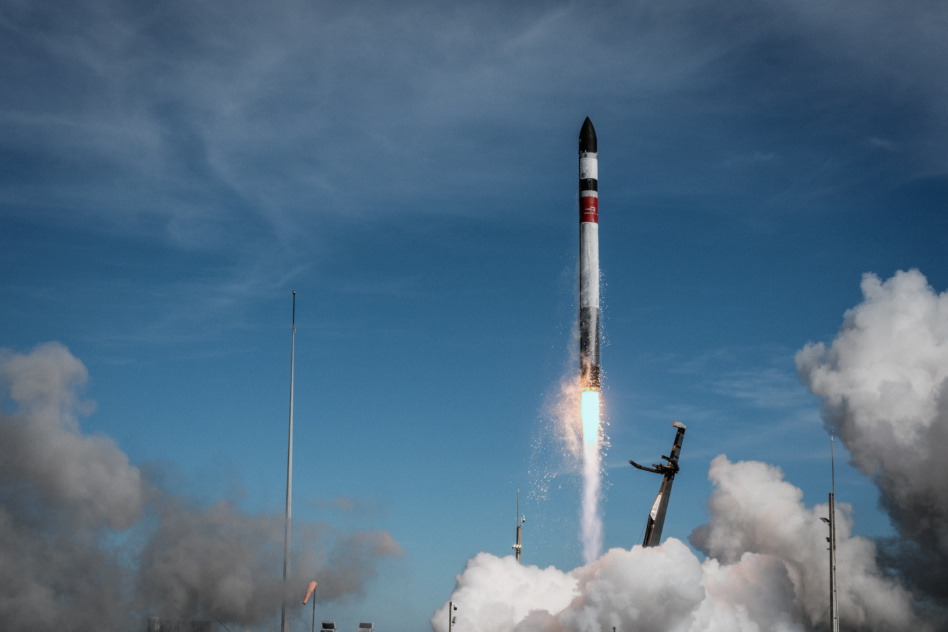
Rocket Lab ($RKLB) announced its purchase of Geost, an AZ-based company that builds electro-optical and IR sensor payloads for satellites.
Rocket Lab will pay private equity firm ATL Partners $275M for Geost, divided between $125M in cash and $150M in Rocket Lab stock. It may pay up to $50M more based on the business’ earnings.
“With this deal, Rocket Lab will officially enter the payload market as a disruptive prime contractor to US national security,” CEO Sir Peter Beck told investors after the news broke.
Keep reading