


The US is beefing up its space-based missile defense capabilities.
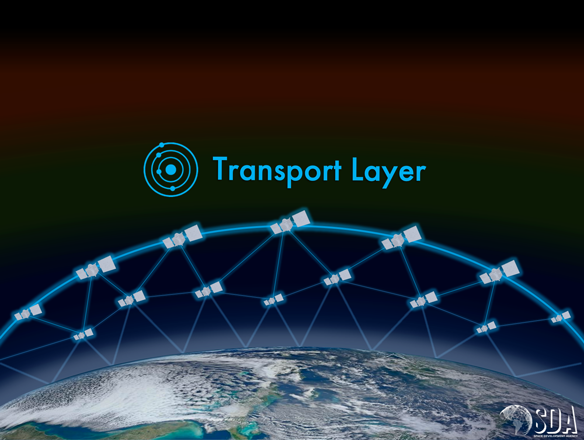
York Space Systems today announced it completed and shipped 21 of the 42 spacecraft it developed for the Tranche 1 transport layer of the Proliferated Warfighter Space Architecture (PWSA). The spacecraft are planned to launch next month.
The blueprint: In total, T1 will consist of 154 operational satellites: 126 in the transport layer developed by York, Northrop Grumman, and Lockheed Martin, and 28 focused on missile warning and tracking developed by Northrop Grumman and L3Harris.
York’s transport layer sats are the product of a $382M contract the company won in 2022. They are built on York’s LX-CLASS platform, and are equipped with Skyloom optical comms terminals, and ExoTerra propulsion modules.
As part of the T1 layer, these sats will form a mesh network of optical communications links to provide global, low-latency comms for the DoD. These sats are expected to operationalize Link 16 connectivity, which uses secure radio waves to enable real-time, jam-resistant, and encrypted communications for US warfighters. The SDA first demonstrated space-to-ground Link 16 transmission in 2023.
The SDA plans to build out the T1 layer through monthly launches of 21 sats each, meaning the entire layer could be completely deployed by early next year.
Gold standard: Sounds a lot like Golden Dome, right?
Many of the capabilities requested in President Donald Trump’s Golden Dome executive order in January were already being fielded by the PWSA, and in February, the SDA put out a call for ideas on how PWSA could be utilized in the proposed Golden Dome architecture.
“While the Golden Dome architecture is still being developed, capabilities demonstrated on T1 could serve as immediate enablers for many of the mission needs envisioned—should US government leadership choose to leverage them to accelerate deployment,” Dirk Wallinger, York’s CEO, told Payload via email.
About time: T1 didn’t come together without a hitch. Originally contracted in 2022, it was expected to launch in September 2024. It was delayed, however, because of system readiness and supply chain issues. York contends that the development timelines have still been aggressive enough to maintain US superiority in space.
“The ability to deploy on the timelines T1, and York, have demonstrated here exhibit exactly the execution timelines required to outpace and outmaneuver our adversaries,” Wallinger said.

DIU and SSC Announce Joint GHOST-R Mission
DIU and SSC announced GHOST-R, a joint effort to bring low-cost reconnaissance to GEO under SSC’s RG-XX program.

Viasat and Space42 Commit Up to $1B to Equatys Joint Venture
Space42 and Viasat agreed to formally establish Equatys, a shared satellite-and-ground-infrastructure company for D2D connectivity and advanced mobile satellite services.
Antares Wins $161M Award for Space Nuclear Power
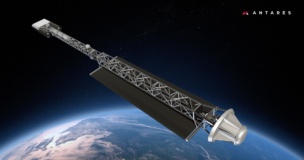
Antares announced today that it won a $161M DoD contract to advance nuclear power for space—which Antares says is the largest DoD space nuclear award to date.

AnySignal Lands Spot on Apex Bus Menu
RF startup AnySignal formalized its partnership with bus manufacturer Apex, allowing customers to add its AnyLink network and radios to Apex’s platforms.
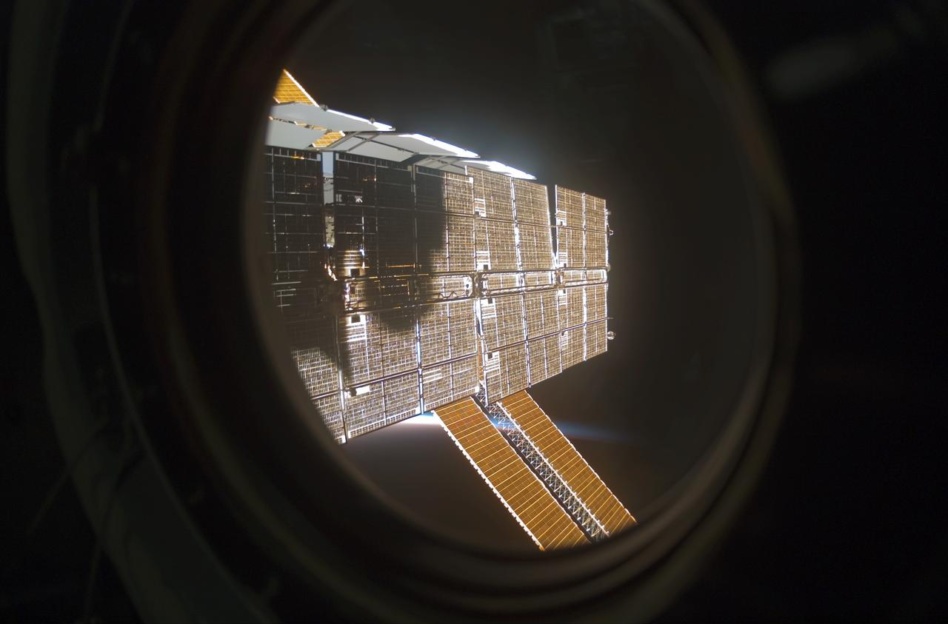
Space could play a key role in helping the European Union reach its goal of net zero greenhouse gas emissions by 2050, according to a study released this week.
Researchers from King’s College London and China’s Xi’an Jiaotong University proposed that space-based solar power could account for 80% of Europe’s renewable energy by the EU’s deadline.
How it works: The study analyzed two NASA designs for space-based solar power:
Keep reading