

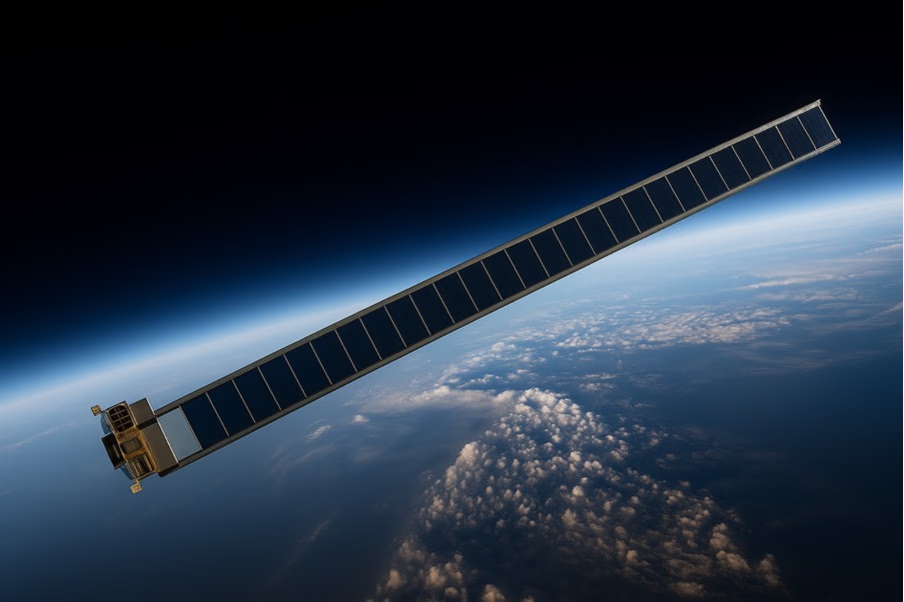
German space hardware manufacturing startup Dcubed unveiled three planned demo missions today that will culminate with building a 2kW solar array in space.
The missions are part of a new printable in-space solar array offering, called Araqys. Dcubed officials hope the tech will change the way power is generated in space, by allowing companies to build large, low-cost solar arrays on demand.
How it works: Dcubed plans to fly the first two demo missions in early 2026. These missions aim to validate the ability to build structural elements that will support a solar blanket that can generate power. The full set of missions includes:
- Araqys-D1 is a 3U satellite that is expected to launch in Q1 2026 and aims to build a 60cm (~2ft) boom in orbit in that will one day support the solar array.
- Araqys-D2 will fly aboard Exotrail’s next spacevan mission—targeting early 2026—and demonstrate the ability to 3D-print a UV-curing resin to harden the underside of a soft solar blanket. The mission will attempt to create a 1m long solar array.
- Araqys-D3 will put the technologies together, and attempt to build a 1m by 15m solar array capable of generating 2kW of power. It plans to launch on a SpaceX rideshare mission in Q1 2027.
While the solar blanket technology is less efficient than traditional solar cells used in space, Dcubed expects that the drastic reduction in cost—an order of magnitude, according to CEO Thomas Sinn—will drive Araqys’ commercial success.
“We want to make unlimited power in space a reality,” Sinn said. “We can print as large as we want. There’s no limit… So that’s the whole idea: to bring…the dollar per watt down into the double digits.”
Power moves: While cheap power generation is the name of the game for many futuristic use cases in space—e.g. space solar power beaming, or data centers on orbit—it’s not just about cost reductions, according to Sinn.
Araqys also opens the door for satellite operators to increase or decrease their solar arrays on demand. Sinn estimated that Araqys could manufacture 1 sq m of solar array in about 2 minutes.
- The rapid manufacturing capability means military sats can quickly ramp up their power-generation capabilities to fuel things such as directed-energy weapons, or high powered electric thrusters. Sats can also drop a solar panel at will to reduce their target surface area, get out of Dodge quickly, and rebuild somewhere safe.
- For commercial-use cases, Araqys could allow satellites to build solar arrays years apart, by replacing old power sources once each array reaches the end of its life.
With three demo missions on the docket, Dcubed expects Araqys to be commercially available quickly, as soon as 2027. In successive years, the company plans to demonstrate larger and larger versions, including a 5kW array in 2028, and 10kW array in 2029.
ICEYE Opens Three International Offices in a Single Week
Think you had a busy week? ICEYE has you beat.
Exclusive: City Labs Plans Second Nuclear Demo
Following the success of City Labs’ first nuclear-powered betavoltaic demo, City Labs is planning a demo of its radioisotope heating unit.
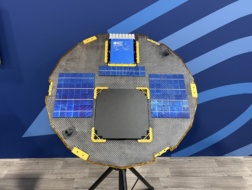
The Aerospace Corp’s Disksat Gains Commercial Traction
Thinking outside the box is paying off—at least for The Aerospace Corporation, which is starting to gain commercial traction for Disksat, its new box-less satellite configuration.
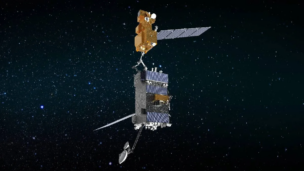
Exclusive: OrbitAID to Launch RPO Demo in 2027
“Most RPO demonstrations to date have qualified a single piece of the sequence, either far-range inspection or close-approach maneuvering, in isolation,” he said. “OrbitAID’s mission is designed to prove the entire satellite life extension in a single flight.”
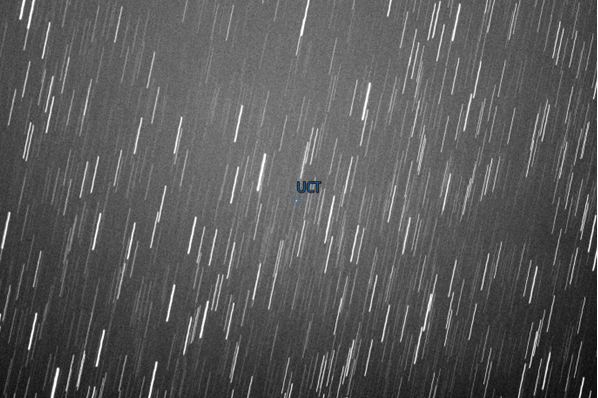
A Russian sat spent five weeks in MEO without the US public SDA database knowing its whereabouts. Slingshot Aerospace found it after just a few hours of looking.
The achievement highlights how adept SDA companies have become at finding uncataloged things in orbit. So what does it look like when astrodynamicists go hunting for a Russian sat missing in US records?
Lost & found: On Sept. 13, Russia launched its Soyuz-2.1b rocket carrying two satellites: a GLONASS sat, part of Russia’s nav system; and Mozhayets-6, an experimental satellite built by Russia’s Mozhaisky Military Space Academy.
Keep reading