

For decades, aerospace and defense programs followed a familiar pattern: define requirements, finalize designs, then validate at the end of the process. That model assumed time was available to manage surprises.
Today, that assumption no longer holds. Teague offers demonstrators—physical or digital representations of a system—which are used to test designs and decisions earlier and throughout a production process.
Across government and industry, the most common failure modes are well understood: late discovery, late rework, and loss of customer confidence. Programs miss schedules not because teams fail to ask hard questions, but because teams answer them too late—after cost, schedule, and technical commitments are already locked in.
“Late discovery is almost always the most expensive way to learn,” said Mike Mahoney, senior director of space and defense programs at Teague. “By the time an issue shows up downstream, teams are forced to manage it instead of designing it out.”
Demonstrators exist to change that equation.
Early Demonstration Is Now a Government Expectation
Demonstrators have moved from “nice to have” to operational necessity. Government customers are no longer satisfied with paper studies or promises of future performance. They expect early, visible progress that shows a team understands how a system will be built, operated, and sustained.
That shift is now reinforced by policy. At the DoD level, broader acquisition reforms call for replacing prolonged analysis with earlier demonstration and competitive prototyping as a way to move faster without sacrificing rigor.
The U.S. Army has made rapid prototyping and experimentation central to delivering new capability, explicitly emphasizing early fielding, soldier feedback, and iterative improvement to reduce risk and accelerate timelines.
“The services are saying this very clearly now,” said Tim Heiser, director of defense programs at Teague. “They want to see progress early—not just PowerPoint, but something tangible that shows you understand the problem and the operational context.”
The implication for industry is straightforward: demonstrating early decreases cost, schedule, and technical risk—and lowers the likelihood of late-stage surprises that erode customer confidence.
The Advantage of Human-Centered Design
Teague is a design firm that works in complex, regulated environments where failure is not an option. Across aerospace, defense, and advanced manufacturing, the firm partners with organizations such as Anduril, Boeing, and Northrop Grumman to help teams reduce program risk through human-centered design and early validation.
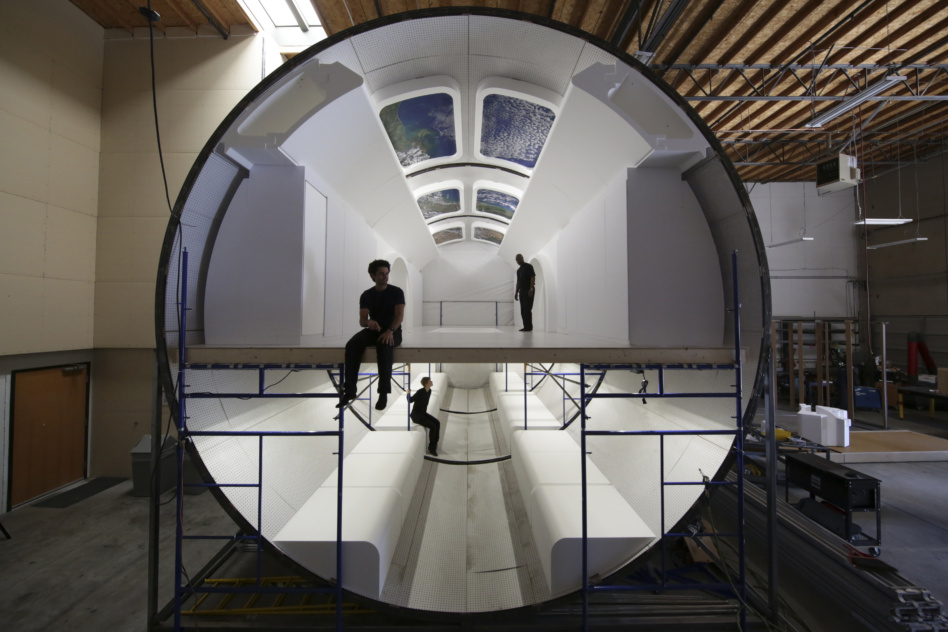
Rather than treating demonstrators as marketing artifacts or late-stage validation tools, Teague uses them as working assets—environments where engineers, operators, maintainers, and decision-makers can interact with a system while change is still affordable.
“Human error is often framed as a training or discipline issue,” Mahoney said. “But in many cases, it’s an interface problem that wasn’t discovered early enough—when the design could still be adjusted.”
Reducing Cost, Schedule, and Technical Risk Earlier
The value of a demonstrator is not realism for its own sake. It is learning—pulled forward in time.
Low-fidelity mockups can reveal fundamental issues in layout, reach, and workflow. Mid-fidelity demonstrators help teams evaluate tradeoffs between automation, information density, and operator workload. High-fidelity environments allow programs to validate procedures, training concepts, and sustainment assumptions before certification paths harden.
This directly aligns with DoD reforms and guidance for managing risk. Demonstrators help teams:
- Reduce cost risk by avoiding downstream rework;
- Reduce schedule risk by resolving uncertainty before commitments;
- Reduce technical risk by uncovering human-system integration issues early.
“If you wait until a system is fielded to understand how people actually use it, you’ve waited too long,” Heiser said. “At that point, even small changes become expensive, slow, and politically difficult.”
Demonstrators Across Space, Defense, and Sales Contexts
In commercial space programs, full-scale habitat and operations mockups are used to validate crew workflows, maintenance access, and long-duration habitability before designs are committed on-orbit. Those mockup environments evolve alongside their programs, providing continuity as configurations change.
In defense contexts, demonstrators are used to evaluate operator interfaces, autonomy supervision concepts, and mission workflows—all areas where late discovery can undermine trust with government customers.
Additionally, demonstrators are important as high-fidelity sales and trade show models. While these are not validation tools, they serve as tangible proxies. When real hardware is scarce, classified, or not yet available, a well-executed model signals seriousness and maturity.
Speed Without Losing Control
Modern acquisition reform is not about moving fast at any cost. It is about moving fast with confidence.
Demonstrators allow teams to shift risk earlier, to align stakeholders sooner, and to make informed decisions while flexibility still exists. They replace late-stage correction with early convergence.
“Speed only works when learning keeps pace with execution,” Mahoney said. “Demonstrators are how teams do that—by turning uncertainty into something they can see, test, and resolve early.”
In today’s environment, smart speed is crucial. Early learning is the difference between programs that deliver—and those that don’t.

The Lunar Economy Could Be Worth $566B by 2050. First, We Have to Build It.
The return to the Moon is an infrastructure story, and Deloitte has created numbers to back it up. The number: A new report from Deloitte, Building the Lunar Economy: How a Sustained Presence on the Moon Could Transform Life, Industry, and Infrastructure on Earth and Beyond, puts the lunar economy’s cumulative economic value through 2050…
The Commercial-First Shift in National Security Space
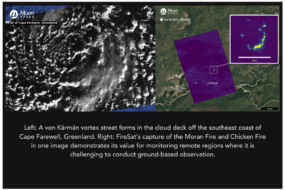
For decades, the model for building national security space systems was relatively straightforward. The government defined a mission, established requirements, funded a spacecraft designed specifically to meet them, and ultimately owned and operated the resulting capability.
The New Middle Ground in Spacecraft Development
For years, the commercial space industry has focused on making spacecraft more affordable and accessible. Today, a new wave of customers want to build their own hardware to gain full ownership of the systems that define their mission.

A Faster Path to Orbit: How Hosted Payloads Are Changing Access to Space
Historically, deploying a new capability in space required significant time, investment, and technical expertise. Companies often had little choice but to build nearly everything themselves—from spacecraft and payload integration to ground infrastructure and mission operations. Today, the space industry offers a different model: hosted payloads. “We’re seeing companies looking for the fastest, most economical way…


Jared Isaacman is just over 60 days into his tenure as NASA administrator, and he’s already getting rave reviews from one space leader on Capitol Hill.
Rep. Mike Haridopolos (R-FL), who chairs the House space subcommittee, commended the entrepreneur-turned-astronaut-turned-NASA-chief for sharing the space agency’s mission with the public—and energizing a NASA workforce in which morale dipped during a rough 2025 marked by staff reductions and proposed cuts by the Trump administration.
“Jared Isaacman understands the whole world—not just political and government, he understands industry as well,” Haridopolos told Payload. “I see the energy from NASA, and the excitement in the building, when you have a charismatic leader who wants to make sure America is at the cutting edge to beat China.”
Keep reading