


Future space lawyers will gather in DC this month to debate how far federal jurisdiction extends in regulating commercial megaconstellations.
The American Space Law Foundation will hold its first moot court on March 20 to 21. The two-day event will give students an opportunity to argue in a hypothetical—but very realistic—commercial space law case, in front of a panel of judges representing government and industry.
Meet the foundation: Elizabeth Sanchez Chang established the foundation in August to try to give students an easier on-ramp to a career in space law—which is something she struggled with in law school, where finding resources focused on orbital legal priorities was difficult.
“I remember thinking: It shouldn’t be this hard. It shouldn’t be this mysterious,” she told Payload. “In law school, I’d say I’m interested in space law. People told me, ‘That’s not real. That doesn’t exist yet.”
Chang is in her last year at American University Washington College of Law, and completed internships at companies like Vast and Blue Origin. She said the foundation’s goal is to get more students interested in space law, and to break down silos that exist between the fields that deal with space, including law, engineering, and policy.
This year’s case: Three teams are participating in this year’s case: Interra LLC vs. FCC.
- Interra is a fictional sat company building a megaconstellation that launched 5,000 sats licensed by the FCC, as Phase I of the company’s building plan.
- For its second phase of sats, which were conditionally approved by the FCC, Interra invested in AI software that would enable the sats to autonomously make orbital evasive maneuvers..
- After launch, one of the sats failed to make an autonomous maneuver, resulting in a collision course with an Italian spacecraft. The crash created 8,000 pieces of trackable debris.
- After review, the FCC denied a license for Interra’s Phase II autonomous sats—thus prohibiting the launch of more Phase II satsand requiring those already in space to safely deorbit.
Dual use: If you’re a longtime Polaris reader, you may remember reading about another space moot court—the Manfred Lachs Space Law Moot Court Competition, which holds its finals at IAC each year. However, Michelle Hanlon, executive director of the Center for Air and Space Law at the University of Mississippi School of Law, said there’s room for both in the space law industry. That is especially true since the Lachs moot court typically deals, Hanlon said, with disputes between countries and the application of international space law.
“This feels less like a simulation of Cold War-era treaty disputes, and more like a rehearsal for the legal challenges shaping Space Race 2.0 — where commercial actors, governments, and geopolitical strategy intersect,” Hanlon told Payload.
Velos’ Election Day Tracker for Space
Space may not be top of mind when voters head to the ballot box, but Election Day outcomes still have a big impact on US policy and funding above the Kármán line.
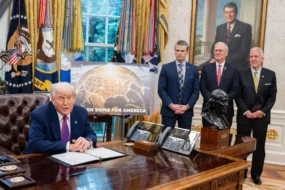
Colorado Springs, Huntsville Team Up on Golden Dome
“It’s a transformed relationship between Colorado Springs and Huntsville,” Rep. Jeff Crank (R-CO) told Payload. “When I took office, I don’t think it was a bad relationship, but it was one where both communities were kind of looking over their shoulder at the other. That wasn’t good for America, and I don’t think it was good for Colorado Springs or Huntsville either.”
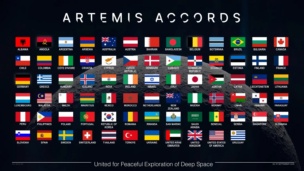
Artemis Accords To Meet on Lunar Debris, Emerging Space Help
The Artemis Accords Principals’ Meeting in Turkey will be led by NASA Deputy Administrator Matt Anderson and Maj. Gen. Roberto Melgar Sheen, director of the Peruvian Space Agency.
FCC to Vote on Waiving NEPA Review for Space Ops
The FCC will vote Sept. 30 on whether to narrow which commission activities face environmental review, and streamline the process for the ones that require assessment.

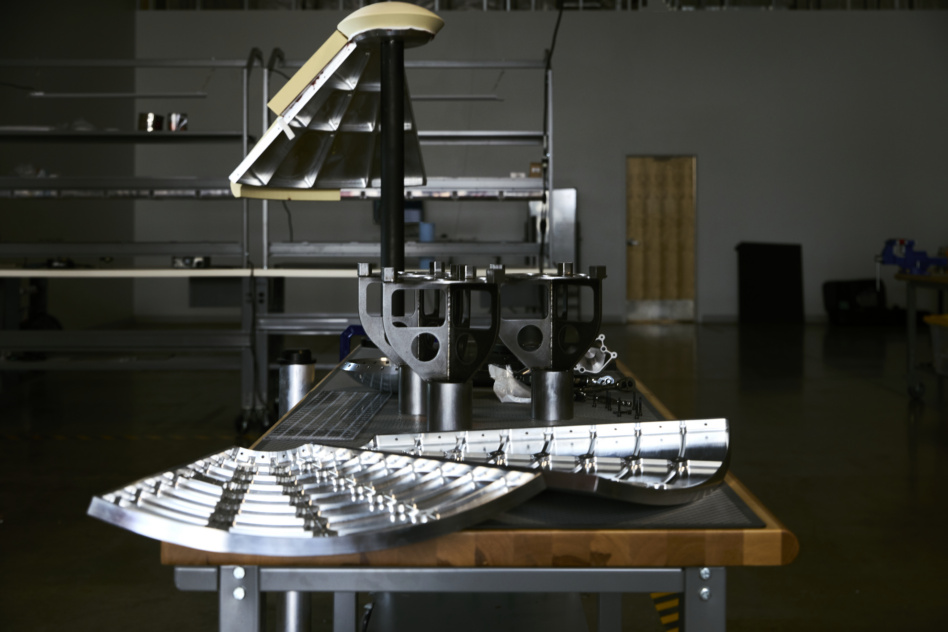
Everybody loves a reusable rocket—so why has the rest of space hardware remained stubbornly single-use?
That’s the question at the heart of the origin story for Lux Aeterna. The CO-based startup announced a $10M seed round today to fund the first flight of its reusable satellite platform—called Delphi—which is scheduled to launch its inaugural mission in Q1 2027.
Konvoy Ventures led the round, which also included participation from previous investors Space Capital, Dynamo Ventures, and Channel 39 Ventures. The fundraise included new investment from Decisive Point, Cubit Capital, Wave Function Ventures, and others.
Keep reading