



Demand in the space industry is skyrocketing—but the supply chain isn’t keeping up. Luckily, policymakers can speed things up, according to two leading industry groups.
The Aerospace Industries Association and PricewaterhouseCoopers released a report Tuesday detailing gaps in the supply chain for the space industry, and ideas for addressing those problems.
Here are some of their recommendations for the administration, and Congress:
Two-way street: The report says the government should establish a system for federal customers to share their needs with the industry—and for industry to share their supply chain constraints with the government. This two-way flow of information will help manage expectations on both sides, according to the report.
“Effective demand signaling should flow downward—from government to industry. But realistic capability assessments should also flow upward, reflecting supplier constraints, workforce limitations, and long-lead dependencies,” the report said. “Absent this feedback loop, government organizations will likely pursue desired outcomes without a full understanding of what the supply chain can deliver, eroding trust when programs slip due to predictable capacity shortfalls.”
Cut the line: The Defense Priorities and Allocations System (DPAS) allows companies working on critical national-security programs to receive first dibs on parts from suppliers. Because space doesn’t currently fall under that designation, space customers get pushed to the back of the line—and as a result, their wait for parts can sometimes stretch years. The report called on Congress to designate space infrastructure as critical to national security—and to expand DPAS to include the space industry.
“By enabling the commercial space industry to leverage DPAS for constrained parts such as electrical transmission equipment, Congress could ignite the industry, cutting lead times significantly and decreasing the cost of new site construction,” the report says.
Testing 1, 2, 3: The report urged the government to change the qualification requirements covering parts for the space system—which would bring a double benefit of allowing new entrants to more easily become suppliers, and enabling companies to innovate on existing products without needing to restart the qualification process.
Report writers also called on the government to:
- Build more federally backed public testing sites, to ease testing bottlenecks that cause delays;
- Establish an easy-to-access financing mechanism, to help companies make investments in regulatory compliance requirements.

Colorado Springs, Huntsville Team Up on Golden Dome
“It’s a transformed relationship between Colorado Springs and Huntsville,” Rep. Jeff Crank (R-CO) told Payload. “When I took office, I don’t think it was a bad relationship, but it was one where both communities were kind of looking over their shoulder at the other. That wasn’t good for America, and I don’t think it was good for Colorado Springs or Huntsville either.”

Artemis Accords To Meet on Lunar Debris, Emerging Space Help
The Artemis Accords Principals’ Meeting in Turkey will be led by NASA Deputy Administrator Matt Anderson and Maj. Gen. Roberto Melgar Sheen, director of the Peruvian Space Agency.
FCC to Vote on Waiving NEPA Review for Space Ops
The FCC will vote Sept. 30 on whether to narrow which commission activities face environmental review, and streamline the process for the ones that require assessment.

State Department Launches New Space-Diplomacy Effort
Alongside the announcement, Rubio also unveiled the SCP’s first project—a two-year, $6.5M effort to bring satellite internet to rural southern Peru.

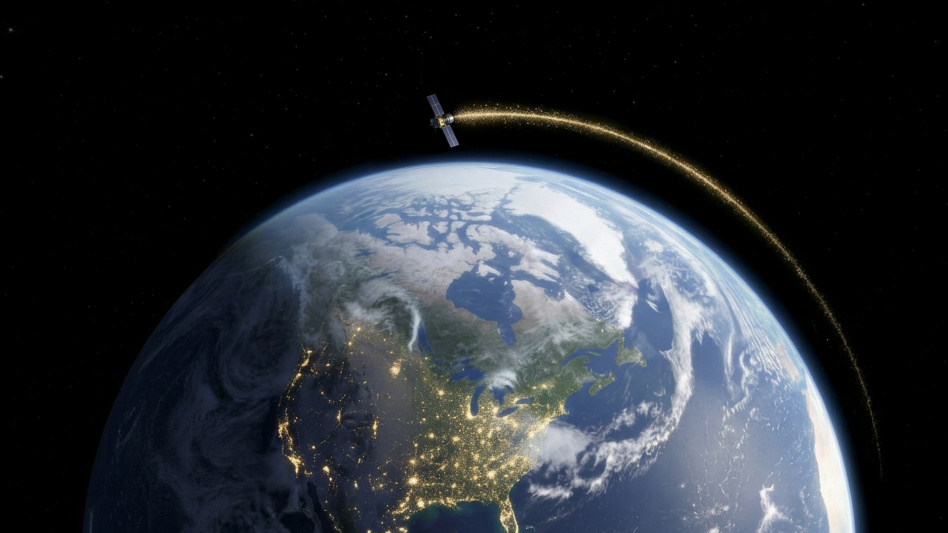
Orbital data centers may be just over the horizon, but we’re starting to get a better picture of what they’ll look like when they arrive.
Nvidia unveiled a new piece of tech yesterday—the Space-1 Vera Rubin Module—aimed at providing the computing power necessary to fuel future in-space computing applications.
As the name suggests, the Space-1 Module is purpose-built to perform in the harsh, low-SWaP environment of space—but it’s not scaled back in its performance. Compared with the company’s H100 GPU, it’s designed to deliver up to 25x more AI-compute—enough to enable orbital data centers, according to the company.
Keep reading