


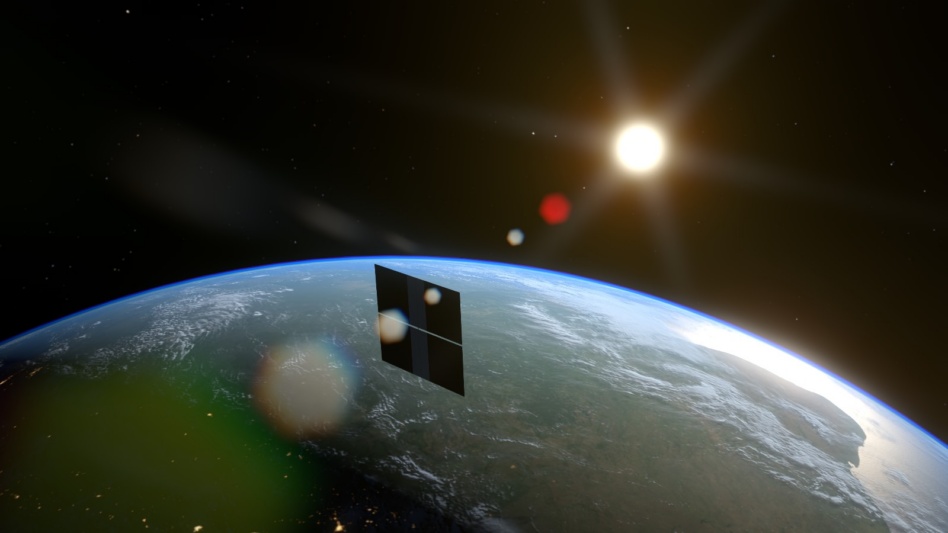
As investors are throwing their weight behind orbital data centers, startup Starcloud today announced a $170M Series A at a $1.1B valuation—just over two years after the company’s founding.
The round for the Redmond, WA company was split into two tranches:
- Benchmark led the initial round, with participation from EQT Ventures.
- Benchmark and EQT co-led the extension tranche.
- The round also included institutional participation from Macquarie Capital, NFX, Nebular, Y Combinator, Adjacent, Seven Seven Six, Fuse Ventures, Manhattan West, and Monolith Power Systems.
- Participating angel investors were Gen. Stephen Wilson (former Air Force vice-chief of staff), ex-Boeing CEO Dennis Muilenburg, and ex-Starbucks CEO Kevin Johnson.
First movers: The fundraise highlights not only the overwhelming demand among investors to fund orbital-data-center ventures, but also Starcloud’s unique position as a data-center startup with flight heritage.
“At the current price, we could’ve easily taken three times the amount of capital,” Starcloud CEO Philip Johnston told Payload. “Because if you want exposure to this, which everybody does, who else are you going to back? I mean, you can’t back Google, you can’t back Amazon, and we’re like a mile ahead of any other startup.”
Starcloud flew its first spacecraft—Starcloud-1—to orbit in November aboard the SpaceX Falcon 9 Bandwagon-4 rideshare mission. The mission brought a Nvidia H100 GPU to space for the first time, and demonstrated the company’s ability to keep AI-enabled tech humming in the tough radiation and thermal environment of space.
For its second flight, scheduled for later this year, Starcloud plans to up the ante.
- Starcloud-2 is aiming to generate 100 times more power than Starcloud-1, and will feature a deployable radiator the company claims to be the largest ever in orbit.
- The spacecraft will also feature a Blackwell chip from NVIDIA, as well as AWS Outposts hardware, and some bitcoin-mining circuits known as ASICs.
- Starcloud-2 will also run edge compute and cloud workloads for customers and partners including Crusoe, AWS, Google Cloud, and NVIDIA.
What’s next: In the meantime, Starcloud plans to use the new funds to scale up its ambitions by.
- Establishing a new manufacturing facility to churn out Starcloud-3 spacecraft capable of deploying on future commercial flights of SpaceX’s Starship, which Johnston expects to begin by the end of 2028.
- Growing Starcloud’s team from 13 employees to as many as 50 by year’s end, while reducing costs by bringing much of the company’s production in-house.
Ultimately, Johnston sees the demand for orbital data centers falling into three applications:
- Providing compute power for data generated in space, to decrease latency for customers needing to analyze space-based data in near-real-time;
- Performing terrestrial data workloads in space, for data security and sovereignty;
- Competing with terrestrial data centers for everyday tasks.
Reduced launch costs will be needed for many of the in-orbit data center applications to make financial sense, Johnston said, but Starcloud is banking on spending less after Starship comes online.
“The big constraint..is getting them up cheaply,” Johnston said of Starcloud’s spacecraft. “The first business model works with Falcon 9 launch costs. The second business model does not work with Falcon 9 launch cost under any scenario, really, so we do need Starship—or a much lower launch cost vehicle—to be running for the second business model to work.”
Transporter-16 Sends 119 Payloads to Orbit
The latest cargo train to orbit has left the station.
Bellatrix Raises $20M For In-Space Propulsion Tech
“This round reflects strong conviction in our ability to scale,” CEO and cofounder Rohan Ganapathy said in a statement. “We’ve flight-qualified our core technologies. Now we’re building the production infrastructure to match.”
Xona Space Systems Raises $170M Series C to Scale Private GPS
Xona has spent the past few years building its ability to transmit PNT signals in LEO that are stronger, more accurate, and more secure than traditional GPS.
Arkadia Space Secures €14.5M to Develop New Biprop Engine
Spanish propulsion startup Arkadia Space just secured a stamp of approval from the European Investment Council.

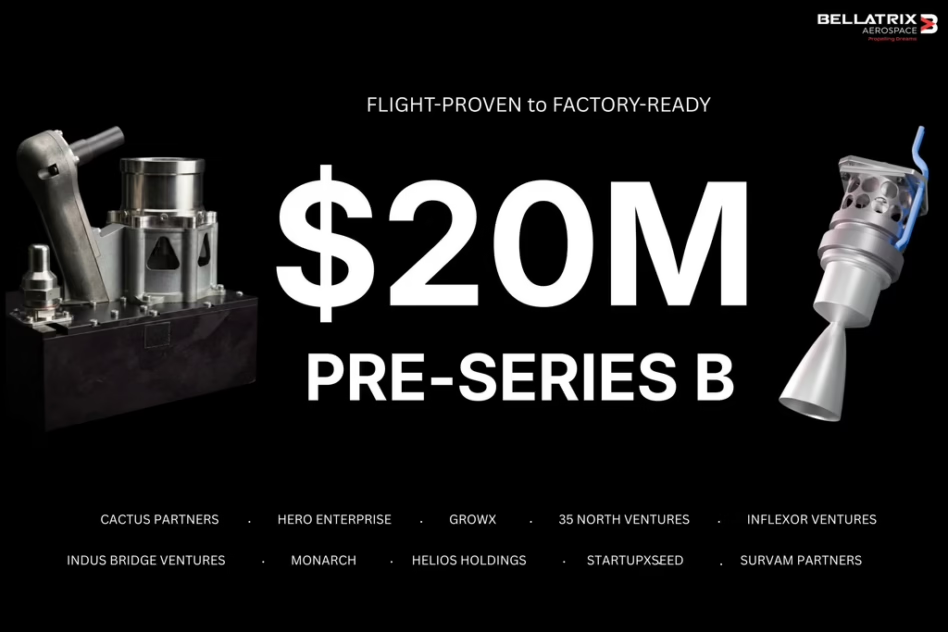
Indian space startup Bellatrix Aerospace has raised $20M to begin ramping up production of its in-orbit propulsion tech.
“This round reflects strong conviction in our ability to scale,” CEO and cofounder Rohan Ganapathy said in a statement. “We’ve flight-qualified our core technologies. Now we’re building the production infrastructure to match.”
Cactus Partners led the Pre-Series B round, which also included participation from new investors Hero Investment Office, 35North Ventures, Indusbridge Ventures, and Monarch Holdings. Previous investors—including Inflexor Ventures, Pavestone VC, GrowX, StartupXseed, and Survam Partners—also joined the round.
Keep reading