


The pages of the ISS manifest are starting to look a lot like those of a sci-fi novel.
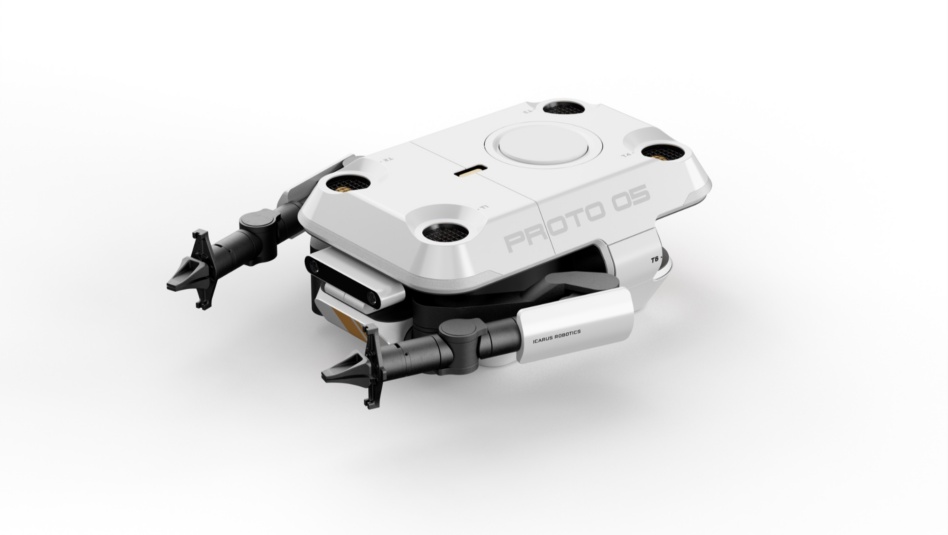
Voyager Technologies ($VOYG) announced a mission-management contract yesterday with New York startup Icarus Robotics to test a new free-flying robotic platform—called Joy—aboard the ISS in 2027.
I am robot: Icarus’ Joy robot is built to operate in pressurized spacecraft much like a submarine would swim in water. The robot uses fans to fly, and comes equipped with two manipulator arms to move things around on station.
As Icarus’ first in-space mission, the company aims to test its ability to fly the autonomous robot in pressurized microgravity, as well as its ability to carry out tasks in cargo and logistics, so future iterations can free up astronauts to focus on more demanding activities. Icarus is also flying to the ISS with customer test articles to begin validating Joy’s ability to perform more complex tasks in the future.
Joy will work alongside astronauts on the ISS collecting data to inform future iterations. The idea is to learn about astronauts’ needs on-orbit so future robotic platforms can take over as much of the workload as possible.
“If we can learn from these human examples, then we can actually have these learned manipulation models, which allow us to surpass the limits of the capability of robots in space before,” Icarus cofounder and CTO Jamie Palmer told Payload.
Domo arigato, Voyager: By partnering with Voyager, which is building the Starlab commercial station, Icarus is fostering a valuable partnership with a potential future customer, and building their robotic platform to meet the needs of future stations.
“[It’s] one of the big reasons why we wanted to work with Voyager,” Icarus cofounder and CEO Ethan Barajas told Payload. “We get to talk to them—and talk to the folks over on the Starlab side of things—to see what their future stations look like, and what moves the needle the most.”
Icarus is building for the long-term, however, regardless of differing opinions on the future of commercial space stations. NASA Associate Administrator Amit Kshatriya said last week that there was an “absence of a mature market [in LEO],” despite Voyager saying that Starlab was already sold out of commercial rack space.
Ultimately, Icarus is working towards a future where robotic workers are foundational for any future needs in orbit or beyond.
“We look at the robotics problems that we’re solving for maintenance and logistics right now on station…we see demand and we can actually deploy,” Barajas said. “We get excited about where it moves beyond this LEO labor…what it looks like on-orbit in ISAM, what it looks like potentially going to the Moon, and going to Mars.”
Fortastra Raises $30M Series A to Fund its Next Security Spacecraft
The US military has weapons in space, and—with the orbital arsenal expanding—security is becoming a top priority.
Exclusive: Xona Ramps Up Production Ahead of Pulsar Launch
With FCC approval in hand and six sats ready for the pad, Xona is turning to its next challenge: building the next 250.
ArbaLabs Launches AI Verification Demo On South Korea’s Nuri Rocket
“In short, tons of companies are looking at the latest and greatest physical AI deployments,” ArbaLabs CEO Ashley Reeves told Payload. “Nobody is really thinking about putting some checks and balances on what these AI models are doing.”
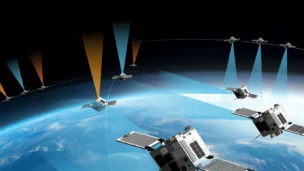
HawkEye 360 Turns its RF-Sensors to Orbital Targets
The DoD wants to better understand what’s going on in orbit. HawkEye 360 ($HAWK) has the inside scoop.

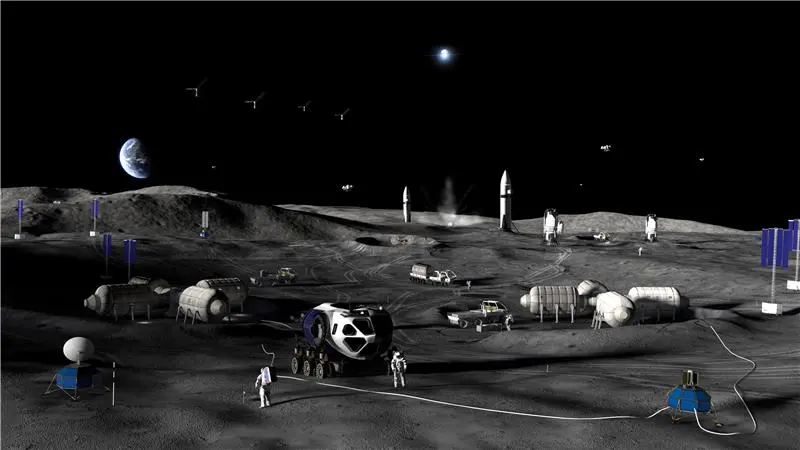
At the start of last week, Carlos Garcia-Galan was working on NASA’s program for a lunar-orbiting habitat. Last Tuesday, however, he became the person overseeing the space agency’s ambitious plan to build a lunar surface base at record speed.
During last week’s Ignition event at NASA HQ, Payload sat down with Garcia-Galan, the program executive of the lunar base, to talk about major changes to CLPS and Lunar Terrain Vehicle (LTV) acquisitions, how Gateway’s tech will be repurposed for the surface, and the culture aspect of a team shifting gears on short notice.
This transcript has been edited for length and clarity.
Keep reading