


With SpaceX and Amazon storming into the satcom market, traditional players and startups alike are realizing they can’t compete directly with these growing giants—and are pivoting to find creative new ways to play in the crowded market.
Satcom was once a slow-moving, walled-off industry. It used to be protected by high capex requirements and partnership models, with limited consumer choice. But today the sector is experiencing a groundswell of new constellations that are making satcom seem easy.
Billionaire-funded constellations with D2C business models, as well as seemingly unlimited capital and launch capabilities, are on the verge of rapid growth. SpaceX Starlink and Amazon Leo aren’t just headed to the consumer market, however. Both companies have begun doing business with enterprise and government customers, forcing traditional satcoms to reevaluate their competitive postures.
“The ecosystem that we’ve been used to for 40, 50 years is—pretty much in my opinion—gone, or on the way to being gone. There’s a new ecosystem that’s emerging,” SES Chief Strategy Officer Nihar Shah told Payload.
Enemies at the gate: SpaceX Starlink has been increasing its consumer base for years—and the growth shows no sign of stopping. The company operates 10,000+ satellites in LEO. The company celebrated 9M users in December, and crossed the 10M mark in February.
SpaceX’s $17B acquisition of 50 MHz of wireless spectrum from EchoStar in September signaled to the industry that it’s just getting started. With more spectrum on offer, and new Gen-3 sats with higher throughput scheduled to launch this year, SpaceX is gearing up to deliver connectivity to consumer, enterprise, and government users at an unprecedented scale.
Adding to this competitive pressure, Amazon Leo is entering the scene in full force this year. Though it’s behind on its deployment plans, the Bezos-funded satcom has launched 200+ satellites—and is on pace to deploy hundreds more in the very near future. The new constellation has contracted 80+ launches to eventually bring its LEO presence into the thousands. Amazon aims to expand its services to 26 countries by the end of the year, and to offer service in 100 countries by 2028.
Starlink and Amazon Leo benefit from seemingly unlimited capital and access to high-volume launch:
- The majority of Falcon 9 flights in 2025 went to launching Starlink;
- Amazon Leo and Blue Origin both share a tie to Jeff Bezos—the owner of Blue and executive chairman of Amazon, which owns the Leo business. Still, Amazon is also launching sats with ULA, Arianespace, and even SpaceX..
“When you hold low-cost delivery to space, that’s 30% of every business case. You have that on everybody else,” Iridium CEO Matt Desch told Payload. “They just need fuel, and everybody else needs to spend 30% more…How does that work?”
Amazon’s demonstrated strategy—of entering new markets and operating at a loss to soak up demand—has placed many traditional players on the back foot. Market analysts fully expect cost pressures to mount as Leo begins to deploy en masse.
Going on the Defense
Seeing the warning signs of a rapidly shifting industry, traditional satcoms are getting creative to maintain their competitive edge. Many are reevaluating their positions, and focusing on differentiating themselves through multi-orbit networks and deeper service offerings.
“We only address the B2B and the B2G market. We’re not trying to compete with Starlink, or any other future constellation on the consumer market,” Eutelsat OneWeb Chief Communications Officer Joanna Darlington told Payload.
And Eutelsat OneWeb isn’t alone. Satcom officials—including at companies like Telesat, Hispasat, Viasat and SES—told Payload that the aim is not to go head-to-head with Starlink and Leo (which are both largely targeting the consumer D2C market), but to focus on maintaining their relationships with government and enterprise customers.
The proliferation of these growing LEO constellations, however, has forced traditional satcoms to change their operating models. Because of competitive pressures, many satcoms have turned to consolidation.
- In 2023, Viasat acquired Inmarsat. This deal created a GEO constellation with both Ka-band and L-band capacity, and combined complementary assets to broaden Viasat’s offering to maritime, aviation, and government. In 2025, Viasat also signalled a move into a multi-orbit regime by partnering with Telesat’s Lightspeed LEO constellation, which is expected to enter (delayed) service in 2028.
- In 2023, Eutelsat and OneWeb merged. Since then, they have spent the past few years combining their GEO and LEO constellations into a single multi-orbit offering.
- In July, SES completed its acquisition of Intelsat, similarly creating a multi-orbit regime of roughly 90 sats in GEO, 30 sats in MEO, and strategic access to LEO through an existing agreement with OneWeb.
Each of these agreements created larger companies that are able to offer reliable service through GEO sats, as well as low-latency connectivity through LEO regimes. This M&A activity is, in many cases, a direct result of Starlink’s impact in the market, which proved that low-latency was “no longer a nice to have. It is a baseline requirement,” according to Stephen Hampton, Telesat’s senior director of global public policy.
In this new reality, even the most long-standing satcoms are being forced to invest in new tech. Spanish satcom Hispasat is attempting to lead the charge on Europe’s IRIS2 constellation as an explicit play to capitalize on the demand for LEO connectivity.
“We have done this multi-orbit solution since the end of 2024,” Javier Izquierdo Martín, strategy director at Hispasat, told Payload. “This has proved to be some kind of defensive movement—the big telco companies, backhaul, oil and gas, mining, maritime—they really look at us in the way that we can offer something different.”
Safety in Numbers
These fundamental shifts in service offerings shouldn’t be seen as the death rattles of an industry experiencing terminal disruption, according to satcom officials. Instead, execs frame the changes as a strategic play to meet the market’s growing demand for connectivity services.
Demand, officials tell Payload, is only increasing. Customers who were once satisfied with a single satcom provider are now signing onto multiple services to meet requirements such as resilience and sovereignty. What’s more, traditional satcoms are leaning into their long-standing reputations to assure new customers that they can provide a level of service and trust that has yet to be demonstrated by the likes of Starlink and Leo.
“The trends that created this sovereign push don’t seem to be subsiding. It doesn’t seem to be a fad. It’s been driven, I think, out of the US, by policies here and the uncertainty the rest of the world feels about being able to depend upon a US operator,” Desch told Payload.
The result is a market that’s primed to spread the wealth. Enterprise and government customers who sign on to Starlink or LEO, for instance, will still want to have access to connectivity through a local provider, and many national governments are spending big on sovereign solutions. It’s a new day for satellite communications, but one that’s ultimately informed by years of history.
Exclusive: Austria Taps R-Space for Its Second Military Sat
Aurora is one of three missions in a series of planned government-backed demos to validate new technologies in orbit

Rocket Lab Enters the Satcom Market With $8B Iridium Deal
Rocket Lab ($RKLB) has been teasing its entrance into the “space applications” market for years. Yesterday, it pulled the trigger.

Japan Eyes Sovereign D2D Satellite Network
Japan plans to select a proposal this month for its domestically owned and operated D2D satellite network, called J-LEO.

Exclusive: Northwood Unveils New Antenna, Expanded Network Capacity
The new hardware comes amid Northwood’s rapid global expansion of its physical ground station footprint, and will allow the company to support more data downlinks over a wider range of frequencies.

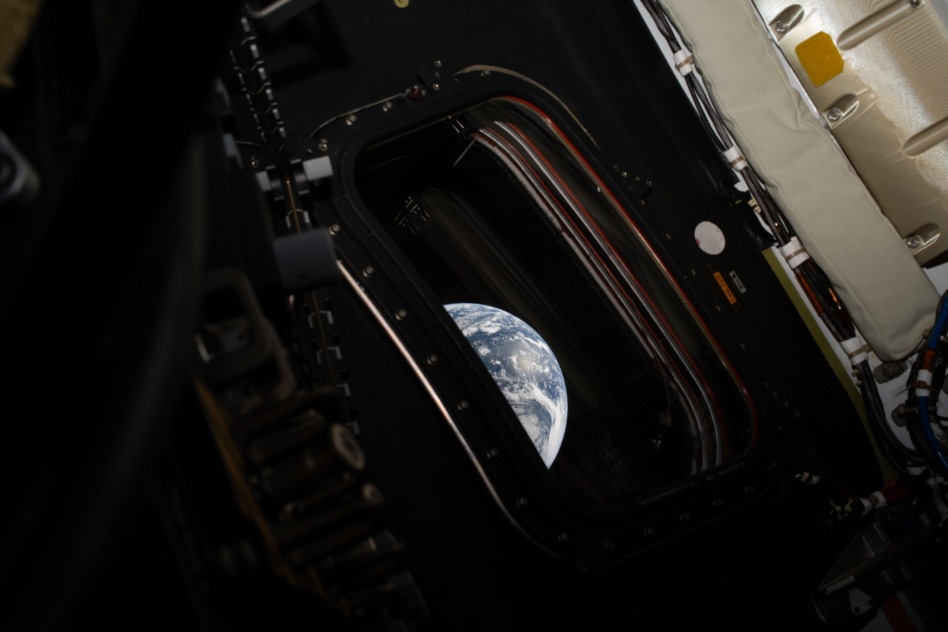
For astronauts who put in decades of work and training, getting to see space with their own eyes is a big part of the payoff.
Artemis II astronauts will take in the view courtesy of McDanel Advanced Materials, which is the company expecting to make the windows for at least the first five Artemis missions.
“Imagine you work your whole life to become an astronaut, and you have to look through a computer screen to see outside,” said Ramsey Benhusen, a senior program manager for aerospace and defense solutions at McDanel. “Of course they want to look through a window to see what it looks like with their own eyes. It’s a privilege only they will have.”
Keep reading