


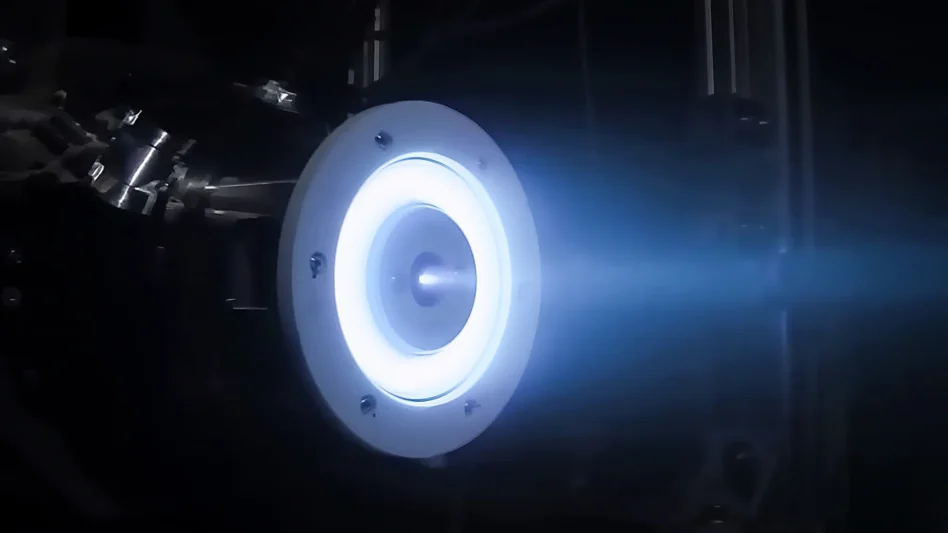
Rocket Lab continued this week to expand its business offerings beyond launch, with the introduction of a new spacecraft thruster—Gauss.
The electric thruster is intended to both support Rocket Lab’s own spacecraft programs, and to fill a gap in the industry. Thrusters are in high demand these days as commercial and government customers look to send more sats aloft, with the ability to maneuver in-orbit.
“Early technology development can be done at these small mom and pop shops, but when it really comes prime time to make things at scale, people like ourselves who are procurers of that, if they don’t vertically integrate, they get very nervous that they won’t have access to capital and expertise to scale production,” Rocket Lab CFO Adam Spice told Payload. “It’s all about derisking our ability to deliver on our commitments.”
Rocket Lab announced this week the closing of its acquisition of Mynaric—also offering Rocket Lab vertically integrated access to optical terminals.
Why it works: Rocket Lab feels it can avoid the barriers that have faced other companies in the thruster space—namely, hitting capacity limitations, and not being able to scale—in part because of the company’s experience building other spacecraft components, including reaction wheels and star trackers. The company also has backing from VC capital that’s typically not accessible to smaller suppliers, Spice said.
Diversify: The thruster is Rocket Lab’s latest offering beyond launch. In fact, the company’s spacecraft and component business has grown so much that Spice said he no longer considers Rocket Lab a launch company.
Instead, officials characterized Rocket Lab as a space company that does launch—something that will become the norm in the industry going forward, Spice predicted. That’s because launch represents only a small part of the total addressable market for space—and because having a ride to orbit eliminates the headache caused by launch capacity constraints.
“I think it’s the future of most of the space market,” Spice said. “If you want to be in an application that requires putting significant mass into orbit, I’m not sure you can be in that application if you don’t own a rocket.”

Space Stocks Dip After SpaceX IPO
SpaceX’s strong first day out was coupled with a significant pullback among investors in other publicly traded space companies, sending major players down across the board.
VCs Predict the SpaceX IPO Will Lift the Entire Industry
After the public markets initiate their newest whale, what happens to the rest of the space industry still reliant on private capital?

Analysts Debate SpaceX’s $1.75T Valuation Ahead of IPO
Analysts are split over whether that’s the right number, and how the stock will perform in the short term—but everyone agrees the space industry is booming.
Quantum Space To Go Public Via SPAC
“We need to scale, and to do that we need capital, but it’s also important to have access to public markets for other things we want to do. But the key right now is speed.”
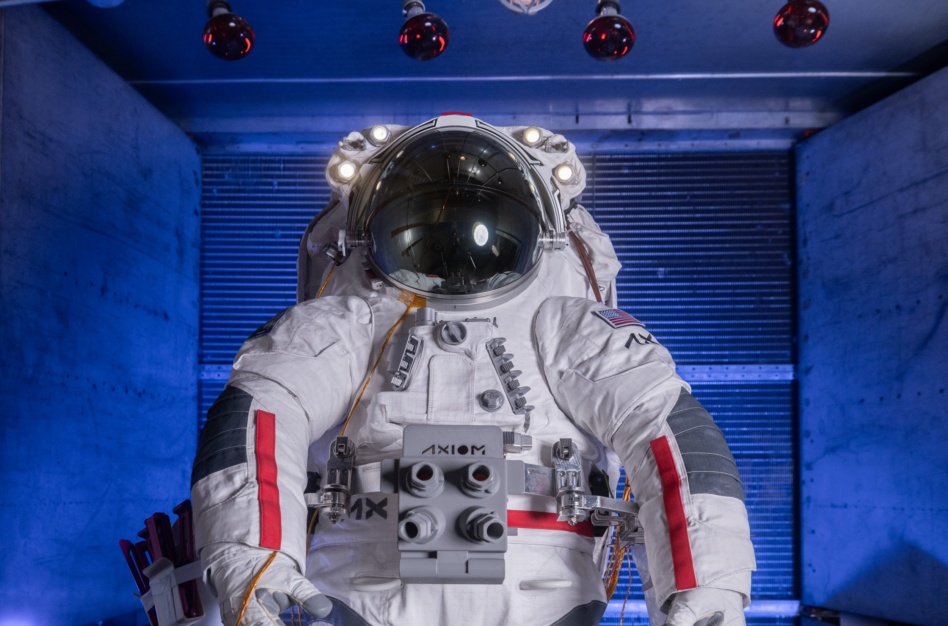
Axiom Space’s suit is getting ready for its orbital date.
The company announced this week that its space suit—which will be worn on spacewalks and the lunar surface—will get an in-space test next year. The only question for NASA to answer is whether it will be on Artemis III or on the ISS. But Axiom Space officials say they’re ready, no matter what NASA decides—and that the suit will ultimately need to be tested in both environments.
“From a production standpoint, we’re putting together the first qualification suit,” Michael López-Alegría, the company’s chief astronaut, told Payload. “That continues regardless of what they say.”
Keep reading