


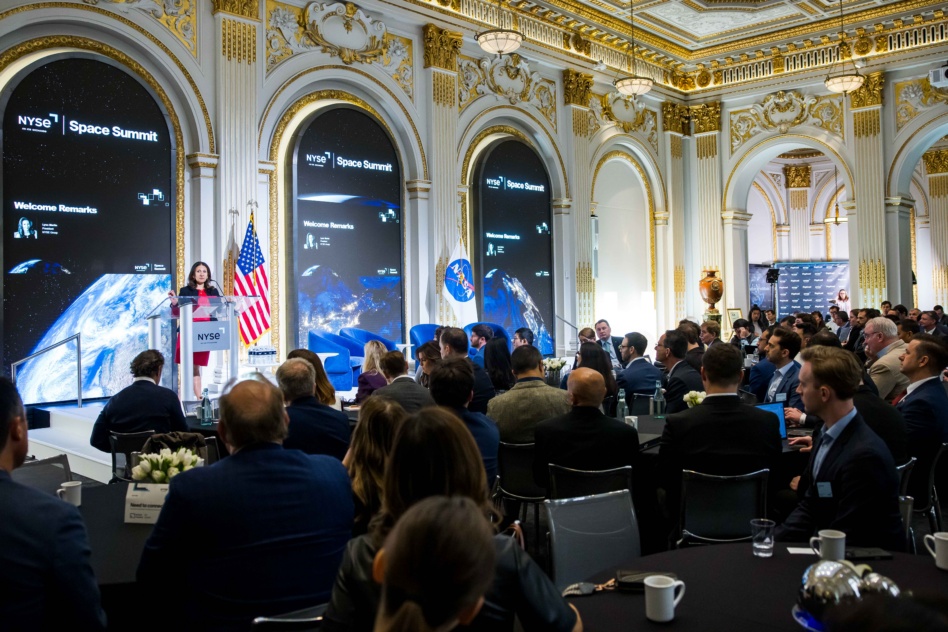
NEW YORK CITY—Industry is planning to largely rely on commercial tech for Golden Dome to make the program affordable and able to scale, according to three industry execs.
Asked what a Golden Dome satellite bus would have that a commercial satellite bus doesn’t, Apex Space CEO Ian Cinnamon’s answer was simple—”Hopefully, nothing.”
“If we really want to get the price down, you need to be using commercial-off-the-shelf systems that are on a set assembly line,” Cinnamon said on a panel at the NYSE Space Summit, which also included Impulse Space President and COO Eric Romo and K2 Space CEO Karan Kunjur.
Price cut: The Golden Dome missile-defense system must protect the US—but it also must do it at a reasonable cost per kill to win support and funding from politicians. Using COTS hardware will allow industry to build the system for far less than the “nonsensical” cost estimates released by the Congressional Budget Office in the early days of the program, Romo said.
Limiting factor: Romo said Golden Dome faces three major hurdles:
- Maturing tech, especially for boost-phase intercept;
- Producing spacecraft at the scale needed for a proliferated constellation;
- Overcoming the political hurdles of the system.
What’s next: Cinnamon said he believes industry can help secure political buy-in by proving out the tech—something Apex is trying to do with its Project Shadow space-based intercept tech demo. But—even if the program is killed by Washington—the tech in which companies and VC firms are investing will likely live to die another day.
“Almost every major ambitious program over the last 50 years, if that specific program was canceled, you can directly trace five other programs that stemmed from it,” Kunjur said. “As an investor you kind of have to look at and understand, how do I want to invest in this program? And how do I want to invest in the subsequent programs that could stem from it later?”
Exclusive: EraDrive Lands $13M DoD Award For Autonomy Module
EraDrive won a $13M DoD award, under which the Space Force will buy an undisclosed number of the company’s Era-Node vision-based autonomy modules.
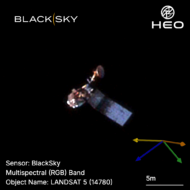
BlackSky Renews HEO Deal, Adds Gen-3 Imagery for Space Domain Awareness
BlackSky Technology inked a seven-figure deal to extend its partnership with Australian non-Earth imaging (NEI) provider HEO for another year.
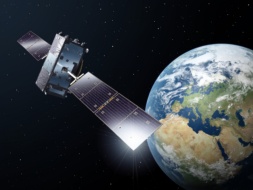
Europe’s Space Defenses Fall Just Shy of Weaponization
Europe doesn’t have any weapons in space—but that doesn’t mean the region is comfortable flying around in orbit defenseless.

Fortastra Raises $30M Series A to Fund its Next Security Spacecraft
The US military has weapons in space, and—with the orbital arsenal expanding—security is becoming a top priority.
President Donald Trump has reportedly fired the entire board of the National Science Foundation—and Democrats in Congress are slamming the move as the latest in a string of changes to attack US science and innovation.
Context: News broke on Friday afternoon that nearly two dozen members of NSF’s advisory board had received an email terminating their service on the board. It is not clear whether the administration will replace the fired officials with new board members, or whether the oversight and advisory body will become defunct. The board is apolitical, according to the NSF website. A third of the board is appointed every two years to six-year terms to ensure continuity across administrations.
The National Science Board meets roughly four times a year, with the next meeting set for May 5, according to an NSF website. While no agenda is posted online, Nature reported that the board was set to discuss a new report on the US losing to China on scientific innovation.
Keep reading