


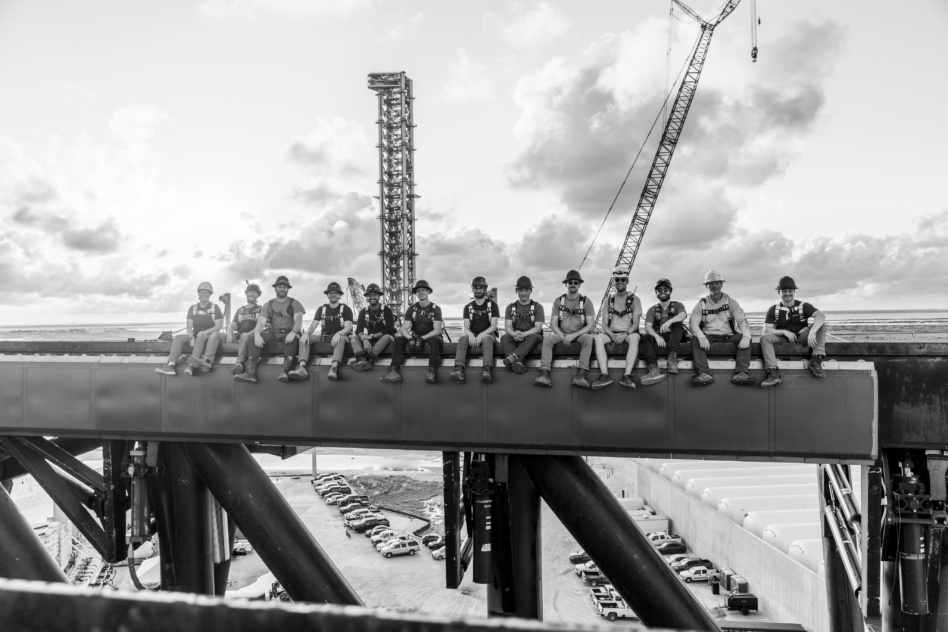
The largest IPO in history is here, and capital is expected to flow into the space industry at record volume. Whether that capital builds an economy that fully operates—or one that just accumulates hardware—is a choice we are about to make.
The big picture: SpaceX is expected to price at a valuation between $1.75T and $2T, with a raise of up to $80B. This capital will not stay entirely within SpaceX, but will flow down through its supply chain and into even newer technologies.
- New funds will form, led by newly made millionaires with deep space expertise.
- Sovereign wealth pools will move from the sidelines to the field.
- By year’s end, the amount of capital chasing space deals will significantly exceed anything the sector has ever seen.
The question is not whether capital is coming. It is, as space pivots beyond exploration to a sector that creates huge economic value. The question is whether we use it to keep building an economy of assets—or to finally build one that fully operates.
The asset economy: Today’s space economy is an asset economy. It launches things, deploys things, builds things. What it does not yet do at scale is service them, manage them, refuel them, remove the debris they leave behind, or protect the orbital environment they all depend on.
The march toward the multi-trillion-dollar space economy is on a credible path to create a bigger version of what we already have: more hardware in orbit, more constellations launched, more assets accumulated. However, it’s not yet building an economy that can use any of it at scale.
The next generation of space asset bets does not close without an integrated, operational layer beneath them that creates economic value and utility at scale.
- Commercial space stations are only viable if several conditions are met: launch costs continue to fall and the user base expands beyond government; in-space servicing exists to keep the stations, satellites, and other objects maintained; improved awareness and traffic management improve safety and make proximity operations safe; and propellant logistics can support resupply at a price that closes the unit economics.
- A future lunar architecture is even more dependent on an operational layer: the Artemis program already assumes orbital refueling and nuclear power that do not currently exist as commercial infrastructure.
Operations are not an alternative to assets. They are the precondition for the assets to pay off.
Follow the money: Where capital flows, and what gets left behind, tells the rest of the story. The current private capital system knows how to handle businesses with anchored customers, but it is not prepared for businesses that see returns compound on longer timelines normally associated with infrastructure development.
- True Anomaly raised $600M in April for in-orbit defense systems with a clear Pentagon customer.
- Firefly Aerospace raised $1.5B across five rounds before its IPO at a $6.3B valuation, with launch and lunar contracts in hand.
- Rocket Lab cleared $20B in public market value, on the strength of a launch business with proven government anchor demand.
These are the businesses capital can read.
The companies attempting to build SSA, propellant logistics, in-space servicing, or debris remediation at scale see almost none of that. Their addressable markets are not smaller. Their business cases are not weaker. They are simply harder for capital trained on software-style returns to underwrite, and so the money flows past them toward more assets, and away from the operations that would make those assets productive and profitable.
A proposed fix: Every emerging economy with deep infrastructure needs has encountered this and resolved it the same way. Governments anchor demand, structured as procurement of services, and derisks the revenue line that private capital underwrites against. NASA’s Commercial Orbital Transportation Services and Commercial Resupply Services did this for launch not only by making the government the long-term customer, but also by signaling enough sustained demand that private capital recognized a real market underneath.
There is no equivalent for new services that would help convert the asset economy into something that functions as a system. There is still a risk that capital will concentrate in the categories investors understand, leaving other areas to starve.
The fix is not exotic. The Trump administration is already signaling the importance of firm-fixed price models and risk-tolerant acquisition, as well as encouraging new firms and services. Existing firm-fixed-price models can be extended to operational services. NASA’s funded Space Act Agreements can be sustained, rather than restructured. Federal acquisition for commercial item procurement can be applied to mid-tier services that have matured enough.
What is missing is the institutional will to treat many operational services as procurement for long enough that the capabilities can mature—and for investors to read the demand as durable.
Of note, repeated adjustments to government strategic vision and funding do not anchor; they produce uncertainty, and uncertainty drives capital toward portfolios it already knows. Governments need both overarching policy and budgets to encourage scale. They also need to signal clearer timelines for funding cycles, and to learn how to buy services from a wide range of space companies.
What’s next: Economists often write about the critical importance of technology convergence in creating scientific, economic, and social value—and the space sector has real potential here.
- One version of this incoming capital infusion unleashes the operational layer, and the space economy starts to function as an integrated system that turns assets into utility, as has already been done with GPS and PNT. Companies in numerous space market segments exist now, and their growth will encourage other industrial sectors to leverage space even more aggressively.
- An alternative version concentrates the capital in the areas it already underwrites, and the space economy reaches $1T+ as an industry of accumulated assets that cannot support the architectures and the services the sector has spent 20 years promising.
Both are possible from where we sit today. The market outcome is a policy choice, and a capital behavior adjustment. Some of this will happen because of the new-found capital, but there are risks of continuing gaps.
The sector likes to say that space is infrastructure. It is. But the capital structures, valuation methods, and portfolio allocations that govern it continue to treat space as a category unto itself—priced against space-specific risk models and organized into space-specific funds.
The SpaceX IPO today is the time to start treating space as the infrastructure it already is. Decisions made now will determine whether we become the economy that just accumulates, or create a space economy that fully operates, thereby creating enormous scientific and economic value for us here on Earth.
Kevin M. O’Connell is the Founder and CEO of Space Economy Rising and the former Director of the Office of Space Commerce (2018-2021). Kelli Kedis Ogborn works at the intersection of space economy policy, capital, and commercialization. She is currently an advisor to the Commercial Space Federation, and has held senior leadership roles shaping global space commerce; she now advises governments and industry on defining the sector’s growth and competitiveness.

Op-ed: The Technologies That Could Define the Future of Space
Daniel Biedermann, a partner at NewSpace Capital, gives his insights on what technologies are driving the future of space tech.
Op-ed: Aging Weather Satellites Are Raising Risks for America. It’s Time for a Hybrid Solution.
When we lose our visibility, we lose our edge. The military needs more, higher-quality weather data, not less.
Opinion: Commercial Space Is Generating Signals Decision-Makers Cannot Hear
Launch cadences, debris accumulation rates, reusing hardware, conjunction events—the commercial sector is generating more operational signals than any previous era of space activity. However, the mechanism that decides whether a signal reaches a decision-maker or disappears into the background noise is broken.

Op-ed: Commercial Demand in LEO is Lacking. The Government Can Help.
LEO’s most promising market opportunity—in-space manufacturing—doesn’t yet have the commercial demand to sustain itself. Government support is what will get us there.

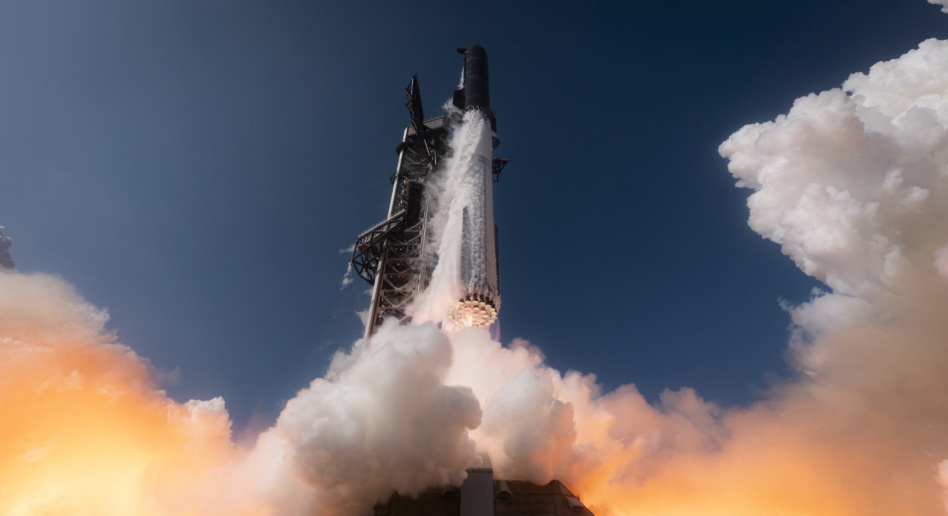
All eyes are on New York today for SpaceX’s IPO, but the moment represents more than just a record-breaking exit by a US space company.
For leaders in the European space sector, the IPO stands as a unique learning opportunity about how to build their region’s space economy—at least according to the European Space Policy Institute.
In an op-ed posted on LinkedIn yesterday, ESPI researchers said the IPO offers Europe a “second chance” in scaling its ambitions—highlighting what it takes to build a successful space venture, and offering insights about where Europe’s space sector needs to mature to remain competitive.
Keep reading