


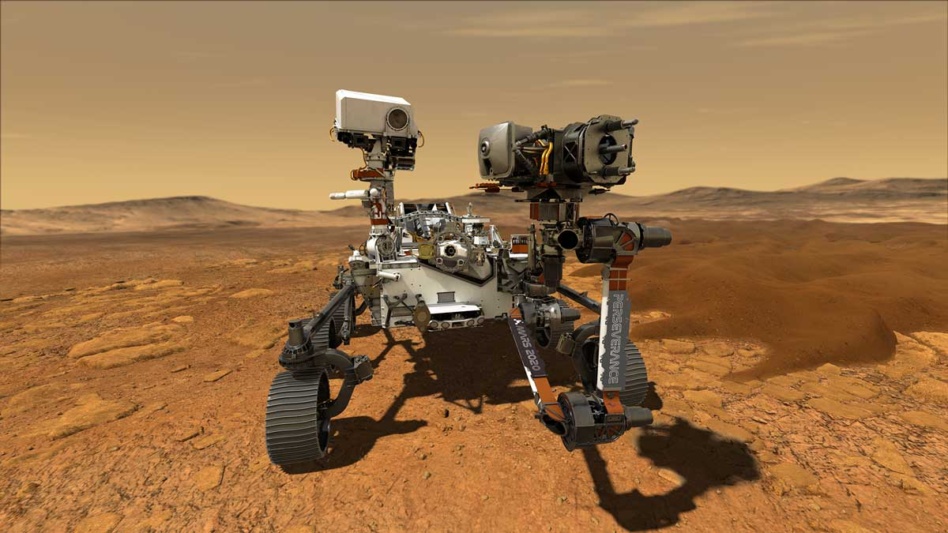
Happy birthday, Percy! Our favorite little rover, Perseverance, has now spent a full Earth year on the surface of Mars, taking samples and searching for life in the Jezero Crater.
We’ve been reflecting on the journey Perseverance has made over the past year. The $2.7B rover has traveled about 2.2 miles and taken eight samples from the crater. Here are some of the historic achievements Perseverance has hit on while traversing the foreign planet’s surface.
Science findings: Perseverance unveiled quite a bit of information about the planet that had previously been a mystery to scientists. Among the things Percy discovered:
- Igneous rocks. The geology of the bottom of the Jezero Crater, which was once probably a lake full of water, is composed of primarily igneous rock rather than sedimentary. Scientists will be able to pinpoint the age of that igneous rock, made from cooled lava, by analyzing the radioactive decay of the elements inside. (Of course, they have to get the samples home first.)
- Oxygen conversion. Well, the rover didn’t invent the process—plants are pretty good at it—but Perseverance performed the first carbon dioxide-to-oxygen conversion on the Red Planet.
Bearing witness: The rover watched—and documented—the first ever flight of a helicopter on Mars. The Ingenuity chopper has now completed 19 flights and flown more than two miles. And let’s not forget, today marks Ingenuity’s first year on Mars, too!
Up next: The rover has spent the last year wandering around the bottom of the crater and redirecting its course to investigate interesting structures, but there’s a final destination in mind: the Jezero delta, where the river that once fed the ancient lake would have deposited sediment and rock and, potentially, preserved microbes. Perseverance has backtracked a bit on its path to circumnavigate an unstable patch of ground and is now en route to the crater.
Zeno Power Books its First Nuclear Mission to the Moon
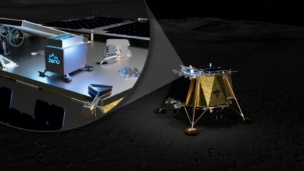
Zeno Power is ready to pull its first all-nighter. On Wednesday, the nuclear-energy startup announced a commercial payload agreement with Firefly Aerospace ($FLY) to send a radioisotope heating unit (RHU) on a Firefly mission launching to the Moon NET 2028. The mission—flying on Firefly’s CS-8 CLPS mission—aims to demonstrate Zeno’s ability to keep a 5W…
Exclusive: Reflect Orbital Responds to its Critics
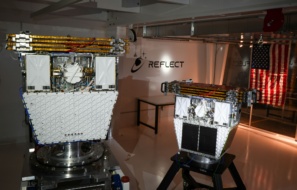
The space community is divided over whether Reflect Orbital’s sunlight-reflecting satellites are a bright idea.
NASA Opens Call on Moon Base Health Research
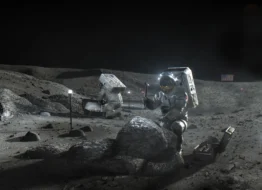
NASA’s Human Research Program is asking researchers what they want to know as the agency transitions to long-term stays at a Moon Base.

Redwire Books Starfall’s First Dedicated Mission
Redwire subsidiary SpaceMD announced a contract to fly up to 32 mini-labs on a future SpaceX Starfall mission.
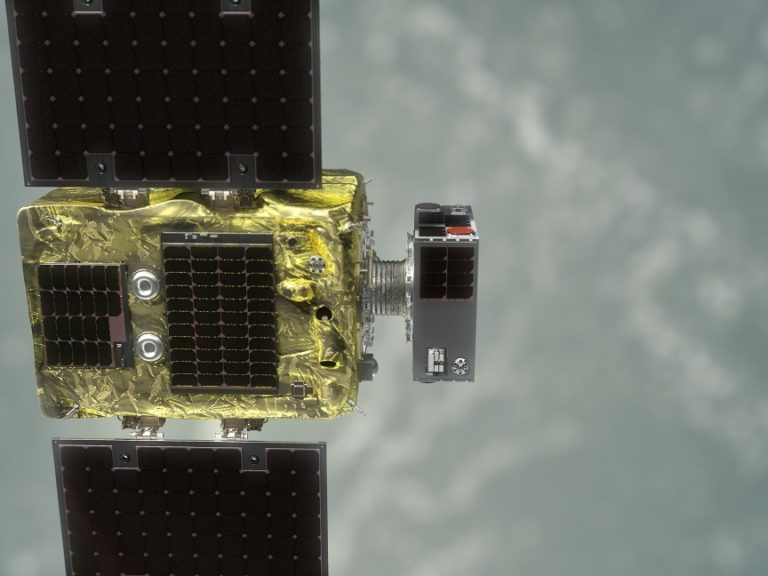
Astroscale has moved a pair of debris-removal satellites back into position after pausing a demo of the technology last month, the startup posted on social media. The company has not revealed the exact reason that the mission was postponed in the first place, citing only “anomalous spacecraft conditions.”
ICYMI: Last month, Astroscale attempted its second debris removal demonstration with its End-of-Life Services by Astroscale-demonstration (ELSA-d) spacecraft. The demonstration was the company’s first attempt to capture a client spacecraft autonomously.
On Jan. 26, Astroscale reported that the client spacecraft successfully separated from the servicer spacecraft and that the pair orbited the Earth several times at a safe and constant distance. Then, the team temporarily called off the mission.
Now, Astroscale seems to be gearing up to try out the autonomous removal demonstration again. The servicer spacecraft, after orbiting separately from the client since the demo paused, has moved back into a close orbit with the client.
Orbital debris removal is a hot topic right now for the space industry and governments around the world. With increases in launches, total spacecraft deployed, and megaconstellations, the population density of spacecraft zooming around LEO is only going in one direction.
