


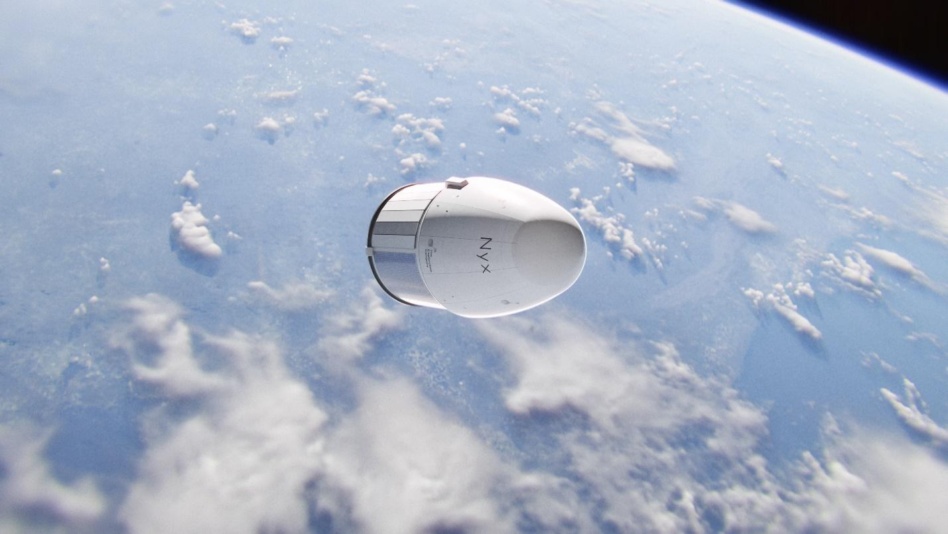
Agile Space Industries will provide the in-space propulsion system for The Exploration Company’s (TEC) Nyx reusable spacecraft, the companies announced today.
Under the agreement, TEC will integrate an undisclosed number of the CO-based propulsion startup’s DS250 bipropellant rocket thrusters into the outer mold line of the Nyx spacecraft for TEC’s upcoming ISS supply run in 2028.
It’s in the name: The contract is the result of a rapid development process, in which Agile designed, 3D-printed, assembled, and hotfire-tested the DS250 in just 10 weeks.
“When we asked Agile to develop and prove out a brand-new thruster in three months, and they delivered beautiful performance on the test stand in 10 weeks, we knew we had the right propulsion partner,” TEC CEO Hélène Huby said in a statement.
Agile’s agility helped it secure the contract, in spite of a European push to support homegrown-space capabilities and shore up sovereign supply chains, according to Agile’s chief engineer, Lars Osborne.
During Agile’s development campaign, the company hotfire-tested its DS250 for more than ~1,100 seconds (18+ minutes). Agile also demonstrated a range of high- and low-thrust modes that will be necessary for the precise maneuvers of in-orbit docking.
Cautionary tale: The result is a set of thrusters that was designed specifically for the Nyx mission—and the unique challenges of firing an engine in an enclosed space where heat can’t easily vent into space.
“With a thruster that gets embedded into the vehicle, the biggest challenge is the operation,” Osborne told Payload. “The robustness in design for an engine is different than, say, optimizing for maximum performance. You are attempting to make something that has very few things that can go wrong with it.”
When those systems fail, bad things can happen. Last year, Boeing’s Starliner spacecraft experienced anomalies with the thrusters located in the “doghouse” of the spacecraft—anomalies that ultimately led to an uncrewed return flight, and an uncertain future for Starliner.

Seraphim Space Investment Trust Doubled its Value in 2026
Seraphim’s major holdings—ICEYE, ALL.SPACE, D-Orbit, HawkEye 360, and Xona Space Systems, which together represent more than 75% of the firm’s portfolio—all had a great year, and that success has trickled upwards.

UKSA Taps ClearSpace for Country’s First Debris Removal Mission
The UK Space Agency is dressing up as a waste-management company for Halloween.
BlackSky Renews HEO Deal, Adds Gen-3 Imagery for Space Domain Awareness
BlackSky Technology inked a seven-figure deal to extend its partnership with Australian non-Earth imaging (NEI) provider HEO for another year.

Europe’s Space Defenses Fall Just Shy of Weaponization
Europe doesn’t have any weapons in space—but that doesn’t mean the region is comfortable flying around in orbit defenseless.

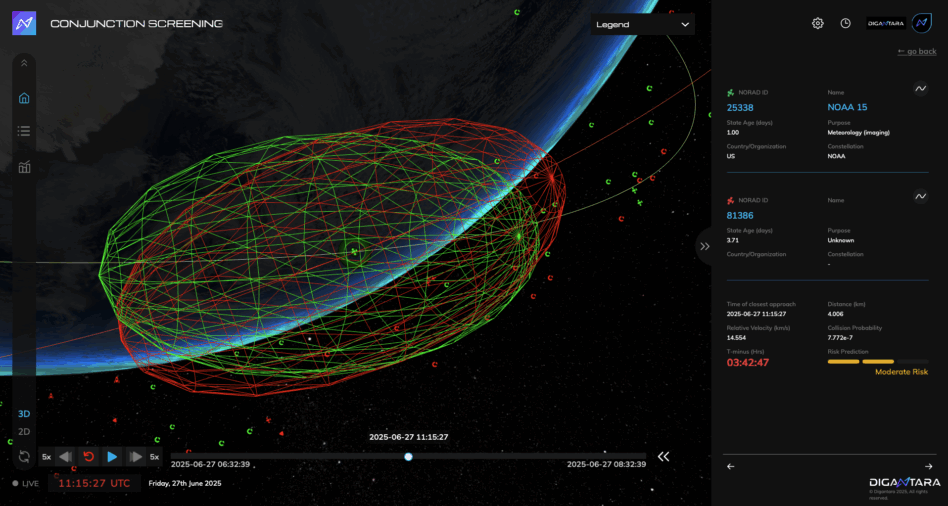
SEOPS Space is expanding its services to help customers quickly find and make contact with their satellites after launch, the company announced today.
The launch service provider is partnering with Digantara, an Indian space surveillance startup, to offer two months of free satellite tracking and collision avoidance assistance for the satellites it helps integrate. Customers can pay, if they wish, to continue the services beyond that timeframe.
Not like the others: Most launch service providers help customers go from Earth to space, including helping them book a rocket ticket and integrate the payload. SEOPS believes continuing to hold customers’ hands through the early phase of being on-orbit gives SEOPS a leg up on the competition.
Keep reading