



The Russians are causing problems again. It was reported this week that Russian spysats may have intercepted what were supposed to be secure comms from European GEO satellites several times during the past three years.
Lucky for Europe, Lithuanian optical comms startup Astrolight is working on a solution to keep space-based comms protected in the years ahead.
The company has three optical comms payloads flying on board customer satellites launching on SpaceX’s next rideshare mission, Transporter-16, according to Astrolight CEO Laurynas Mačiulis. These payloads will serve as demonstration flights for the future of Europe’s laser-enabled, space-to-ground secure communications.
“Once we get the signal that the customers are happy with it, we will invest more into building up the infrastructure,” Mačiulis told Payload.
Bundled up: Astrolight is working on multiple products to create a full suite of technologies for optical comms.
- The company is building an optical ground station in Greenland, which it expects to be operational by this summer.
- Astrolight is also upgrading its space-to-ground terminals based on lessons learned in these first flights.
Top down: While Astrolight is leading the development of the optical comms infrastructure, these projects are heavily funded by ESA’s ARTES ScyLight program for optical and quantum comms, which received nearly €1B in funding for the next three years at the latest ESA ministerial conference.
The ARTES program has funded—at least in part—Astrolight’s development of its optical ground station in Greenland, as well as the company’s next-gen optical satcom terminals.
ESA, the European Commission, and national governments across the continent are pushing hard on these technological advancements to ensure that nefarious actors can’t eavesdropp on future communications. ARTES funds, driven by national contributions, are being directed to projects in laser communications, quantum-encryption technology, and cybersecurity.
For optical communications, the idea is to make what Russia is doing on orbit near-impossible going forward.
“It would be almost impossible, or practically too difficult and not reliable, to try to block the [laser] links,” Mačiulis said. “That would make the comms very resilient and secure, so that the only other options that would be left would be to try to shoot down the satellite, which is always an option.”
Contrivian Launches New Product Bundling Amazon Leo & Starlink
Customers looking for satellite connectivity are often forced to choose between one provider or another. Those days are over.

Inside Austria’s Small But Mighty Space Ecosystem
Austria’s space industry is in the midst of a renaissance, with bigger funding deals and more startup activity.

HyImpulse Signs Launch Agreement with SaxaVord
The second suborbital flight of HyImpulse’s SR75 is expected to lift off from SaxaVord no earlier than Q3 2026.

Advanced Navigation Raises $110M Series C
Not many space companies want to reduce the world’s reliance on satellite infrastructure, but that’s the pitch that landed Australia-based Advanced Navigation a $110M Series C.
Projections on satellite numbers in orbit differ on the finer details, but—big picture—analysts agree that number will grow exponentially in the coming decade.
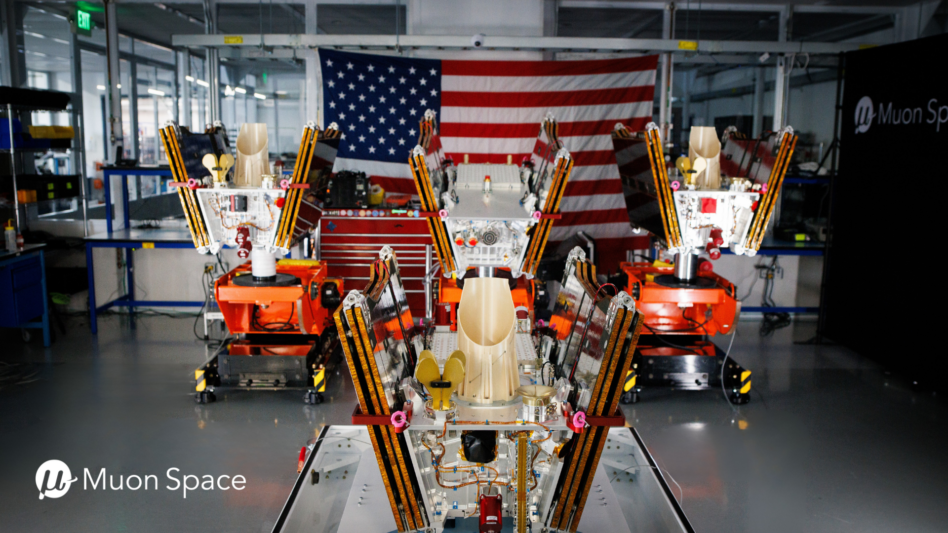
To keep up with booming demand, satellite manufacturer Muon Space announced a fundamental shift in its business strategy this week. The company plans to focus less on one-off satellite projects, and more on constellations.
In many ways, the strategy is already in action. The company has 20 satellites manifested to launch in the next 20 months, and expects more contracts to close in the coming year, according to CEO Jonny Dyer.
Keep reading