


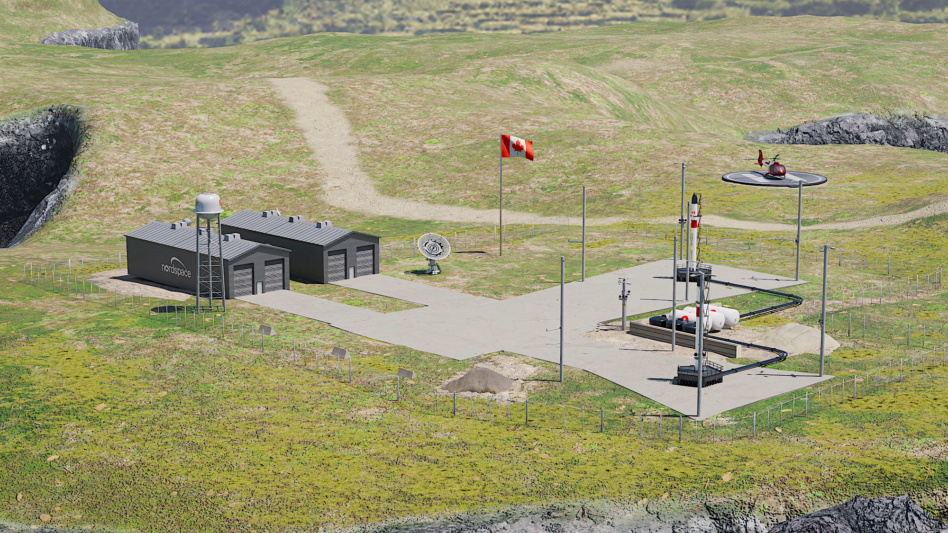
Canada will invest in a spaceport and three young rocket systems as part of its push to build up sovereign launch capabilities, officials announced Monday.
Citing defense needs, the country will spend $200M CDN ($146M) over the next 10 years to lease a launch pad at a startup spaceport, operated by Maritime Launch Services (MLS). Canada also revealed the first-phase winners of its Launch the North competition for sovereign launchers.
Start me up: MLS will receive the first $20M CDN ($14.6M) in government cash by March 31, as the lease is retroactive to 2025, the company said in a separate statement. “The timing of payments supports near-term cash flow as the spaceport advances toward operations,” MLS officials added.
Canada has two early-stage spaceports—MLS’ Spaceport Nova Scotia, and NordSpace’s Atlantic Spaceport Complex, in Newfoundland and Labrador. MLS has hosted a couple of suborbital spaceflights, while NordSpace hopes its first will fly this year.
Looking up: Canada also selected three unflown orbital-rocket systems to receive a conditional $8.3M CDN (~$6M) each in development funds:
- NordSpace’s Tundra,
- Canada Rocket Company’s R-1,
- Aurora-8 from Reaction Dynamics—an investor in MLS.
It’s the first of several phases planned as part of the $105M CDN ($76.7M) Launch the North initiative to send Canadian payloads aloft from Canadian soil by 2028. Defense promises ride on that program succeeding: Canada also said Monday it would join the ~18-month-old NATO STARLIFT initiative for short-notice alliance launches.
Northern niche: While Canada announced modest space spending Monday against recent nine-figure fundraises for companies in the EU and US, it’s all part of the plan. Last year’s federal budget committed $182.6M CDN ($133.5M) over three years for sovereign launch. And Canada has always been known for niche space spending—like for its Canadarm program, still doing robotic-arm work in orbit after ~45 years of spaceflight.
Artemis II Gives Airbus Hope For European Spaceflight
At the heart of Artemis II’s Orion spacecraft is the European Service Module (ESM), built by Airbus Defence and Space in Bremen, Germany, on behalf of ESA.
The State of Launch 2026
“You look at things like Golden Dome. There were a couple of capability gates there where you had to demonstrate capability by deadlines in order to be eligible to continue to compete,” Brian Rogers, Rocket Lab’s VP of launch, told Payload. “The constraints around launch can pick winners and losers there if you don’t have a way to get to space by a deadline.”
Transporter-16 Sends 119 Payloads to Orbit
The latest cargo train to orbit has left the station.
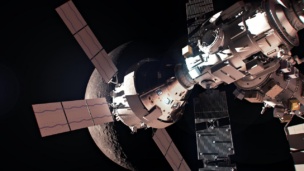
With Artemis Changes, Europe is Left Holding the Bag
ESA and European space primes were developing many of the key components of the planned lunar orbiting station.

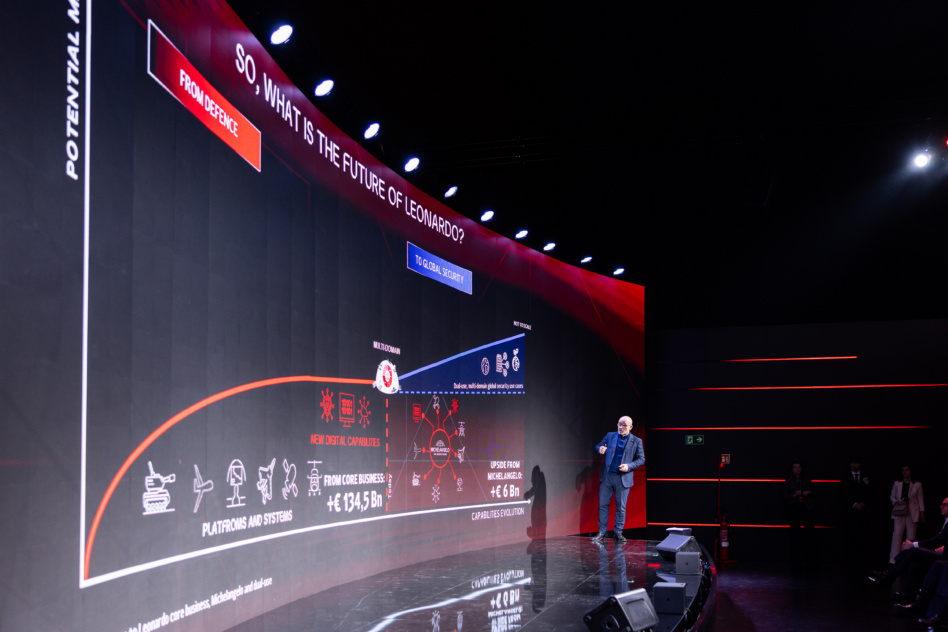
Leonardo is positioning itself to become a mass distributor of space-enabled missile defense shields.
The Italian A&D prime announced last week it would begin testing its Michelangelo Dome missile-defense system in Ukraine before the end of the year. But that’s just the beginning.
In the company’s longer-term plan also released last week, Leonardo laid out a larger vision to turn the company into a global security power player by 2030.
Keep reading