


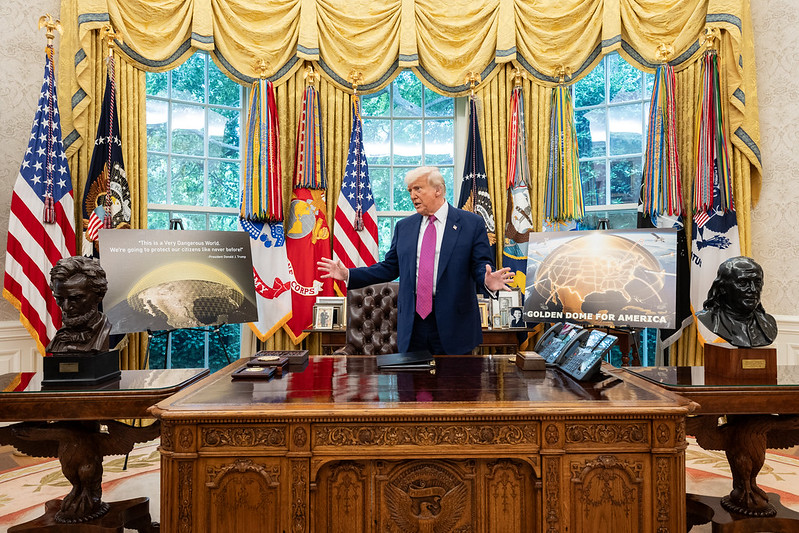
China warned the Trump administration’s Golden Dome missile defense system could kick off an international arms race in space, and urged the US to abandon the program.
The pushback from China follows an announcement from President Donald Trump on Tuesday that he had selected a plan for the system, appointed Space Force vice chief Gen. Michael Guetlein to lead the program, and included $25B for Golden Dome in a bill that has yet to pass Congress.
China’s position: China Foreign Ministry spokesperson Mao Ning said Wednesday that Beijing is “gravely concerned” about the project. She also alleged that putting interceptors into orbit is an offensive action that “violates the principle of peaceful use in the Outer Space Treaty.”
“The project will heighten the risk of turning the space into a war zone and creating a space arms race, and shake the international security and arms control system,” she said in a press briefing. “This is yet another ‘America First’ initiative that puts the US’s absolute security above all else.”
The orbital battlefield: As both China and the US ramp up militaristic tech and rhetoric in orbit, deterrence in the space domain is becoming more uncertain, according to a report released this week by the US Air Force China Aerospace Studies Institute.
The report studied 10 considerations for how effective deterrence would be. Of the 10, the report found that only two factors actually increase US deterrence of Chinese actions in orbit:
- Military balance: The US still has a more powerful military than Beijing.
- Space reliance: China is launching a number of satellites, so any action that makes space more hostile (including the creation of space debris through deliberately impacting a satellite) could hurt its own assets.
Next steps: The report recommended a few things to better deter China in orbit, including:
- Making US space assets more resilient;
- Increasing space domain awareness to better understand attribution and intent in orbit.
Planet Labs Extends Middle East Space Imagery Restrictions
Planet Labs just proved that dual use doesn’t necessarily mean equal priority.

Space One Rocket Fails Third Consecutive Flight
Japan’s dream of setting up reliable commercial access to orbit suffered a major setback this week.
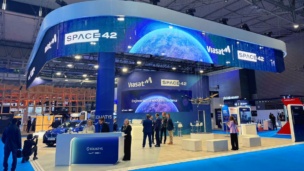
Viasat and Space42 Share Strategy for Equatys JV
The two companies cancelled a key roundtable at the Mobile World Conference, but Viasat CEO Mark Dankberg gave Payload an exclusive rundown.

Heritage Foundation Rates Space Force ‘Marginal’
“The Space Force is woefully short of the resources required to hold adversary space systems at risk, and is not ready to operate in a contested environment even though conflict with a major adversary will likely begin in space,” the report says. “While most of its current capabilities are highly effective in an uncontested environment, the Space Force lacks the capacity and capability to be ready for conflict in space.”

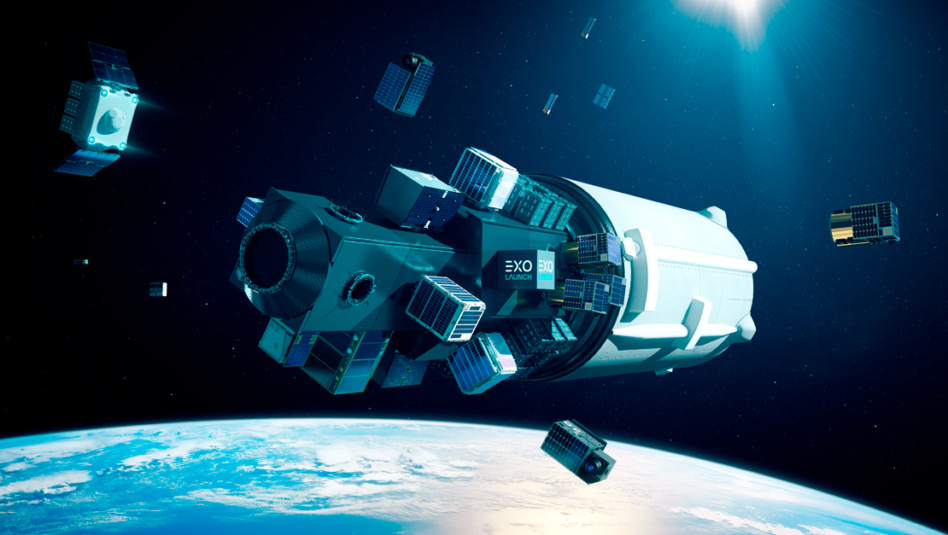
Exolaunch, the satellite launch integrator and deployer, signed multi-year launch contracts with SpaceX, extending Exolaunch’s small satellite launch capacity through 2028.
The contract extension continues a lucrative partnership between the two companies. Exolaunch deployed more than 400 sats from 20 SpaceX launches—including every Transporter and Bandwagon rideshare flight to date.
The deets: Exolaunch’s capacity buy reveals a booming satellite market, with more satellite operators choosing the company to support missions reaching more orbital destinations.
Keep reading