


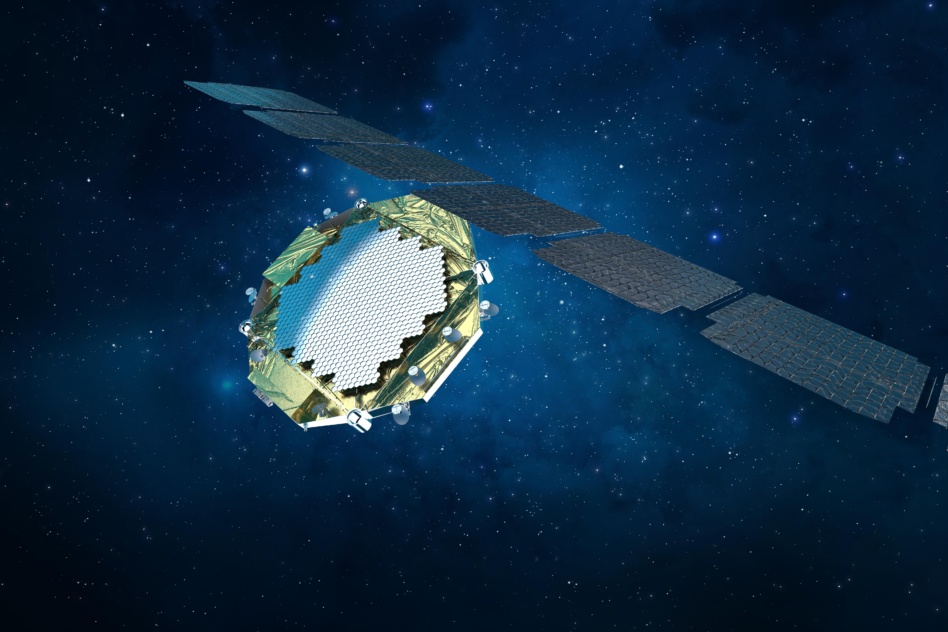
CNES has tapped a trio of companies to work together on demonstrating 5G direct-to-device (D2D) connectivity as part of its France 2030 vision.
Thales Alenia Space—a joint company between Thales and Leonardo—will lead the consortium, which also includes participation by Thales and Capgemini.
The mission: Under the U DESERVE 5G demo mission, the companies will launch a sat to LEO with a payload designed to send voice calls and data directly from space to a mobile device, bypassing ground stations entirely. As part of the demonstration, operators will run scenarios to test how quickly and smoothly devices can transition between satellite and terrestrial connectivity, according to a press release.
“This pioneering 5G-by-satellite project represents a major breakthrough for Thales and the telecommunications industry,” Alexandre Bottero, Thales’ VP of networks and infrastructure systems, said in a statement.
The consortium’s aim to develop 5G D2D solutions for non-terrestrial connectivity (NTN), Bottero added, is “enabling high-speed connectivity, even in the most remote areas, [and] laying the groundwork for the future of global communications.”
Zoom out: The broader France 2030 program is expected to invest €54B ($63.5B) in high-priority areas that are expected to drive significant economic growth. The national space strategy portion of the vision includes €1.5B ($1.8B) to prioritize supporting companies working on new tech, including sovereign rockets and satellite constellations.
Artemis II Gives Airbus Hope For European Spaceflight
At the heart of Artemis II’s Orion spacecraft is the European Service Module (ESM), built by Airbus Defence and Space in Bremen, Germany, on behalf of ESA.

Czech Radiation Chips on Artemis II Bring ISS Experience
With the sun at solar maximum, HERA serves as an instant warning system if a solar flare emerges.
The State of Satcom 2026
With SpaceX and Amazon storming into the satcom market, traditional players and startups alike are realizing they can’t compete directly with these growing giants—and are pivoting to find creative new ways to play in the crowded market.
With Artemis Changes, Europe is Left Holding the Bag
ESA and European space primes were developing many of the key components of the planned lunar orbiting station.


ICEYE Japan’s new CEO will be Yasuhiro Tsukahara—formerly the COO of Japan Space Imaging Corp., a satellite imagery and geospatial company.
The move, announced Friday, positions Finnish Earth observation company ICEYE, parent company of ICEYE Japan, to take advantage of the Japanese government’s plans to invest ¥1T ($6.8B) in the space sector over the next ten years as part of its Space Strategy Fund.
The government’s goal is to double the size of its space economy to ¥8T ($54.4B) by 2030, and ICEYE’s new CEO wants the company to be at the center of this growth.
Keep reading