



A young Indian sustainability startup is getting its feet wet in orbit during an international joint mission.
OrbitAID, a Bangalore, India-based startup building satellite servicing and sustainability tech, has signed a contract to supply ground fueling services and a refueling port to Aussie firm Space Machines Company in support of the upcoming MAITRI mission, a state-backed collaboration between India and Australia.
The deal is the first time OrbitAID has sold a unit of its docking and refueling port. Under the contract, the company will contribute two key services:
- Conducting the ground fueling campaign for the MAITRI mission before its launch on an SSLV rocket, targeted for late 2026.
- Supplying a unit of its docking and refueling port, making the sustainability-focused mission potentially refillable at some point in its future.
The story so far: OrbitAID was founded in India in 2021 with the long-term goal of building fuel stations in space to extend the life of satellites in orbit. It has raised $1.5M since its founding and counts the Indian state of Tamil Nadu as one of its investors—which proves the Indian government is all in on supporting inexpensive life extension technology, according to the company.
“India tends to keep their budget tighter, so they will be able to [get] a lot of bang for their buck,” Naresh Kannan, BD lead for OrbitAID, told Payload. “Instead of launching more and more satellites, we’ll still be able to keep the satellites alive.”
OrbitAID is developing four subsystems on its way to deploying orbital gas stations, Kannan said:
- A docking and refueling port
- A robotic arm
- A sensor suite
- A propulsion suite
The company employs 30 people, but it’s in the midst of a growth spurt and aims to get to a headcount of 45 in the next year.
Get going: OrbitAID is wasting no time in beginning work on the contract—according to Kannan, work will start in the next month, and delivery will take place in plenty of time for the late 2026 MAITRI mission launch.

Airbase Emerges From Stealth With $5M to Automate Spectrum Allocation
As demand for spectrum grows alongside the rising number of missions in orbit, a new startup is looking to ease management of this precious, finite resource.

Ramon.Space, Ingrasys Aim To Fly Prototype Orbital Data Center In 2027
There’s another entry in the space-data-center race.

Contrivian Launches New Product Bundling Amazon Leo & Starlink
Customers looking for satellite connectivity are often forced to choose between one provider or another. Those days are over.

Kayhan Space Launches Satcat Terminal
Business and liberal arts majors rejoice!
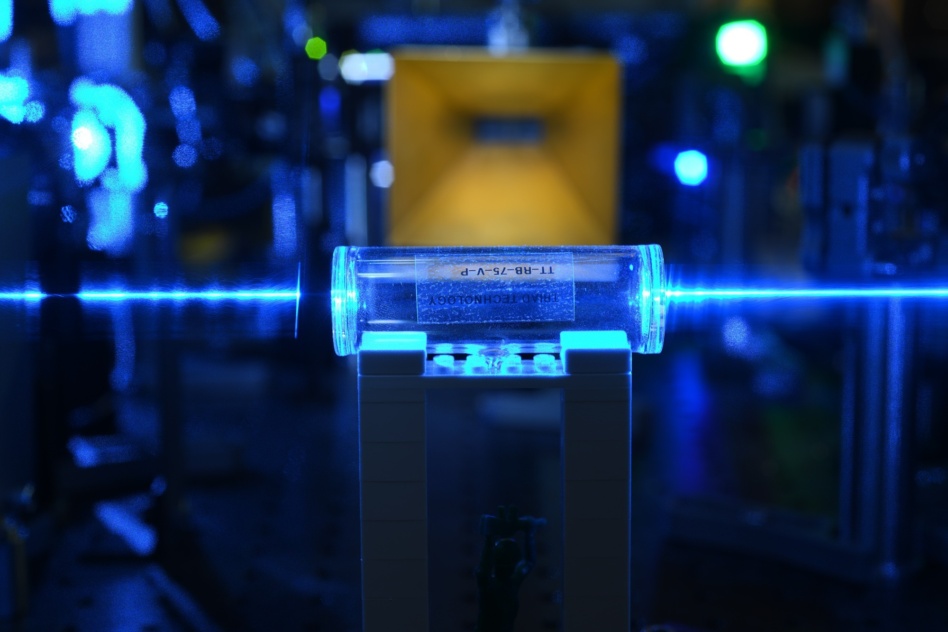
The Defense Advanced Research Projects Agency (DARPA) announced yesterday that it awarded Safran Federal Systems a contract to develop robust and reliable quantum sensors to improve the US military’s PNT architecture in multiple domains, including in space.
To effectively manage its troops and personnel across the world, the DoD says it needs extremely—and increasingly—precise ways to coordinate PNT. The department is actively developing quantum-based approaches to improve its capabilities.
For the uninitiated, quantum sensors use properties of quantum mechanics, like entanglement and superposition, to conduct measurements to an extremely high degree of accuracy—in theory. In practice, they’re very difficult to build and to make reliable, and are not deployed at scale today.
Keep reading