


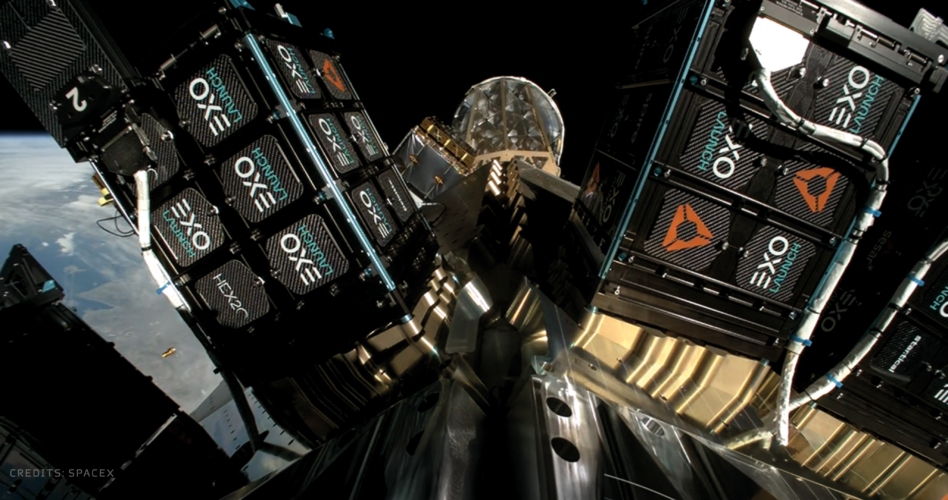
SpaceX is ready to bring customers on a sunset cruise.
In a new class of rideshare mission, scheduled for early next year, SpaceX will bring customer satellites to a unique sun-synchronous orbit over the Earth’s terminator—an orbit that allows satellites to scrutinize our planet at the moment of dawn and dusk.
Naturally, launch integrator Exolaunch is filling up the manifest. The German company, which has integrated sats on all of SpaceX’s Transporter and Bandwagon rideshare flights to date, will deploy 22 satellites on the Twilight mission. The payloads include six microsats, one ESA-funded tech demonstration, and over a dozen cubesats.
Exolaunch’s customers on Twilight include communications and navigation payloads, SAR antennas, and one in-orbit manufacturing payload. Like most Exolaunch missions, it’s a global affair, and customers hail from Bulgaria, Finland, Germany, Lithuania, Spain, Turkey, and the US.
Hasta la vista: The Twilight mission offers a unique set of pros and cons for satellite operators.
- On the plus side, the orbit is constantly in the sun, which is good news for payloads with large power requirements—as long as they can withstand the heat.
- On the other hand, the orbit covers the planet right at the moment when shadows are longest, so it’s not ideal for optical imagery applications.
While the dawn-dusk orbit has been a less common destination for launch providers in the past, Exolaunch officials believe the tide may be turning.
“We see a lot of demand for the next few years, flying to such orbits,” Exolaunch Head of Investor Relations Jeanne Allarie told Payload. “When customers realize that there are such missions available, they are likely to have more interest…[and] will tailor their satellites to these specific orbits.”
Terminal velocity: For many customers, the benefits of dawn-dusk orbit aren’t just nice to have, they’re non-negotiable.
“We’ve had satellites on our manifest for years, sometimes waiting for a dawn-dusk orbit…and it’s difficult to find any sort of rideshare, [so] people will just pony up the money to go dedicated,” Exolaunch VP of Launch and Engineering Connor Pollock told Payload. “Next time, there will be potentially a bigger market.”
It’s not just science missions that need to operate over the terminator. The access to 24/7 sunlight will be a huge driver of future demand, especially when payloads with higher power requirements become more common, according to Pollock.
“There’s a lot of press being made about data centers in space. They’re likely to be in dawn-dusk because of the constant sunlight,” Pollock said.

SEOPS Books Five Launches on Isar’s Spectrum Rocket
Isar Aerospace became the first European launch startup to reach orbit less than two weeks ago, and already the market is demanding more.

Viasat and Space42 Commit Up to $1B to Equatys Joint Venture
Space42 and Viasat agreed to formally establish Equatys, a shared satellite-and-ground-infrastructure company for D2D connectivity and advanced mobile satellite services.
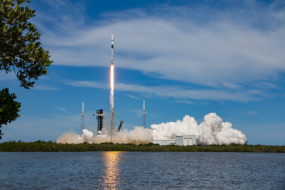
Maverick Books 10 Kepler Sats to Fill Excess Capacity On Portal’s Dedicated Launch
Everybody’s looking for launch capacity these days, and for those who have it, the phones are ringing off the hook.

Kuva Space Spots Illegal Poppy Farms from Orbit
Kuva Space released data today from a pilot program that demonstrated its ability to monitor illegal crop farming from space.

The Space Development Agency awarded $3.5B in contracts on Friday to continue building the Proliferated Warfighter Space Architecture (PWSA)—a missile-tracking, military-supporting, multi-layer constellation that’s been several years in the making.
The contracts are for the third tranche for the constellation’s Tracking Layer, which is responsible for all sensing from space. Each of the companies are responsible for delivering 18 satellites for a grand total of 72 in the tranche.
Drumroll, please…the awardees are:
Keep reading