


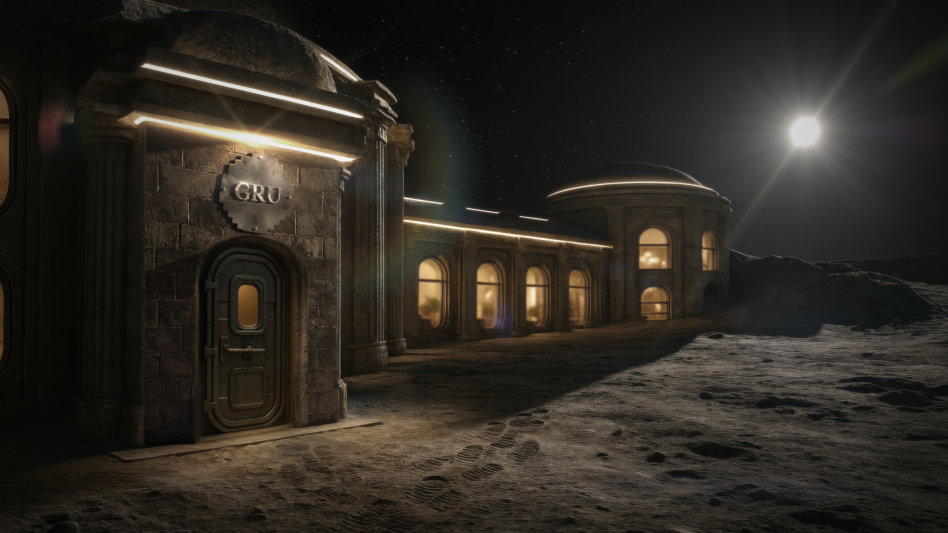
If you want to vacation on the Moon, you’ll need a lot of money—and patience.
Galactic Resource Utilization (GRU) Space announced today it would open applications for aspiring Moon tourists, who can place a $1M deposit to reserve a spot in the company’s planned lunar hotel. But they’ll have to wait to pack their bags. The facility aims to open its airlocks as early as 2032.
Meet GRU: GRU Space is a Y Combinator-backed startup founded in 2025 by recent University of California, Berkeley graduate, Skyler Chan. The company has received backing from people who have invested in SpaceX and Anduril, and was also selected as part of Nvidia’s “Inception Program for Startups”.
In a white paper shared with Payload, GRU Space outlined its aggressive strategy to set up a lunar hotel, only a few years after the Trump administration’s 2030 target date for NASA to construct “initial elements” of a lunar base.
GRU Space’s plan includes three missions to de-risk technologies, and to set up its first hotel.
- Mission 1: In 2029, GRU Space plans to send a ~10 kg payload, aboard a CLPS lander to the lunar surface to test two core technologies:
- An inflatable structure with an air-tight bladder, structural fabric layer, micrometeoroid shielding layers, and an external thermal/UV cover—to demo the material that’s expected to form the first iteration of the hotel.
- An in-space resource utilization demo, which aims to validate the company’s process to turn lunar regolith into Moon bricks using geopolymers. The idea is that one day the inflatable lunar hotel will be surrounded by these lunar bricks, offering greater protection from the harsh lunar elements.
- Mission 2: In 2031, GRU Space aims to land a much larger payload—hundreds of kilos—on a next-gen CLPS-sized lander. The lander would deploy a subscale inflatable structure inside a “lunar pit”, which is a deep hole that may have warmer temperatures under the surface. Mission 2 will also send a scaled-up version of its ISRU tech.
- Mission 3: In 2032, GRU Space wants to open its doors. The mission, tentatively scheduled for that year, aims to send the first version of its hotel, manufactured entirely on Earth, aboard a heavy-lift lunar lander. The inflatable structure will be equipped with full life-support systems, and would be designed to last on the lunar surface for a full decade. This iteration would be large enough to support four guests at a time.
- Missions 4 and beyond: After starting operations, GRU Space plans to scale up its hotel, and use its ISRU technology to build a rigid outer structure around the inflatable lunar hotel—in the Beaux-Arts style, no less—to provide more protection for tourists inside, while reducing material requirements of the inner inflatable structure.
Reality check: While the company’s vision for lunar tourism is a rosy one, where guests can partake in lunar rover excursions or potentially play a round of golf, according to Chan—the execution also relies heavily on factors outside of its control.
GRU’s roadmap relies on decreasing launch costs, regular and reliable crewed flights to the lunar surface, a favorable regulatory environment, and supporting technology like lunar power and lunar comms—all of which are in various stages of development. This is a moonshot after all.
“This is a big bet. We’re not going to sugarcoat it. We don’t hide it. We’re very proud of it, actually. We wear it on our sleeves,” Chan told Payload. “With that being said, if we’re successful, this is literally going to be the most impactful thing that has happened in human history.”
Correction: This article was updated to correct the spelling of Galactic Resource Utilization Space.

CLPS Companies Excited For NASA’s ‘Opportunity Bomb’ Lunar Plan
Last week, NASA laid out a vision for a lunar base that’s built and supplied through monthly uncrewed lunar landings, with launches beginning as soon as next year.It’s no surprise that CLPS companies are raring to go.
Phantom Space Acquires Thermal Management Technologies
Thermal Management Technologies builds advanced satellite thermal components for in-space applications.
Artemis II Is On The Way To The Moon
NASA astronauts Reid Wiseman, Christina Koch, and Victor Glover, plus Canadian Space Agency astronaut Jeremy Hansen, are on board—with Koch and Glover poised to make history as the first woman and person of color to head to the Moon, and Hansen as the first non-American.
Exclusive: In-Orbit Manufacturing Startup Dispatch Emerges from Stealth
Dispatch emerged from stealth this week with $500,000 in funding to build an uncrewed space station that will host manufacturing infrastructure on orbit

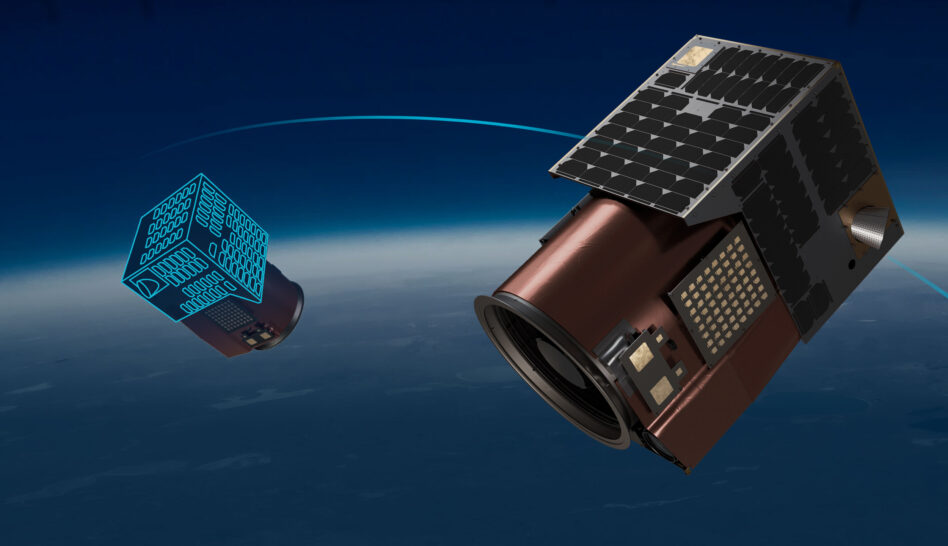
Portugal is getting two brand-new eyes in space.
This morning, Satellogic ($SATL) announced that it is building two satellites for a Portuguese government agency, the Centre of Engineering and Product Development (CEiiA, to use its Portuguese acronym). CEiiA paid $18M for a speedy delivery on its new tech.
The two satellites will be part of the Atlantic Constellation, an initiative that Spain and Portugal are collaborating on that will put eight small EO satellites in orbit.
Keep reading