



Jared Isaacman is just over 60 days into his tenure as NASA administrator, and he’s already getting rave reviews from one space leader on Capitol Hill.
Rep. Mike Haridopolos (R-FL), who chairs the House space subcommittee, commended the entrepreneur-turned-astronaut-turned-NASA-chief for sharing the space agency’s mission with the public—and energizing a NASA workforce in which morale dipped during a rough 2025 marked by staff reductions and proposed cuts by the Trump administration.
“Jared Isaacman understands the whole world—not just political and government, he understands industry as well,” Haridopolos told Payload. “I see the energy from NASA, and the excitement in the building, when you have a charismatic leader who wants to make sure America is at the cutting edge to beat China.”
Haridopolos also talked about support for space in the White House, what he’s hearing from constituents on Florida’s Space Coast, and the timeline for the Artemis II launch to the Moon.
This transcript has been edited for length and clarity.
What’s your reaction to Jared Isaacman’s tenure as NASA chief so far?
I love how he’s communicating with the public about the mission of NASA, and why NASA is vital to America’s interests. I have been in constant communication with him since he was nominated by the president. His [Isaacman’s] unique background in the private sector is very much welcomed, and he always wants to push the envelope.
One of the challenges we face is [former NASA Administrator] Bill Nelson was a status-quo person. Jared Isaacman understands the whole world—not just political and government, he understands industry as well. I see the energy from NASA, and the excitement in the building, when you have a charismatic leader who wants to make sure America is at the cutting edge to beat China. We feel that NASA is in a really strong position.
I’ve never seen the support so high as I see it today for NASA—when you see a dynamic leader and a president that’s backing him, with not only the idea of the US being No. 1 in space, but also backing it up with real money.
The White House proposed significant budget cuts for NASA. You see the president still backing the space agency financially?
As with any presidential administration, they’re going to make proposals, then it’s Congress’ job to have power of the purse. I’ve been in constant communication with the White House and OMB. Within the CJS budget, we recognized that we need to stay focused on what NASA was designed to do, and that is to be No. 1 in space.
What they did get rid of is the social programs, but they kept the science mission in place. If people want to get involved in social experiments, that’s for the private sector or charity programs. It’s not NASA’s core mission. We are in a space race like we haven’t seen since the 1960s, and have to put all resources towards that.
Can you give an update on Florida’s Space Coast, and what you’re hearing from constituents?
The energy is incredibly high. There have been thousands of jobs created in the private sector. Brevard County [the home of Kennedy Space Center] compared to 10 or 12 years ago is a different place.
We’ve been able to get programs in place so high school students can get technical certifications to go right to work in private and public sector space jobs. Students learn basic skills to go right from high school, and get set up for a career where the starting salary is $80,000 to $90,000. With Starship coming soon, there will be even more jobs and opportunities.
Are you at all worried about Artemis II launch delays stretching past March?
I’m incredibly optimistic. Our No. 1 mission is safety-first.
There are always going to be challenges with hydrogen leaks. These rockets aren’t like the Falcon 9, where you launch every few days. And there will be four astronauts on the top of this rocket, so we won’t take any chances.
I have no problem whether it’s waiting until March or April—or whatever it may be—because we have to get this right. We have to minimize the risk. Three or four days before the [February] launch [window], I had a conversation with Jared Isaacman. I said, “Jared, if there’s any doubt, let’s wait till March.”
We’re going to launch when conditions are optimal. This has got to be a picture-perfect launch. I have no problem being patient, because it’s of paramount importance on so many fronts. However long it takes for them to be safe is what I’ll be comfortable with.

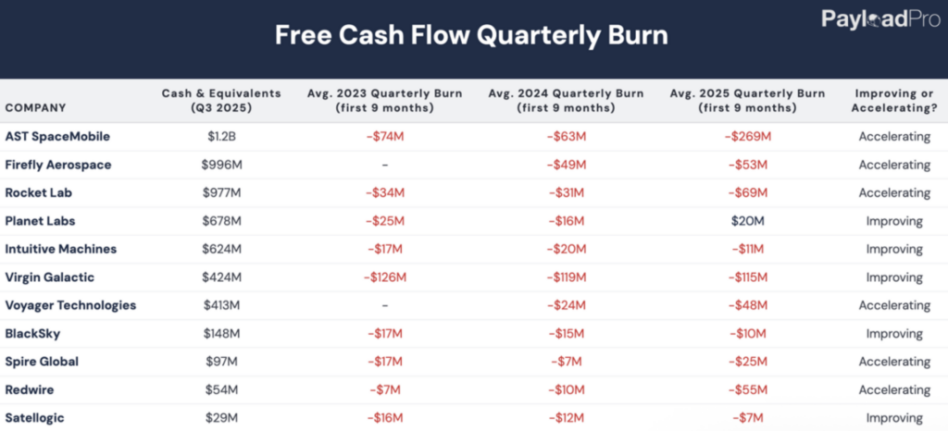
When Space Businesses Should Accelerate Cash Burn, When to Improve
Space businesses continue their burn streak.

Revenge of the Bad Businesses: Refining the Space Hardware Investing Thesis During This Year’s Software Rout
The investor playbook has flipped: In the era of AI, Asset-light, high-margin good businesses (software) start to look bad, while greasy, capital-intensive, bad businesses (hardware) now look good. That’s just as true in space as anywhere else.
Kepler Plots European Expansion with NanoAvionics Deal
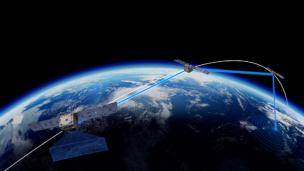
Kepler Communications and Kongsberg NanoAvionics have teamed up to put on a laser show for Europe.
OroraTech’s New Exec Plans to Step on the Gas
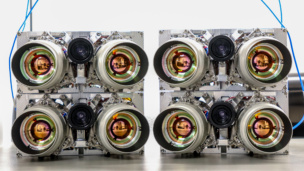
With Zuleta as a catalyst, OroraTech aims to grow to a few hundred sats in the coming years, with the aim of providing worldwide coverage, 15-minute revisit rates, and resolution as low as 50 m.

This content is restricted to subscribers
The post When Space Businesses Should Accelerate Cash Burn, When to Improve appeared first on Payload Pro.
Keep reading