


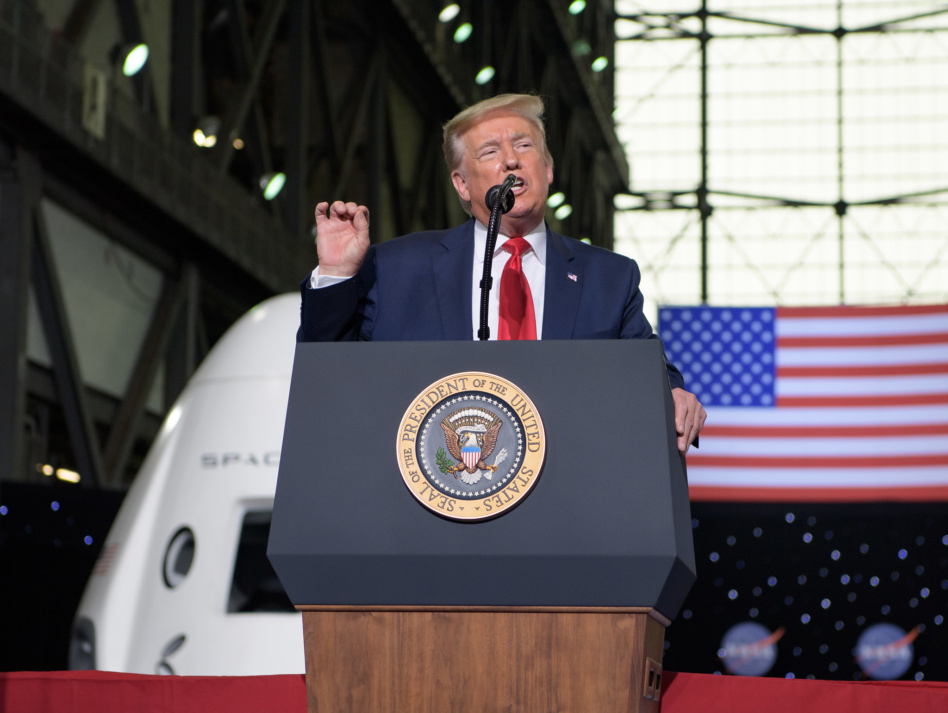
Incoming President Donald Trump has already tapped a number of people to lead federal departments and agencies, including a few who will have a hand in the next administration’s space policy.
An important note: Each of these positions has staffers and offices beneath them who are laser-focused on space and will drive most of the policy work. However, history proves that interest and commitment can trickle down—just look at Commerce Secretary Wilbur Ross’ interest in space and attendance at the Space Symposium that coincided with the agency taking an expanded role in space under Space Policy Directive 3.
FCC: On Monday, Trump tapped Brendan Carr to be chairman of the FCC. Carr, who currently serves as a Republican member of the commission, authored a chapter in Project 2025, the Heritage Foundation policy book that Trump has repeatedly disavowed but is widely seen as a guide to his administration’s policy.
The Project 2025 chapter on the FCC, which includes a mandate to “advance America’s space leadership”—and specifically highlights work being done by SpaceX and Amazon.
“One of the most significant technological developments of the past few years has been the emergence of a new generation of low-earth orbit satellites like StarLink [sic] and Kuiper,” he wrote. “The FCC should expedite its work to support this new technology by acting more quickly in its review and approval of applications to launch new satellites.”
The agency is in the midst of considering a few requests from SpaceX, including an ask submitted last month to modify its second-generation Starlink systems to deliver faster broadband.
State: Sen. Marco Rubio (R-FL) has been nominated to serve as Secretary of State, overseeing an agency that can leverage America’s space capabilities as a soft power tool and build coalitions in orbit. While representing the Space Coast the senate, Rubio took a handful of related policy actions:
- Introducing a bill to maintain US leadership in space by taking steps to increase investments in spaceports
- Sending a letter sent to the FAA calling for a quicker regulatory approval process
- Introducing a bill to help the US win the competition with China in space
- Putting forward a piece of legislation to establish a Space National Guard
DoD: Trump has also selected Pete Hegseth, a veteran and Fox News commentator, to serve as defense secretary. Hegseth, who has not made many public comments about the national security space enterprise, has been a vocal advocate of cutting diversity initiatives in the military—and removing high-ranking officers who have championed them. Hegseth has recently come under fire for a sexual assault accusion. Though Hegseth has denied the claims, with his lawyer calling it a consensual encounter, he admitted to paying the accuser under a “civil confidential settlement agreement.”
More broadly, Project 2025 has called for the Space Force to maintain offensive capabilities (rather than relying on defense), declassify programs where possible to boost cooperation with the commercial sector, and consider establishing a Space Force Academy to recruit promising young students.
What’s next: Trump’s picks for the Pentagon and State Department will both need to be confirmed by the Senate early next year. We’re also still waiting to find out who will fill a number of important space jobs in the next administration, including NASA administrator, Air Force secretary, and executive secretary of the National Space Council.
There’s also the opportunity for people in non-space positions to potentially influence the administration’s policy in orbit. For example, SpaceX CEO Elon Musk will serve in Trump’s government as a co-leader of the Department of Government Efficiency.

Rep. Mike Haridopolos On Cutting Red Tape, Passing NASA Bill
“We don’t have the budgetary ability to do everything and now—unlike 10 years ago—there is a business case to be made.”
Congress is Considering a NASA Authorization Bill—Again
Recently, it’s become an annual exercise for lawmakers, and a stated priority for committee leaders past and present. However, past bills have stalled and failed to codify the space agency’s missions.

Report: How to Better Deter Russia in Orbit
While China is making all the headlines in Space Race 2.0, a DC think tank is cautioning policy makers not to forget about the threat posed by Russia in orbit.

Senators Introduce Bills on Space Workforce, Regulations
The NASA Talent Exchange Program Act would boost collaboration between the space agency and industry—by letting staff from each side walk a mile in the other’s shoes.

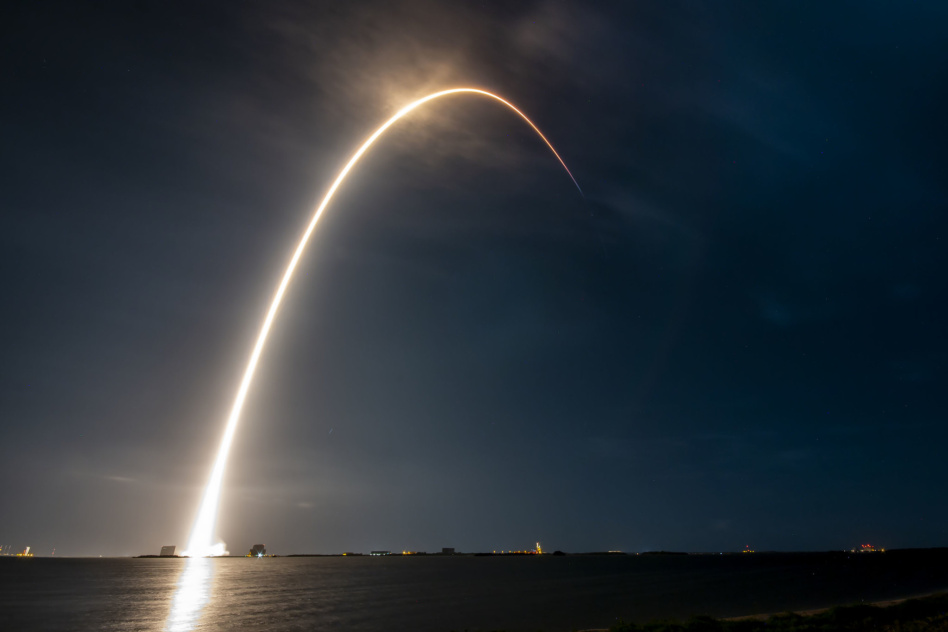
SEOPS, a provider of responsive launch and payload integration services, signed a partnership with Axient Systems to provide launch services to European customers, the companies announced today.
The partnership’s first launch will be an ISR satellite for the Dutch military, which is expected to lift off as early as 2027.
Stairway to heaven: The SEOPS partnership is the latest piece in the puzzle for Axient Systems’ goal to offer end-to-end mission services to EU customers.
Keep reading