



Germany’s HyImpulse Technologies announced a launch service agreement to begin flying from SaxaVord Spaceport, in the Shetland Islands.
The suborbital flight, which is expected to lift off in Q3, is the latest in a broader, European-wide push for sovereign launch capabilities much closer to home than French Guiana, which requires many of Europe’s launchers today—including Arianespace and Avio—to cross an ocean before passing the Kármán line.
Location, location, location: SaxaVord, located above the northern tip of the Scottish mainland, is working to complete three launch pads to host European launchers.
The spaceport also has installed a tracking and telemetry system, mission control center, and integration hanger, and has received a license from the UK Civil Aviation Authority for up to 30 launches per year.
For the UK—which has signalled its plan to invest ~£2.8B ($3.7B) in its space sector by 2030—SaxaVord plays a central role in attracting international space business to its shores.
“Assured access to space means greater resilience for our space sector, new skilled jobs, and a stronger signal to investors that Britain is serious about its place in the new space economy,” UKSA director of launch Matt Archer said in a statement. (UKSA will be absorbed into the UK’s Department for Science, Innovation and Technology on April 1.)
Common wealth: For HyImpulse, the company says its mission at SaxaVord stands to strengthen its growing presence in the UK. The company’s 90 employees are spread across three sites—two in Germany, and one in Scotland.
The expected launch of SR75 this year aims to build on a the successful launch of HyImpulse’s hybrid suborbital system from Australia’s Koonibba Test Range in 2024, which validated its single-stage, 75kN engine for the first time.
- The vehicle uses a mix of paraffin-based solid fuel and liquid oxygen, and can carry up to 250 kg to an altitude of 200 km.
- The rocket aims to significantly improve the cost equation for suborbital hypersonic testing, atmospheric research, and microgravity experiments, as SR75 is 40% cheaper than traditional propulsion systems, according to HyImpulse.
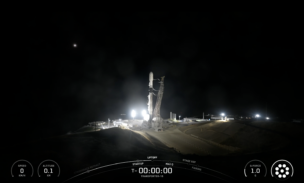
Transporter-16 Sends 119 Payloads to Orbit
The latest cargo train to orbit has left the station.
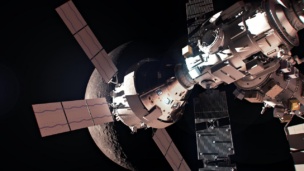
With Artemis Changes, Europe is Left Holding the Bag
ESA and European space primes were developing many of the key components of the planned lunar orbiting station.
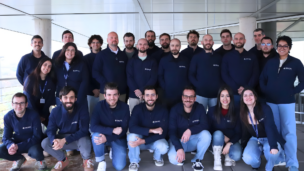
Arkadia Space Secures €14.5M to Develop New Biprop Engine
Spanish propulsion startup Arkadia Space just secured a stamp of approval from the European Investment Council.
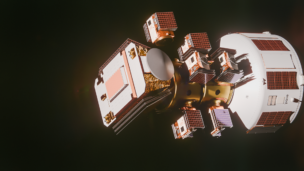
PAVE Space Raises $40M for In-Space Propulsion Tech
PAVE’s propulsion systems rely on a storable rocket bipropellant, which aims to make launch operations simpler and more cost-effective, compared with cryogenic fuels.

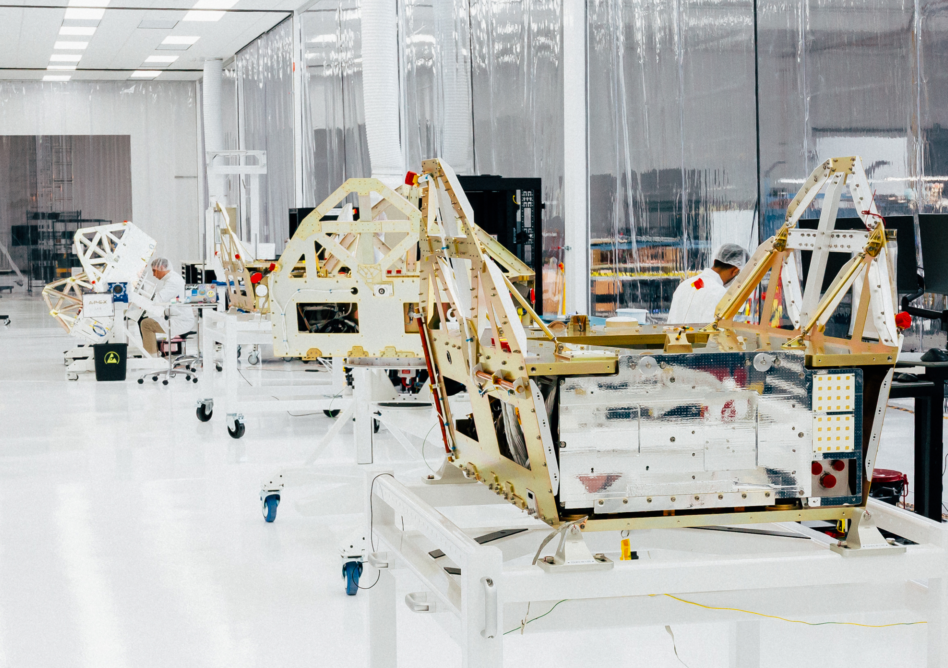
Apex is branching into the Japanese market, with a new contract announced this morning.
Under the contract, the Japanese NEC Corporation will buy one of Apex’s Aries satellite buses for a communications demo mission next year.
“In today’s rapidly expanding space sector, speed directly correlates with project success,” Yasushi Yokoyama, GM of NEC’s satellite constellation department, said in a statement. “By fusing NEC’s long-standing expertise in advanced mission payload design with Apex’s standardized, innovative platform, we will redefine the speed of development.”
Keep reading