


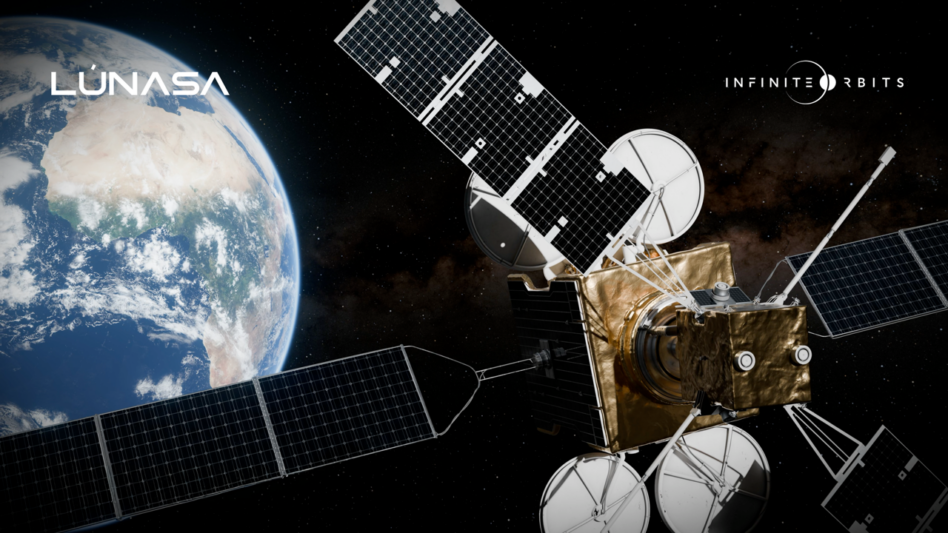
French in-orbit servicing startup Infinite Orbits is on a buying streak.
Less than one week after the company announced the purchase of Luxembourg autonomy startup LMO, Infinite Orbits (IO) announced the acquisition of UK-based Lúnasa Space—a company developing autonomous navigation tech for RPO and ISAM applications.
The deal provides Infinite Orbits with a stronger technical backbone for future life-extension missions in orbit—most notably its GEO mission for SES in 2027—and gives the French company a foothold in the UK.
Highland rules: In November, Infinite Orbits closed a €40M ($46.8M) funding round to accelerate its expansion across Europe. These two acquisitions make the roll-up strategy behind the fundraise crystal clear.
“The ambition is to become THE—with the big T, big H, [and] big E—European player of in-orbit servicing,” Infinite Orbits CEO Adel Haddoud told Payload. “In-orbit servicing is one of the most capitalistic segments of space, and we believe they’re going to be a few winners…at some point consolidation would happen.”
Infinite Orbits isn’t just buying up the competition, however. Haddoud told Payload that the strategy was to increase Infinite Orbit’s capabilities, and better serve the growing market for in-space satellite inspection and life-extension missions.
While Infinite Orbits has focused almost exclusively on life-extension missions in GEO—where Haddoud says ~90% of in-space asset value flies—Lúnasa has been building autonomous, vision-based navigation systems for applications in LEO.
With Lúnasa under its wing, Infinite Orbits can increase its pool of possible missions, and begin to take on projects for the UK government. Infinite Orbits also plans to leverage Lúnasa’s in-house testing and assembly facilities, and to move away from using third-party alternatives.
Help wanted: Both companies’ officials expect the acquisition to increase the speed at which Infinite Orbits closes deals worth eight or nine figures, according to Lunasa CEO Amin Chabi.
“We are looking at adding more talent [and] more opportunities into the UK, [and] building infrastructure, attracting and catalyzing investments into the UK through private funding,” Chabi said. “So this is a new trajectory for us, which is—again—onwards and upwards.”
PAVE Space Raises $40M for In-Space Propulsion Tech
PAVE’s propulsion systems rely on a storable rocket bipropellant, which aims to make launch operations simpler and more cost-effective, compared with cryogenic fuels.

Airbase Emerges From Stealth With $5M to Automate Spectrum Allocation
As demand for spectrum grows alongside the rising number of missions in orbit, a new startup is looking to ease management of this precious, finite resource.

Ramon.Space, Ingrasys Aim To Fly Prototype Orbital Data Center In 2027
There’s another entry in the space-data-center race.
Contrivian Launches New Product Bundling Amazon Leo & Starlink
Customers looking for satellite connectivity are often forced to choose between one provider or another. Those days are over.


Military space capabilities played a critical role in the early stages of Operation Epic Fury, according to the Pentagon’s top general.
Chairman of the Joint Chiefs Gen. Dan Caine said Monday that US Space Command used “non-kinetic effects” to disrupt Iran’s infrastructure in space, hindering their ability to operate in the first hours of the conflict, which began on Feb. 28.
“The first movers were USCYBERCOM and USSPACECOM,” Caine said at a press conference. “Coordinated space and cyber operations effectively disrupted communications and sensor networks across the area of responsibility, leaving the adversary without the ability to see, coordinate, or respond effectively.”
Keep reading