


Space resources startup Interlune announced yesterday that its first customers are ready to buy its Moon-mined Helium-3.
The US Department of Energy Isotope Program (DOE IP) agreed to purchase three liters of the lunar-extracted Helium-3 for delivery no later than 2029. Interlune also unveiled a new commercial customer: Maybell Quantum. Maybell, a quantum computing infrastructure company building ultra-cool refrigerators to keep quantum devices at near-absolute zero temps, agreed to purchase thousands of liters of Helium-3 for annual delivery between 2029 and 2035.
Big bucks: Helium-3 is one of the most expensive resources on the planet—selling for about $20M per kg, according to Interlune CEO Rob Meyerson.
The exorbitant price tag is driven by both scarce terrestrial supply, and increasing demand.
- Terrestrial Helium-3 is a nuclear energy byproduct with an extremely limited global supply. In the US, it’s been rationed by the DOE IP since 2010 due to the critical shortage.
- On the demand front, as quantum computing gains steam, there’s a growing need to keep quantum systems cold—Kelvin cold. Helium-3 is a vital resource in quantum refrigerators.
“We see the demand growing beyond anything that we could produce on Earth,” Meyerson told Payload. “[Helium-3] is really the only thing in the universe that’s priced high enough to warrant going to space, and bringing it back to Earth to sell.”
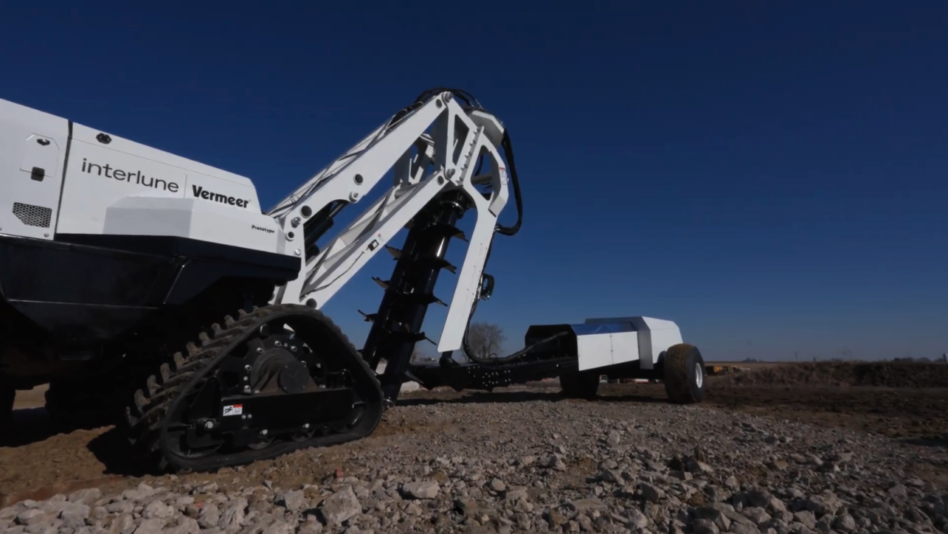
See it to believe it: The company also unveiled the full-scale prototype of its lunar excavator yesterday.
Built in partnership with Vermeer, the industrial equipment manufacturer, Interlune’s excavator is designed to suck up 100 metric tons of lunar regolith per hour. The excavator will then remove lunar rocks, crush the regolith down to dust, and use a gaseous process to separate out Helium-3.
One small step: Getting from the prototype stage to the delivery of product in under five years will require a lot of work, and not just for Interlune.
The company’s business model depends on a lot of supporting infrastructure standing up in parallel—launchers to send Interlune tech to the Moon, landers to bring excavators down to the surface, and most importantly, return craft to deliver Helium-3 to Earth.
What’s next: Interlune aims to send a prototype version of its extractor to the Moon in 2027 to demonstrate its ability to find and isolate Helium-3. By 2029, Interlune wants to build a pilot plant on the lunar surface to begin processing and shipping Helium-3 back home. In the 2030s, the company aims to send excavators to streamline its Moon operations and begin filling larger orders.
From there, Interlune wants to take up as much of the lunar resource pie as it can. Helium-3 would be its high-value, go-to-market product for fueling its expansion into lunar resource markets—including lunar water and rocket fuel.
“This is Interlune’s way to build that in-space economy, which we’ve all been talking about for decades,” Meyerson said.
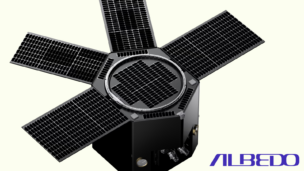
Albedo Ratchets Up the Power for its Second VLEO Flight
Albedo announced a new VLEO capable satellite bus today that’s aiming to fly the company’s second orbital mission in 2027.
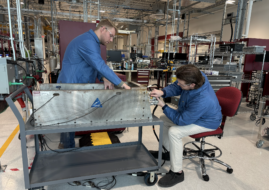
Moog’s “Tip to Tail” Contributions to the Artemis II Flight
“Moog supplies more than 100 different pieces of hardware that go from tip to tail of the rocket, [and] into the Orion system.”
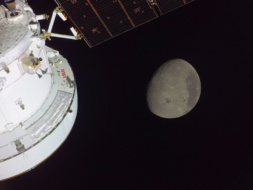
Artemis II Gives Airbus Hope For European Spaceflight
At the heart of Artemis II’s Orion spacecraft is the European Service Module (ESM), built by Airbus Defence and Space in Bremen, Germany, on behalf of ESA.
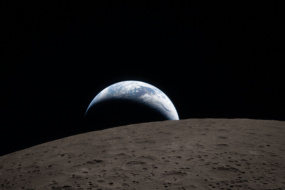
Czech Radiation Chips on Artemis II Bring ISS Experience
With the sun at solar maximum, HERA serves as an instant warning system if a solar flare emerges.

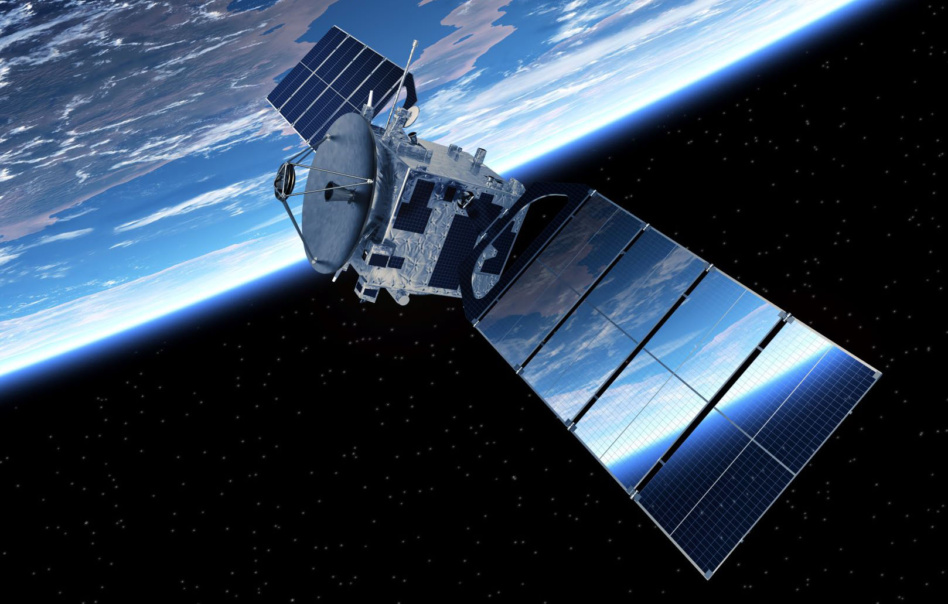
Space solar power startup mPower Technology closed a $21M Series B to help scale production of its solar modules.
Razor’s Edge Ventures led the round, which also included participation from Shield Capital. The funding allows mPower to expand its automated manufacturing line for its flexible solar array tech as well as grow its workforce, CEO Kevin Hell told Payload in a statement.
“The entire space ecosystem is on the cusp of transformational growth, and nothing happens in space without power. It is a critical enabler,” Mark Spoto, managing partner of Razor’s Edge, said in a statement. “The confidence we have in mPower is based on real-world proof: Its solar solutions are in orbit, and delivering value now.”
Keep reading