


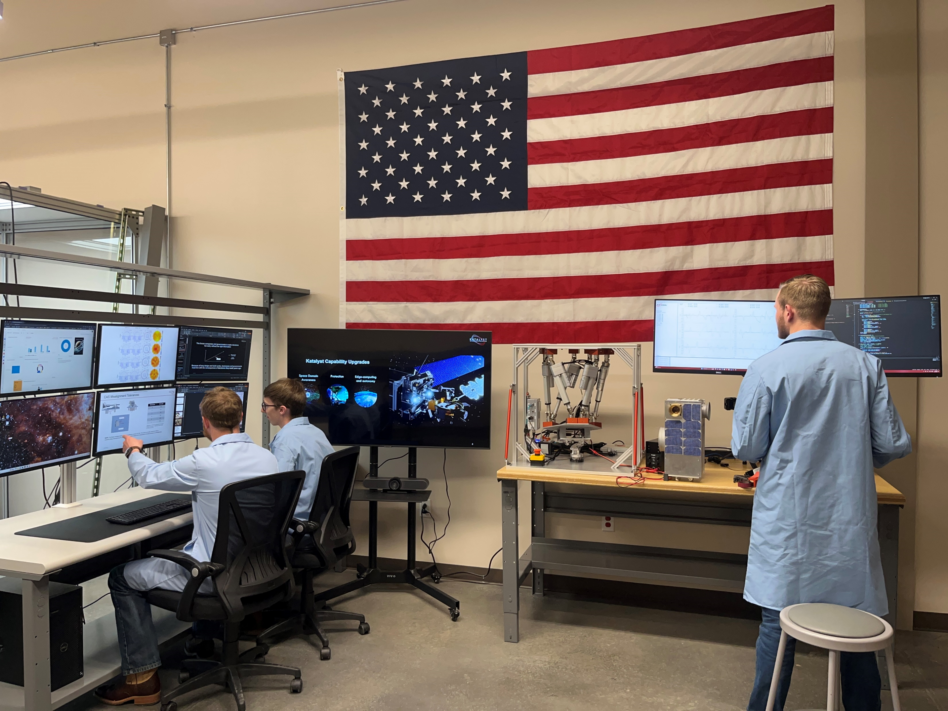
The fastest way to give the military better assets in orbit is to upgrade what’s already there, rather than embarking on a lengthy process to design, build, and launch new sats.
At least, that’s the thesis behind Katalyst, which is developing the technology to enhance existing satellites. The startup has won a government contract to demonstrate a modular sensor package that will add space domain awareness capabilities to a US military satellite.
Katalyst has been contracted by the Defense Innovation Unit to build and test an optical sensor module, called SIGHT, which can be affixed to the launch adapter ring of a Space Force satellite.
A program called Robotic Servicing of Geosynchronous Satellites, a partnership between DARPA and Northrop Grumman’s SpaceLogistics subsidiary, is expected to launch a mission in 2025, carrying multiple satellite-servicing payloads onboard Northrop’s Mission Robotic Vehicle. Katalyst is in talks with Northrop Grumman to fly SIGHT as a payload on that mission, which could use its robotic arm to attach the Katalyst module to the target spacecraft.
The goal: The mission aims to give that spacecraft the vision necessary to serve as a training platform for Space Force Guardians, who currently rely on ground-based sensors during maneuvering exercises. The project is backed by the Space Force’s National Test and Training Complex.
“They don’t care about ISAM,” Katalyst CEO and founder Ghonhee Lee told Payload of his Space Force customer. “They need high quality sensors on orbit, and we can upgrade existing satellites faster” than procuring and launching new spacecraft over a years-long timeline.
This mission is “validating the value proposition as much as the technology,” Lee continued.
The upgrade Economy: “Everyone wants to upgrade their satellites, no one wants to invest in implementing these USB [style] ports and systems,” Jason Herman, Katalyst’s VP of strategy, told Payload. To meet that need, Katalyst built a system to attach a ~10 kg sensor-filled module with its own solar panels and communications system onto an orbiting spacecraft.
You could call the first product a “Ring Doorbell” for satellites, but the 13-person company is contemplating more sophisticated sensors and other capabilities, like adding edge computing to spacecraft.
Capabilities gap: This mission relies on Northrop’s spacecraft and a robotic arm built by the Naval Research Lab to get Katalyst’s unit in the right place, but the company is also working with Motiv Space Systems, a firm developing its own robotics, as part of this project. In addition, Katalyst is partnering with OTV makers as it shifts its focus to its upgrade modules, not the infrastructure required to install them.
This story has been updated with additional details about the contract and mission plan.
Exclusive: In-Orbit Manufacturing Startup Dispatch Emerges from Stealth
Dispatch emerged from stealth this week with $500,000 in funding to build an uncrewed space station that will host manufacturing infrastructure on orbit
Infinite Orbits Expands into the UK with Lúnasa Acquisition
French in-orbit servicing startup Infinite Orbits is on a buying streak.
Spaceium Tests Robot Gas Attendant Piece in Orbit
They flew an actuator on SpaceX’s Transporter-15 mission in November that—when tested in orbit—achieved a 0.003-degree rotation accuracy.
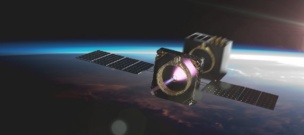
Momentus and NASA Will Collab on RPO Demo
The mission will test technologies including multispectral satellite inspection, formation flying, and WiFi-based inter-satellite links.

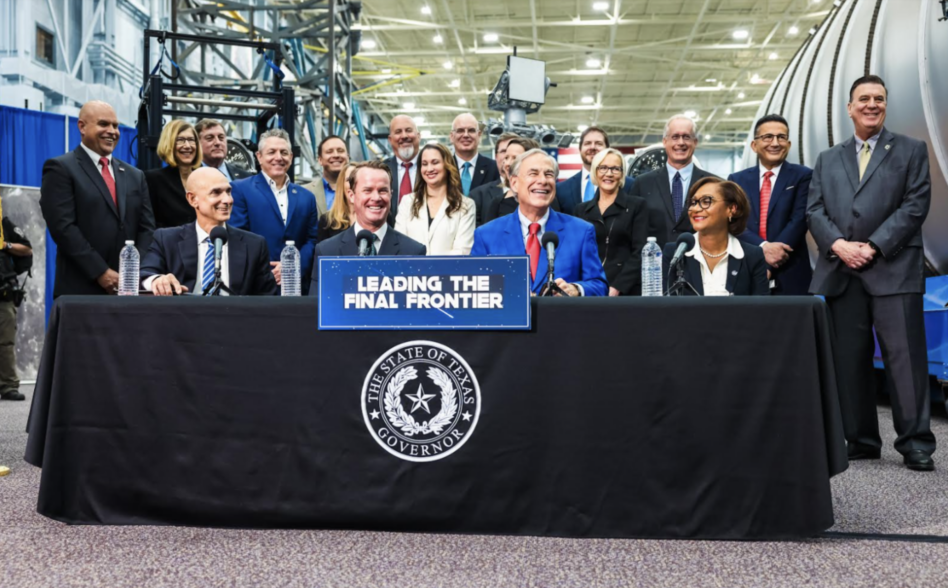
The Texas Space Commission announced its inaugural board of directors yesterday at NASA’s Johnson Space Center, which includes a who’s who of industry and academia.
Introducing the Lone Star-studded board:
Texas forever: The Texas Space Commission, a legislative initiative signed into law in June, aims to boost innovation in space, aeronautics, and aviation within the state.
Keep reading