


Everybody loves a reusable rocket—so why has the rest of space hardware remained stubbornly single-use?
That’s the question at the heart of the origin story for Lux Aeterna. The CO-based startup announced a $10M seed round today to fund the first flight of its reusable satellite platform—called Delphi—which is scheduled to launch its inaugural mission in Q1 2027.
Konvoy Ventures led the round, which also included participation from previous investors Space Capital, Dynamo Ventures, and Channel 39 Ventures. The fundraise included new investment from Decisive Point, Cubit Capital, Wave Function Ventures, and others.
Reduce, reuse: After gaining experience building sats for SpaceX Starlink, Amazon Project Kuiper (now Amazon Leo) and Loft Orbital, Brian Taylor founded Lux Aeterna in 2024. His strategy, however, represents a fundamental shift from his previous employers, Taylor told Payload.
“I started looking at, what can you do in space if you’re a little less optimized for mass? Reusable rockets reduced the cost and increased the cadence for launch, and that really exploded the satellite industry,” Taylor said. “And our goal is to do that same thing for the payload industry.”
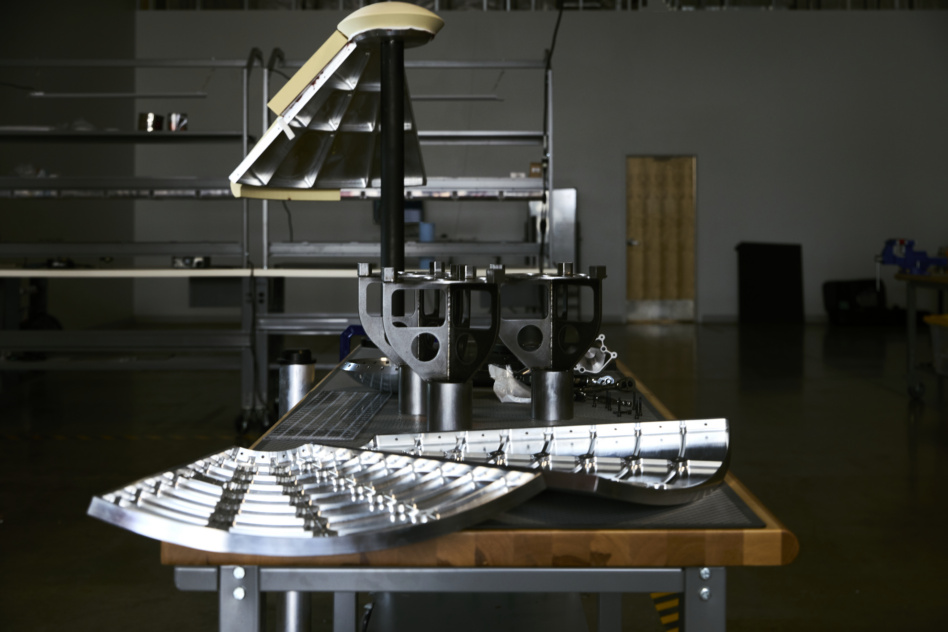
Lux Aeterna’s Delphi demo satellite is built to withstand the violence of reentry. It’s step one towards a longer-term goal of building a larger production vehicle that company officials hope will be capable of being reused 15 times, or flying up to 15 cumulative years in orbit.
- Delphi is about 200 kg, just under 25% of which is designated for payload capacity—but the eventual production vehicle will be larger, with a target payload capacity of between 25% and 40%.
- Delphi relies on many COTS parts, and Lux Aeterna has a Space Act Agreement with NASA to collaborate on the heat shield.
- Lux Aeterna has designed and built its own retractable solar array.
As with the rest of the budding reentry industry, Lux Aeterna has seen incredibly strong demand from customers looking to get their space hardware back after a mission concludes. Its Delphi mission in early 2027 is already completely booked.
New kind of thing: Unlike the rest of the reentry sector, however, Lux Aeterna isn’t trying to increase the availability of down-mass for its own sake. Instead, Lux Aeterna is trying to make possible a new type of satellite mission—focused less on stretching hardware to its limit, and more on rapid iteration.
“The current state of the art is you put a satellite up, and your goal is to make it last as long as possible,” Taylor said. “But you have to match the lifetimes of everything that’s on the vehicle…and you don’t really have flexibility, or it’s an assumed constraint that the only thing that’s better is longer.”
For payload operators, Taylor explained, this means that costs are prohibitively high, and options for short missions simply don’t exist. Lux Aeterna’s goal is to offer a platform for companies to fly missions as short as one day—meaning hardware no longer needs to be space-rated to last years on orbit, and costs can decrease as a result.
For high-tech missions, such as those centered around GPUs or sensor technologies which are rapidly improved, this approach means Lux Aeterna’s platform can offer low-cost options to remain on the bleeding edge.
“Our goal is to get to this concept of fleet operations where we’re moving satellites up and down on a regular basis,” Taylor said. “The vision is over the next, say, three, four years, we’ve got tens of vehicles in our fleet and tens of flights per year, and then that climbing up to hundreds of vehicles in the fleet, and hundreds of flights per year.”
Mantis Space Emerges from Stealth with $10M Seed
Mantis Space is aiming to bring power into the light—and now it has the money to do so.
AIRMO Raises €5M For Methane Monitoring Sats
European space startup AIRMO closed a €5M ($5.8M) seed round to launch its first greenhouse-gas-monitoring satellite no earlier than next year, and to expand its drone and airplane monitoring into the Middle East market.
What to Expect from Starship V3
SpaceX CEO Elon Musk announced the first launch of Starship V3 was “about 4 weeks” away.

Seraphim Space Investment Trust Posts Record Results
Seraphim Space Investment Trust ($SSIT) announced its financial results for H2 2025, revealing a successful portfolio of global space businesses that have seen valuations buoyed by geopolitical trends.
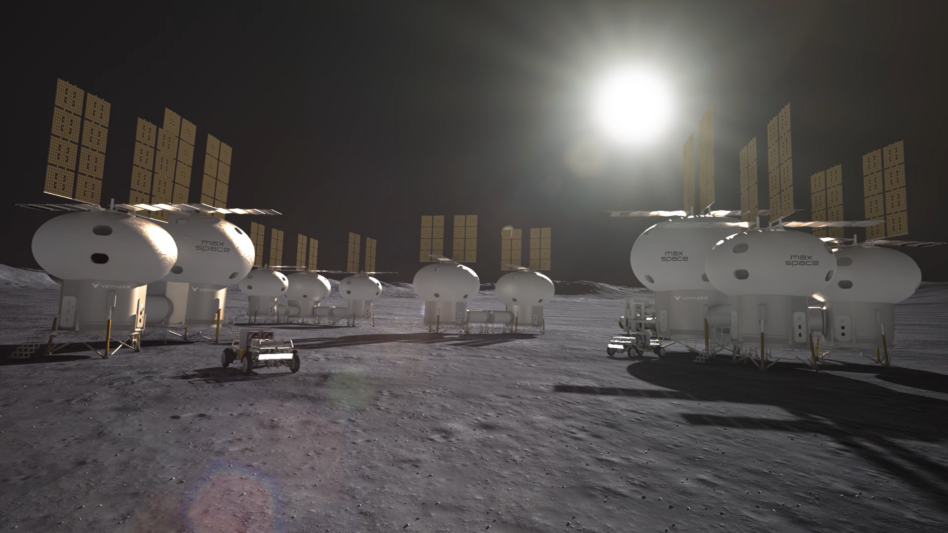
It’s earnings season for the space industry, and publicly traded space stocks keep playing the same hit. It goes like this: higher revenue, bigger backlog, and acquisitions to boot.
Voyager Technologies ($VOYG) followed suit with its earnings results for 2025, released yesterday after the bell.
The ones and twos:
Keep reading