


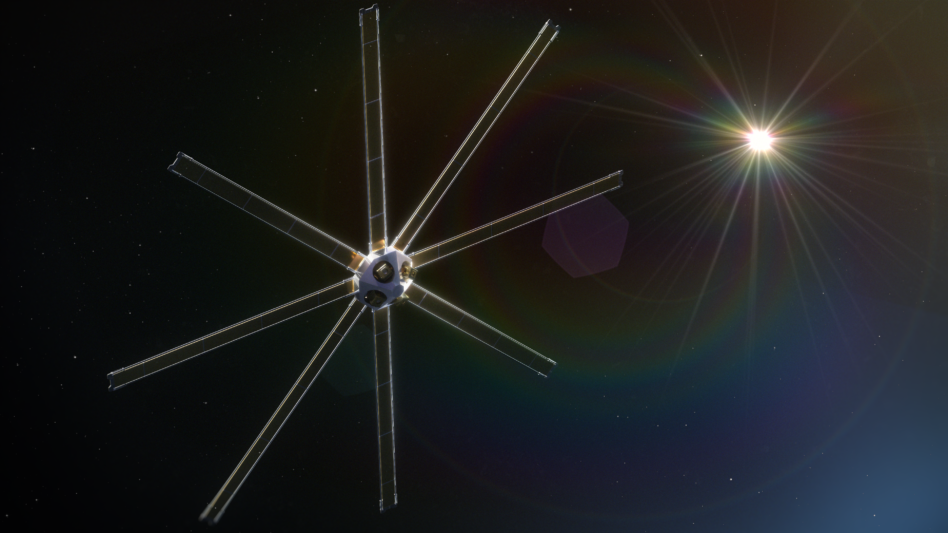
Mantis Space is aiming to bring power into the light—and now it has the money to do so.
The startup, which is building tech to beam solar power from one satellite to another, formally exited stealth today with the announcement of $10M in seed financing. Mantis will use the funds to complete development of its prototype payload and to grow its workforce.
Rule 1 Ventures led the round, which included funds from Mantis incubator Montauk Capital. Mantis has also received ~$25M in support—as a combination of cash and tax incentives—from New Mexico and the city of Albuquerque, according to CEO Eric Truitt.
How it works: Space has an inherent power-generation problem. The sun gives off enough energy to fuel just about any application on orbit, but the Earth’s shadow provides an upper limit. Satellites still require batteries to keep operations running in periods of darkness.
Satellites spend an average of one-third of their life in shadowed regions, according to Truitt.
To get around this problem, satellite operators get creative: launching sats with expensive, heavy battery banks and huge solar arrays, or targeting orbital trajectories to increase time in the Sun.
Mantis’ solution is to centralize and distribute solar power on orbit. The company envisions flying satellites with large solar arrays at higher altitudes (above the growing congestion in LEO), then using laser beams to send energy to customer sats flying in the dark.
By using military-grade lasers, and beaming light at a wavelength optimized for power generation, Truitt says Mantis’ energy is 20% to 30% more efficient than the light from the Sun.
“It’s kind of an elegant solution because you’re safer to the satellite, and you help them generate more power in the same amount of time,” Truitt said.
Go towards the light: Mantis is aiming to launch in early 2028. The first iteration payload is expected to have as many as four laser beams per sat to power as many customer spacecraft at a time.
As the number of applications requiring higher-power output increases—in-orbit manufacturing, data centers, etc.—prime real-estate along the line between light and darkness will fill up quickly. Mantis aims to fuel these energy-hungry missions, while also allowing sats to operate in other, less crowded orbits.
“Ultimately, we see a future where [we] can provide more than one Sun of power. So, you can charge in half the time, or a quarter of the time,” Truitt said. “That means, on a per-hour basis, you can even multiply that higher—so we could service 20, 30, 40 satellites an hour.”
AIRMO Raises €5M For Methane Monitoring Sats
European space startup AIRMO closed a €5M ($5.8M) seed round to launch its first greenhouse-gas-monitoring satellite no earlier than next year, and to expand its drone and airplane monitoring into the Middle East market.
Lux Aeterna Closes $10M Seed to Build Reusable Sats
Everybody loves a reusable rocket—so why has the rest of space hardware remained stubbornly single-use?
What to Expect from Starship V3
SpaceX CEO Elon Musk announced the first launch of Starship V3 was “about 4 weeks” away.
Seraphim Space Investment Trust Posts Record Results
Seraphim Space Investment Trust ($SSIT) announced its financial results for H2 2025, revealing a successful portfolio of global space businesses that have seen valuations buoyed by geopolitical trends.
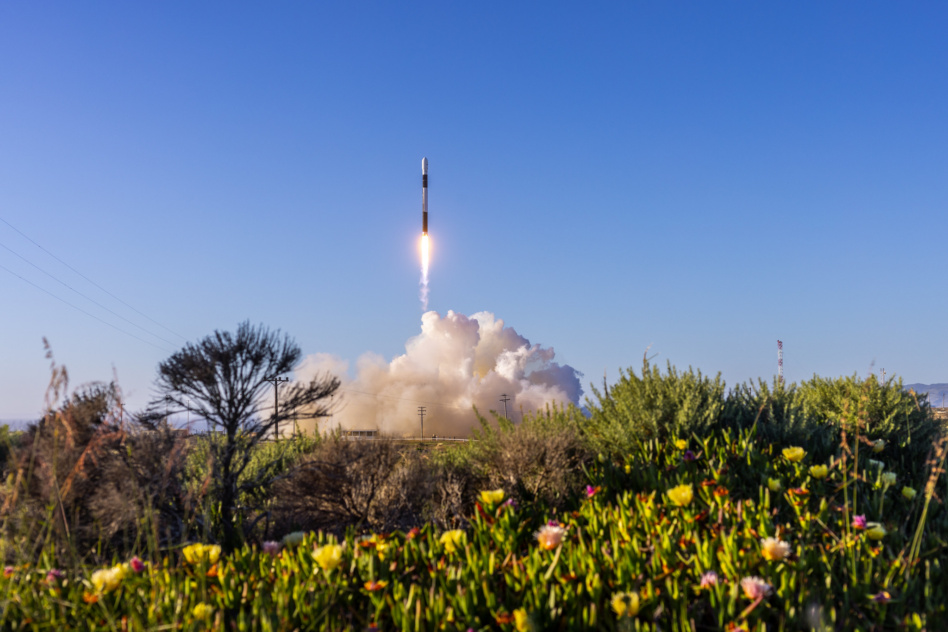
Firefly Aerospace’s ($FLY) Alpha rocket flew the first leg of a redemption arc Wednesday night.
Alpha lifted off the pad from Vandenberg Space Force base at 8:50pm ET in the company’s first fully successful flight in nearly two years. The rocket checked off multiple objectives, including:
Anotha one: Alpha hasn’t had an easy road. In previous flights, the rocket suffered a range of mishaps and fell short of its intended target.
Keep reading