


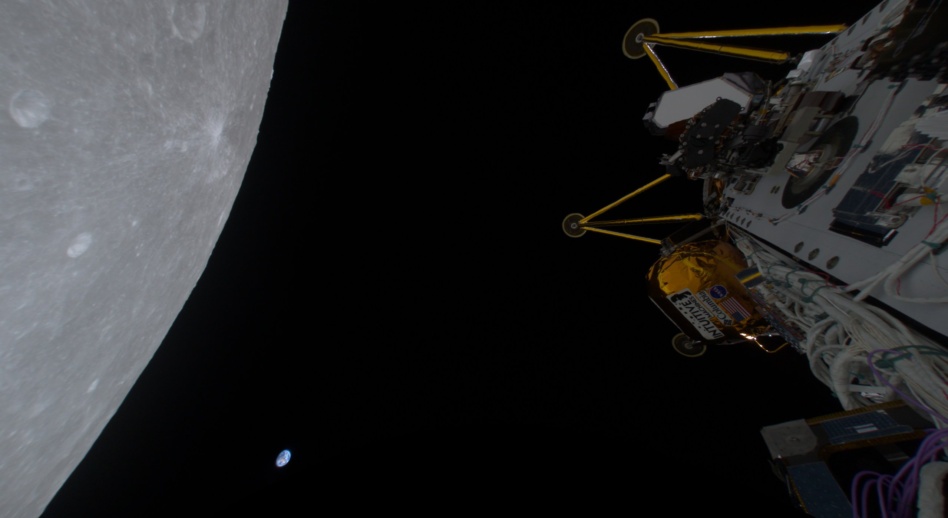
Industry is working every day to establish a long-term, sustainable human presence on the lunar surface. But the challenge of creating a complete, end-to-end cislunar economy doesn’t end with touchdown—or even with setting up shop permanently on the surface. To close the loop, material from the Moon also has to make its way back to Earth.
Returning material from the lunar surface is complicated. In addition to making already-complex lunar landing missions even harder, spacecraft heading to Earth must also clear the hurdles of a rendezvous in lunar orbit, a 480,000-km trip, and a reentry through Earth’s atmosphere.
Still, returning samples from the lunar surface is essential to help companies eventually sell high-value material that’s abundant on the Moon, but scarce on Earth. These samples allow companies to understand the environment in which infrastructure will be built, as well as the commercial applications.
Momentum is building: NASA and several other space agencies have commissioned lunar-sample-return missions. Lunar exploration companies have forged contracts with industry partners for tech demos. Mining companies have started signing contracts for delivery. The bets are down that this will work.
“It doesn’t make sense to be involved in the economy unless you are also planning on being involved at higher levels, and having that mass movement go both directions,” Kevin Scholtes, future systems architect at Firefly Aerospace, told Payload. “As a lander-provider company, we also have to be constantly considering what the future looks like in terms of launching from the surface, returning materials from the surface, and also delivering larger and larger payloads to the surface.”
The big picture is simple: Get to the Moon, and get back again. For a sustainable lunar future, there’s no other option.
What’s to sample
If you land on the Moon and look around, most of what you’ll see is regolith. That’s worth a lot—at least, from a scientific standpoint.
Space agencies, including NASA and JAXA, have asked industry to bring material back from the lunar surface. Though astronauts and robotic landers have sampled and studied lunar regolith before, starting with the Apollo program, the proportion of the Moon’s surface that has been sampled is very low. We don’t have a robust understanding of the chemical composition of the regolith at key sites—including the lunar south pole, where most of the modern exploration of the Moon is focused.
“The value of returning materials back from the Moon has more to do with the information that it gives us about where to bring the next assets down,” Scholtes said. “The most value that we’ll see at the Moon will be in the activity that occurs on the surface itself, and whatever we bring back will inform us on what activity we need to prioritize next.”
That goes not just for scientific exploration of the Moon, but also for prospecting for commercial development on the lunar surface.
“I wouldn’t build a one-bedroom apartment in Galveston, Texas, without doing a soil survey, you know, and that’s considerably less valuable than a multi-billion-dollar habitat,” Intuitive Machines CTO Tim Crain told Payload. “We’re going to need information for the people who are either going to decide where to put the habitats, or where to expand to, or where the resources are.”
Dollars and sense: There’s also a commercial opportunity for returning one element in particular: Helium-3. That helium isotope—rare on Earth, but abundant on the Moon— is a key material for cooling quantum computers, as well as a potential fuel for fusion power. The anticipated demand is far greater than the available quantity on Earth.
That means the price is right for making commercial return from the Moon financially viable. According to Interlune, a company focused on harvesting lunar helium-3 and selling it to customers on Earth, the isotope can be sold for around $20M per kilogram. If the processing and separation of helium-3 can be done in-situ on the Moon, only a relatively small payload has to come back to Earth to make the mission worth it.
“That bottle that we bring back—you know, a single, relatively small bottle that you could literally carry—would contain tens of millions of dollars of product,” Gary Lai, CTO of Interlune, told Payload. “These are payloads on the order of a few kilograms, 10 or 20 kilograms. That’s all we’re expecting to bring back even after months of production.”
That kind of mission profile is striking interest in commercial-material return that hadn’t been there before. “A couple years ago, I didn’t believe [in] very strong demand for the sample return as a commercial market,” Takeshi Hakamada, CEO of Japanese lunar exploration company ispace, told Payload. “However, I think the thing evolving recently, quite rapidly, is helium-3 demand.”
The time is only really right when demand aligns with capabilities, though. As more and more companies venture to the Moon, the expectation is that those transportation costs—like the cost of launch during the last two decades—will drop, making the trip worth it for smaller players.
“We think now is the right time for a company that is trying to invest in the basic technologies for how to get space resources back, to be doing the early research and development, and to lock in intellectual property—so that sometime in the next decade, when those transportation costs really do come down, we are in a good position to actually deploy operations on the surface,” Lai said.
Lunar Helium-3 Mining, another company developing technology to harvest helium-3 from the Moon’s surface for customers on Earth, is predicting a huge eventual market for the resource—not only for quantum computing in the short term, but also for wide-scale deployment of fusion power in the long term.
“You can create an entire industry with 50 to 100 rovers, and humans supporting the rovers on the Moon’s surface, bringing back 570 metric tons [per year],” Chris Salvino, CEO of Lunar Helium-3 Mining, told Payload. “That would generate up to $17T of revenue.”
Those are big goals, but Salvino says the business case closes even with one or two rovers in the beginning.
In the long term, if a continued human presence is established on the Moon, the need for dedicated sample return missions is likely to decrease, according to Firefly’s Scholtes. Ideally, material harvested or mined on the Moon will be able to be processed, studied, and used on site.
“If there’s going to be any kind of lunar economy, the assets that we take to the Moon…They have to be not just interoperable, and not just able to coordinate with other assets,” Scholtes said. “There has to be in-situ contracting going on. There has to be in-situ flexibility.”
The architecture
Companies are looking at different routes from the Moon to Earth, but the overall mission profile is similar. You need an ascent from the lunar surface, navigation home (with or without rendezvous, which requires an additional craft in lunar orbit), reentry of the Earth’s atmosphere, and recovery on the ground.
Navigating a robotic lander safely down to the lunar surface is difficult—as evidenced by the many incomplete or failed landings during the last few years. But none of those missions carried anything to the lunar surface that was designed to turn around and come back to Earth. Adding the capability for lunar return into a lander adds to the downmass requirements for the initial landing, which makes the whole mission more expensive and complex. And the technology to power a lunar ascent eats into the cargo capacity of the lander.
“A fully loaded lander on the surface of the Moon can launch about as much mass off the surface as a lander can land,” Scholtes said. “So from our perspective, what that means is that—for example, our Blue Ghost lander—if we could place it on the lunar surface fully loaded with propellant, we could return off the surface somewhere between 100 and 150 kg of material.”
Ascending from the Moon’s surface requires—what else?—a rocket.
“The ascent from the Moon is, I don’t think, technically challenging,” Hakamada said. “However, it’s hard to validate the technology well without actual testing on the Moon.” Hakamada said that a solid rocket motor is likely the best approach for a lunar ascent.
Some architectures for lunar sample return also include a rendezvous with another craft waiting in lunar orbit to ferry the material home—which requires software for rendezvous and capture, as well as the transfer of samples into a reentry vehicle.
Once a sample has left lunar orbit—whether through direct ascent, or via the propulsion of an OTV in cislunar orbit—falling back towards Earth is relatively technologically straightforward, at least until you get near our planet.
Then comes reentry—which, coincidentally, is a popular problem being pursued now by companies like Varda Space Industries and ElevationSpace, which have commercial reasons for developing small-scale reentry capsules for samples in LEO.
The architecture challenges for sample return, according to Scholtes, are problems the industry needs to be solving anyway.
“If we’re going to have a presence on the Moon and Mars, and have responsive systems around Earth, we’re going to need entry systems. We’re going to need rendezvous systems. We’re going to need to be able to do rendezvous and proximity operations. So these are all tools that we’re working on, and we’ll assemble as we need to,” Scholtes said.
In the works
Of the companies pursuing lunar landings, most are thinking hard about what ascent and Earth return might look like for them—and they’re at various stages of developing those capabilities.
Intuitive Machines first considered a pair of Nova-C landers and a cislunar rendezvous, followed by a ballistic entry towards Earth, Crain said. That design needed no electronics, but it also had specific landing requirements due to its simplicity—including landing at the Utah Test and Training Range, which no longer allows experimental commercial reentry. So, complexity arose.
“We began getting into systems where I think we’re going to need a parachute…if I’m going to have a parachute, I need power to deploy the parachute. Now I need batteries. Okay, if I’m going to do a deployed controller, I need a computer. Okay, so now I’ve got a computer and batteries and well, when do you deploy it? Well, now I need a sensor,” Crain said. “So very quickly, the sophistication of what before had been a very simple, ‘Dump this heat shield at the Earth’s atmosphere and just let it go through,’ was quickly turning into a full spacecraft.”
Intuitive Machines then pivoted to a different approach: using the higher-cargo-mass Nova-D lander to support direct ascent of a vehicle from the lunar surface that could carry material from the Moon—skipping over the need for a cislunar orbit rendezvous. Nova-D is also pulling a design developed for Mars sample return into the architecture to support a high-energy approach.
Other lunar exploration companies are also thinking hard about the capability for lunar sample return. ispace has received interest from the Japanese government, as well as NASA. The extent to which ispace works on sample return capabilities will depend upon the demand from the Japanese government, which seems to be there: In Japan’s 2023 space policy, lunar-material return was identified as one of the top three priorities for the space program.
“Our business is focused on the lunar transportation, just one-way travel to the Moon, at this moment,” Hakamada said. “Right now, we obviously don’t have that capability, but I believe that [the] Japanese government is seeking commercial capability to support such science missions in the future.”
In September, ispace announced it would work with ElevationSpace, a company developing a reentry vessel for Earth return, on a commercial mission to bring lunar material back to Earth. The companies are looking into what their overall architecture for a lunar-sample-return mission could look like. Though it’s early in the process, Hakamada said that such a mission would use the OTV that ispace is developing, as well as ElevationSpace’s reentry capsule. The lunar-ascent approach is an open question, and there are still pieces that need additional development, like the tech to support cislunar rendezvous.
Firefly is also early in determining how to map out and engineer a lunar-material-return architecture.
“We’re ready to take that step at a moment’s notice. We have the core competencies to go execute on it. We have the manufacturing capabilities to go build larger, more capable vehicles, and we certainly have the engineering talent to make that happen, and to do so on a very rapid schedule,” Scholtes said. “What we need to transpire within the markets, and probably within the government, is some kind of clear, unequivocal signal that there is demand for that service.”
The Policy Questions Facing a Lunar Economy
Once engineers solve the technical problems that stand in the way of a thriving lunar economy, it’s up to policymakers to set industry up for success on the Moon’s surface.
Sustaining Life on the Moon is Harder Than it Looks
Artemis requires scientists and researchers to find long-term solutions to the problems space creates for human health, replacing the short-term fixes that once sufficed.
Orion: The Spaceship That Will Carry Astronauts Back to the Moon
When four astronauts climb into NASA’s Orion spacecraft for the Artemis II mission, they will be doing something no one has done in more than half a century: leaving Earth for a journey to the Moon. Behind this historic flight is a spacecraft designed and built with one unmistakable priority—safeguarding its crew every step of the way.

International Competition is Driving the Moon Race
In the 21st century space race, the contest to reach the Moon feels less like the Cold War and more like Wacky Races.
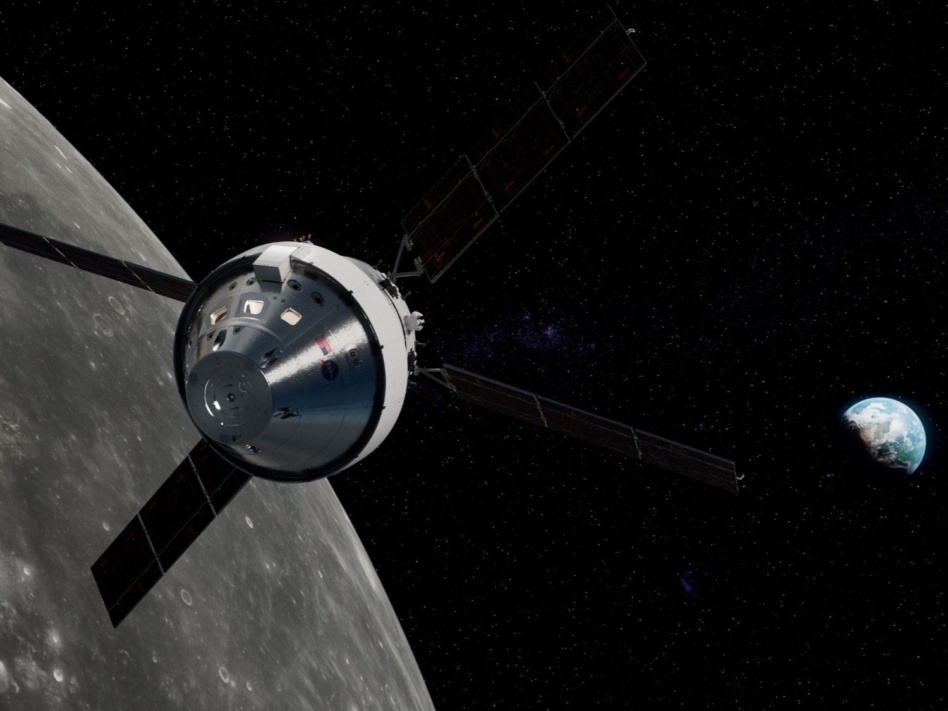
When four astronauts climb into NASA’s Orion spacecraft for the Artemis II mission, they will be doing something no one has done in more than half a century: leaving Earth for a journey to the Moon. Behind this historic flight is a spacecraft designed and built with one unmistakable priority—safeguarding its crew every step of the way.
For Lockheed Martin, NASA’s prime contractor for Orion, that responsibility has guided every decision across years of design, innovation, testing and assembly. It is a cutting-edge vehicle built for the most unforgiving environment and the only exploration-class spacecraft designed to take humans into deep space.
Preparing for Artemis II
Keep reading