


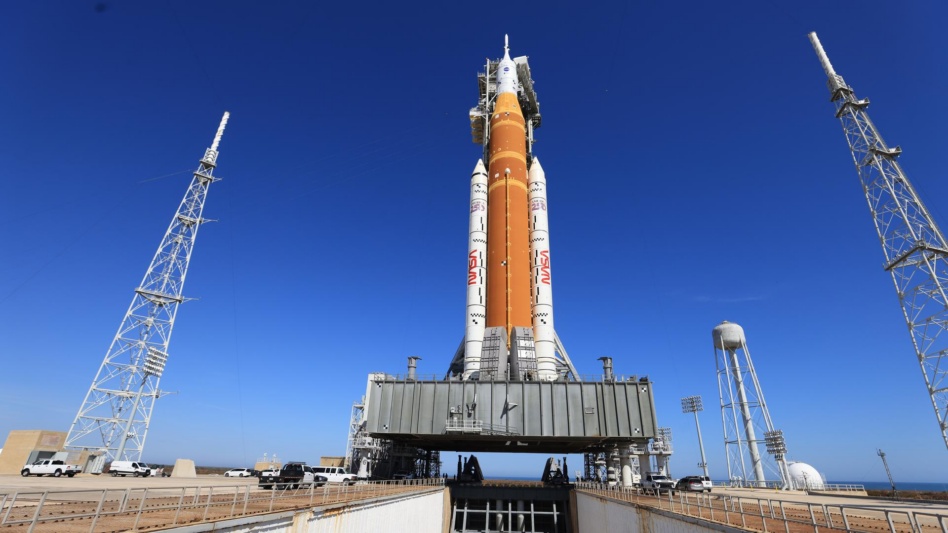
The US path to the Moon shifted significantly on Friday, in what NASA Administrator Jared Isaacman called the “only way forward” for the American lunar program.
Hit the gas: Isaacman announced multiple changes to the program, including:
- Standardizing the SLS rocket, to cut complexity and accelerate manufacturing;
- Growing the NASA civil workforce;
- Cutting the time between SLS launches from once every three years, to once every 10 months.
Timeline: In light of these structural changes, Isaacman announced a new timeline for the American return to the Moon. The biggest shift is that Artemis III will no longer involve putting astronauts on the lunar surface. Instead, the mission—which is expected to launch in mid-2027—will test out the tech in lunar orbit for the Orion capsule, using one or both Moon landers being built by industry (SpaceX’s Starship and Blue Origin’s Blue Moon, specifically).
Then NASA will have two shots to land on the Moon in 2028—one early in the year with Artemis IV, and one roughly 10 months later with Artemis V. Isaacman said the agency isn’t set on launching two landing missions that year, but wants to keep its options open.
“Everybody agrees—this is the only way forward,” he said. “They know this is how NASA changed the world, and this is how NASA is going to do it again.”
Next up: First, the Artemis II mission to fly around the Moon needs to get off the launch pad in 2026, as planned—a milestone that was further delayed into the year when engineers discovered a helium flow issue last week. Lori Glaze, the acting associate administrator for NASA’s Exploration Systems Development Mission Directorate, said work has already begun to fix the rocket. Glaze said the decision to roll the rocket back to KSC’s Vehicle Assembly Building rapidly for assessment gave the agency the “best possible chance” to launch in early April.
Isaacman Plans Monthly Uncrewed Lunar Landings In 2027
“We are going to plus up for Moon base construction in a huge way,” said during an interview with Spaceflight Now that was released late Friday night.
Voyager Invests in Max Space, Projects 2026 Revenue Surge
Last month, Max Space and Voyager announced they would collaborate on the design of an expandable lunar habitat.
Astrobotic Wins Lunar Wheel Contract For Italian Habitat
The Pittsburgh, PA-based space firm won a contract of undisclosed value from Thales Alenia Space to contribute the wheels for Italy’s Multi-Purpose Habitation.
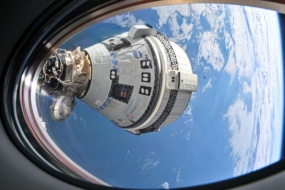
NASA: Agency ‘Failed’ Starliner Astronauts
“The most troubling failure…is not hardware. It is decision-making and leadership that, if left unchecked, could create a culture incompatible with human spaceflight,” NASA Administrator Jared Isaacman said during a livestreamed press conference.

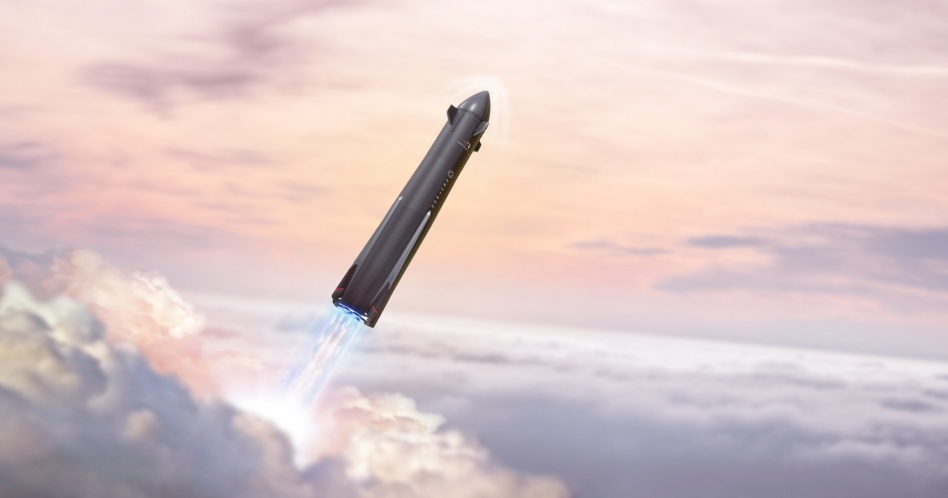
Rocket Lab’s Neutron rocket won’t fly until the end of the year, the New Zealand launcher announced Thursday in its 2025 earnings.
During earnings announcements in years past, CFO Adam Spice tied the company’s profitability to its ability to begin flights of the medium-lift rocket, which was expected to first fly as early as 2024 when first announced. So, an update that Neutron’s inaugural flight would be pushed back to Q4 2026 is a rough sign for the rest of the year.
Delays, however, should be contained to the single component—the fuel tank—which ruptured during a test in January. CEO Peter Beck said that the extra time to requalify a new tank, and a new, faster method to build that tank, would mean quicker ramp up of Neutron missions after flight one.
Keep reading