


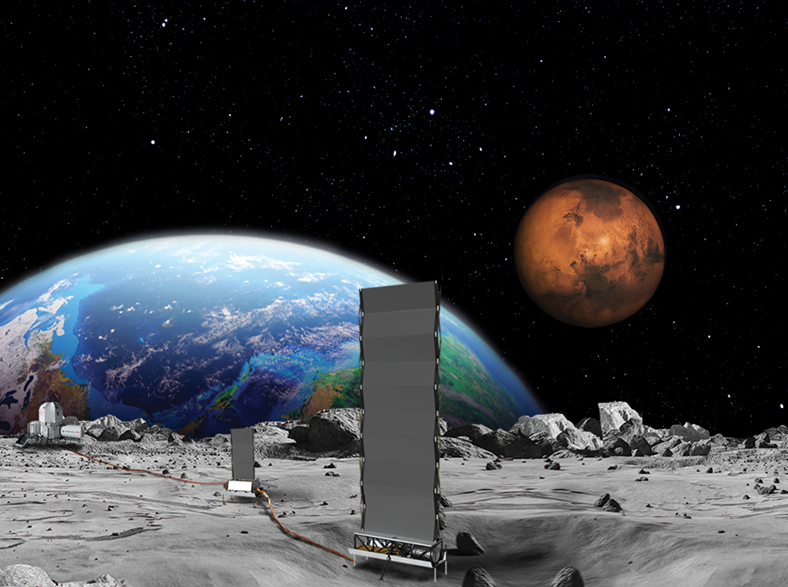
Did you forget about the goal of putting fission power on the lunar surface? NASA didn’t.
Establishing a power source on the Moon that can provide continuous, always-on electricity is a key enabling technology to make the jump from short- to long-term missions on the lunar surface. Solar power is good until the lunar night hits, and when that happens, astronauts on the lunar surface will need to turn to something else.
To keep the lights on through the night, NASA is exploring putting a nuclear fission reactor on the Moon’s surface. The idea has been around for years, but the agency appointed new executive leadership for the Fission Surface Power Project last year—and committed to seeing it through.
- Three $5M contracts were awarded in 2022 to Lockheed Martin, Westinghouse Electric, and a joint venture between Intuitive Machines and X-energy to explore fission surface power architectures.
- The designs had to be able to operate for a decade without refueling, weigh under six metric tons, and produce 40 kW each of electricity.
- Phase 2 awards have not yet been made.
Now, in his first weeks as NASA administrator, Jared Isaacman has confirmed that the program is a high priority for the space agency.
“Under President Trump’s national space policy, America is committed to returning to the Moon, building the infrastructure to stay, and making the investments required for the next giant leap to Mars and beyond,” Isaacman said in a release. “Achieving this future requires harnessing nuclear power.”
Hand in hand: NASA is working with the DoE to identify potential technologies and providers of fission surface power. Energy Secretary Chris Wright has been a key proponent of nuclear technology since taking office last year, and the nuclear energy sector has risen to meet demand signals coming out of the energy agency. A suite of executive orders signed by President Donald Trump last year have also given shape to the goal of reinvigorating the nuclear energy sector in the US.
The partnership between NASA and the DoE on nuclear fission surface power is meant to move quickly, putting tech on the Moon by 2030. The agencies signed a new MoU to collaborate on the program this week.
“History shows that when American science and innovation come together, from the Manhattan Project to the Apollo Mission, our nation leads the world to reach new frontiers once thought impossible,” Wright said. “This agreement continues that legacy.”

Czech Radiation Chips on Artemis II Bring ISS Experience
With the sun at solar maximum, HERA serves as an instant warning system if a solar flare emerges.
How Earthlings Got Views of the Lunar Fly By
Redwire has built 11 cameras that are installed around the inside and outside of the Orion capsule, Kaylee Geidel, a senior systems engineer at Redwire, told Payload.
Artemis II Supplier Series: Orion’s Windows
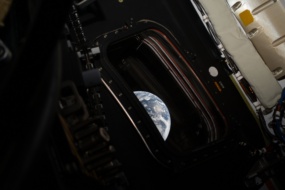
For astronauts who put in decades of work and training, getting to see space with their own eyes is a big part of the payoff.

CLPS Companies Excited For NASA’s ‘Opportunity Bomb’ Lunar Plan
Last week, NASA laid out a vision for a lunar base that’s built and supplied through monthly uncrewed lunar landings, with launches beginning as soon as next year.It’s no surprise that CLPS companies are raring to go.

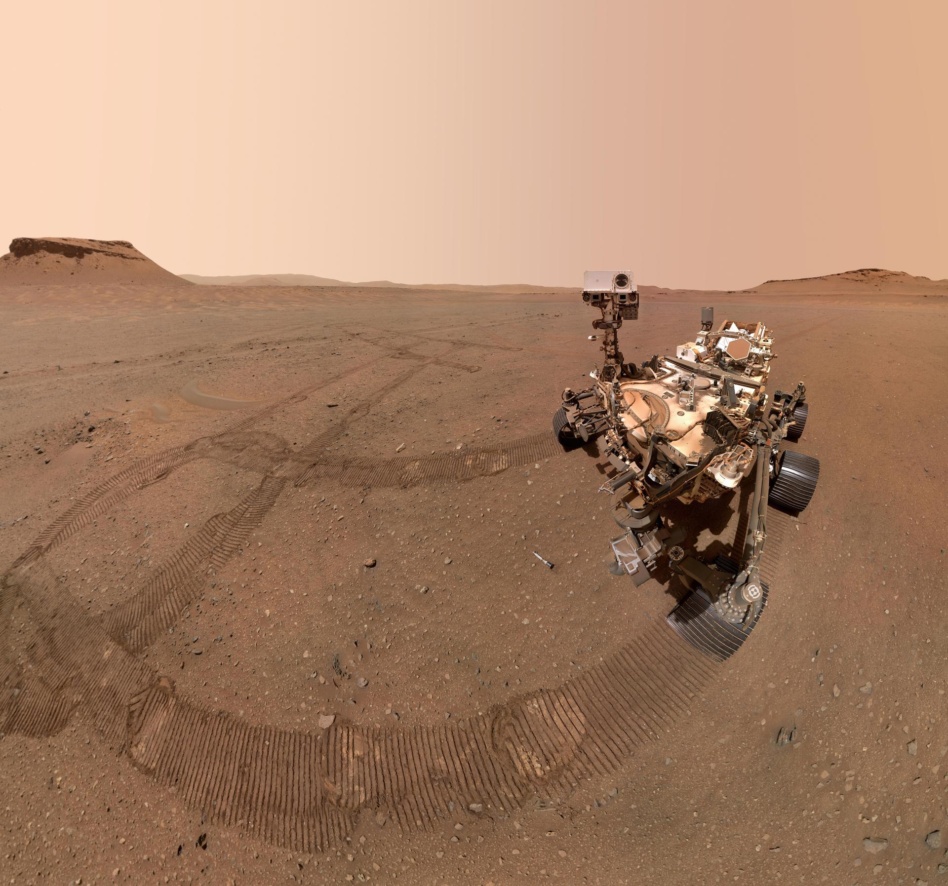
With Mars Sample Return canceled, the question is no longer how to bring samples home—but how far existing space law can stretch before its gaps become consequential.
Finders keepers?: International space law does not treat abandoned missions as abandoned property. Article VIII of the 1967 Outer Space Treaty makes clear that a launching state—in this case, the United States—retains jurisdiction and control over the objects it launches into space wherever they are located, including on celestial bodies such as Mars. There is no concept of abandonment in space law, simply because a return mission is delayed, redesigned, or canceled. The Mars sample tubes left behind by NASA remain US space objects, even if the US has no plans to retrieve them.
That conclusion is reinforced by the Rescue and Return Agreement, which requires any state that recovers a space object to return it to the launching state—upon request. That means that, while another country could physically retrieve the tubes on Mars, doing so would not transfer ownership. Recovery is not appropriation, and possession does not confer title. Absent US consent, international space law requires that the tubes be returned to the United States—though the US could choose to contract with another state or private actor to retrieve them on its behalf and, by agreement, share or relinquish ownership.
Keep reading