


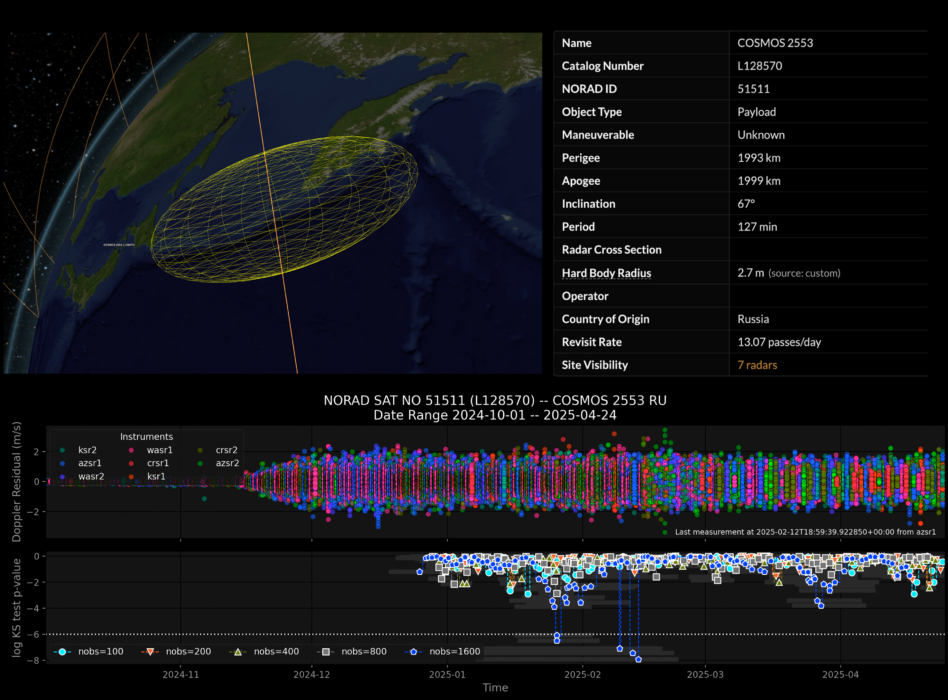
A prototype anti-sat weapon Russia launched into orbit in 2022 is tumbling out of control, according to commercial SSA companies who spotted it. That’s a sign the spacecraft is no longer functional.
Spin doctors: Cosmos 2553 is thought to be part of a Russian effort to develop a nuclear weapon that could indiscriminately fry many sats at once in LEO. That approach would threaten proliferated constellations that wouldn’t otherwise be affected by losing a few spacecraft to traditional anti-satellite weapons.
A LeoLabs official told Payload that its radars detected the unusually dense spacecraft (a sign that it could have a dummy nuclear payload onboard) spinning out of control in November, which was confirmed by Maxar imagery. Reuters first reported the news.
Primary sources: Two new reports on space weapons from the Secure World Foundation (pdf) and the Center for Security and International Studies (pdf) offer new details on the growing threats to spacecraft in orbit, as the US and China in particular scramble for potential conflict.
Yo, RPO: RPO missions are taking place at a high clip as nations seek to service their own sats, eavesdrop or characterize others’ spacecraft—or even attack rival vehicles kinetically, electronically or energetically.
- Russia’s Luch 2 spacecraft passed within a few miles of communications satellites operated by US and European companies in July 2024 and January.
- China appears to have put five satellites through an intense RPO demo last year, which included two simultaneous proximity events within meters of their targets.
- The US has conducted dozens of RPO missions in recent years, most notably with LDPE 3A. The sat took up station late last year near an experimental Chinese satellite that released an object—potentially a spent motor—in January. The head of Space Command said this month that he needed “orbital interceptors” to win a war.
Don’t jam me up: While GPS interference was a relatively limited problem as recently as 2017, today it is endemic in 20 countries. Culprits include Russia, North Korea, and Israel. SWF’s Victoria Samson said airline pilots now spot jamming when the clocks start running backwards in their planes. The interference is putting pressure on the US to make GPS more secure, while other countries and private companies offer their own secure PNT solutions.
Commercial in the crosshairs: With commercial spacecraft playing increasingly important roles in comms and targeting, “the writing is on the wall here that those commercial assets will be treated as military targets by US adversaries,” Clayton Swope, the deputy director of CSIS’ Aerospace Security Project, said Friday. Keep that in mind for your Missile-Defense-As-A-Service pitch.
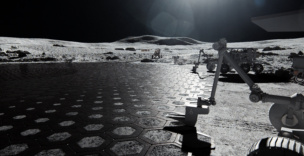
ICON Prime Launches, Led By Former TX Rep
Robotic construction company ICON today announced the establishment of ICON Prime, a new business unit that will work with the Pentagon and NASA.
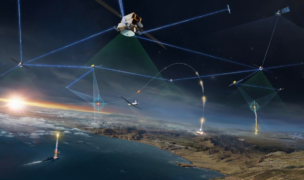
One-On-One With SDA’s GP Sandhoo
It’s been about six months since the SDA launched its first operational tranche of satellites—but troops still aren’t benefiting from the better comms tech because of a series of small issues that forced the agency to take a “strategic pause,” SDA Acting Director Gurpartap “GP” Sandhoo told Payload.

Leonardo’s Missile-Defense Demo in Ukraine Aims To Be a Blueprint for Other Nations
Leonardo is positioning itself to become a mass distributor of space-enabled missile defense shields.

A Recap of Payload’s Space Stage
Two days. Nine panels. Two dozen speakers—and that’s just the space content.


China announced that it will share lunar samples with international researchers and fly other nations’ payloads aboard future Moon and Mars missions—a giant leap for Beijing’s space diplomacy efforts.
“We look forward to scientists worldwide making more scientific discoveries, jointly expanding human knowledge and benefiting all of humanity,” Shan Zhongde, head of the Chinese Space Agency, said April 24 at a ceremony in Shanghai celebrating China’s annual Space Day.
Sharing the haul: Seven institutions in six countries—two in the US and one each in France, Germany, Japan and Pakistan—were loaned Moon rocks collected from the lunar nearside by the uncrewed Chang’e-5 mission in 2020. While the Wolf Amendment prohibits the US government from working with China, American institutions are free to collaborate with Beijing on scientific pursuits.
Keep reading