



Planet Labs just proved that dual use doesn’t necessarily mean equal priority.
The satellite operator announced this week that it would be extending restrictions for commercial access to EO data covering the Middle East—from 96 hours, to two weeks.
The new blackout rules also expand the area of interest to include “all of Iran and nearby allied bases, in addition to the Gulf States and existing conflict zones,” according to the announcement.
A spokesperson from Planet told Payload that the decision was informed by consultations with “experts inside and outside of government,” but that ultimately their decision was not the result of a request from any government entity.
“It’s Planet’s decision to proactively limit the risk of misuse of our data in the conflict…to ensure our imagery is not tactically leveraged by adversarial actors to target allied and NATO-partner personnel and civilians,” the spokesperson said.
Blackout dates: The move underscores the value of space-based infrastructure in modern warfare.
Less than one week into the conflict, US Central Command announced that it had destroyed Iran’s military space command, denying the country’s ability to conduct electronic warfare actions against US and allied forces. Now, Planet is offering its assistance to the US, by attempting to deny Iran’s ability to use its timely, commercial EO data to target allied bases.
At the time of this reporting, Planet is the only EO provider to publicly announce limitations. Even still, Planet’s blackout severely limits access to up-to-date imagery over the region, as Planet’s sats can revisit sites more frequently than many other providers.
Collateral damage: While the temporary blackout is intended to limit Iran’s destructive response to the US offensive, it’s also limiting the public’s ability to understand what’s going on in the region.
Since the outset of the war, connectivity in Iran has been critically constrained, falling to 1% of normal levels. For journalists trying to cover the region, the loss of EO imagery means the work has become nearly impossible.
“Understanding the situation on the ground depends a lot on our ability to see these things…my team does not have access to all of the areas on the ground that we’re reporting on, so without a timely insight into what’s going on it makes things a little bit more challenging,” a journalist who uses Planet imagery for their reporting told Payload.
The journalist also told Payload that the restrictions have forced their team to consider working with a broader range of EO providers.

One-On-One With SDA’s GP Sandhoo
It’s been about six months since the SDA launched its first operational tranche of satellites—but troops still aren’t benefiting from the better comms tech because of a series of small issues that forced the agency to take a “strategic pause,” SDA Acting Director Gurpartap “GP” Sandhoo told Payload.
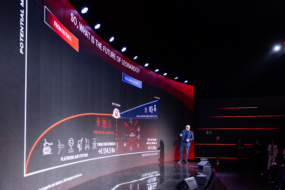
Leonardo’s Missile-Defense Demo in Ukraine Aims To Be a Blueprint for Other Nations
Leonardo is positioning itself to become a mass distributor of space-enabled missile defense shields.

A Recap of Payload’s Space Stage
Two days. Nine panels. Two dozen speakers—and that’s just the space content.

ICEYE Smashes Its Own Revenue Projections
ICEYE’s results reveal a massively successful year for a business in the right place at the right time.

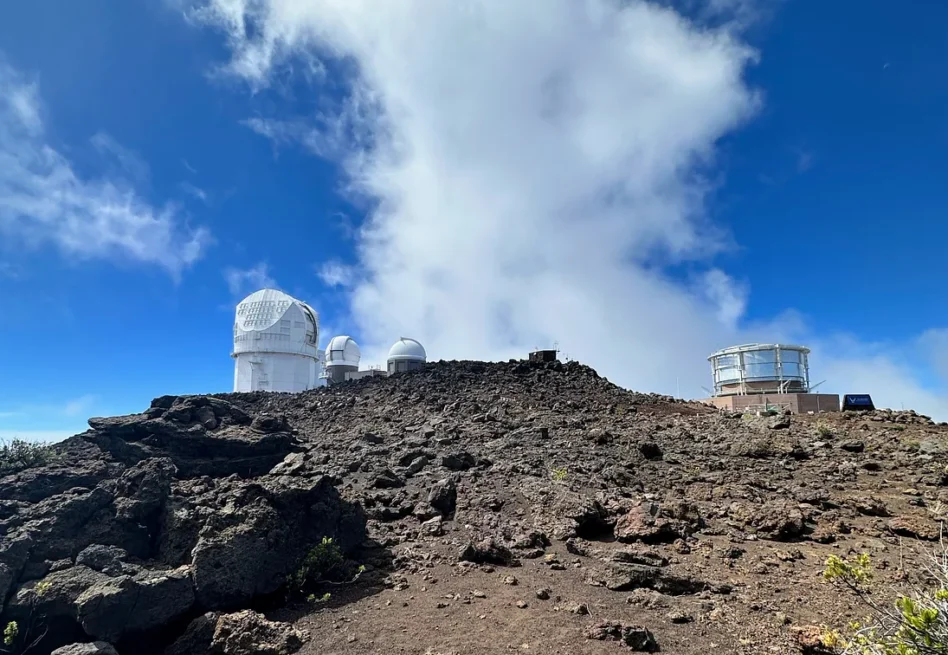
Anduril Industries announced this morning that it will acquire ExoAnalytic Solutions—a move that will double the neo prime’s space headcount.
The acquisition of the SDA and missile-defense firm will boost Anduril’s SSA offerings for natsec space customers, according to company officials.
“Ultimately we believe the department deserves the best catalog of everything going on in space,” Gokul Subramanian, Anduril’s SVP of engineering, said on a press call. “We want to be part of that solution for the warfighter.”
Keep reading