


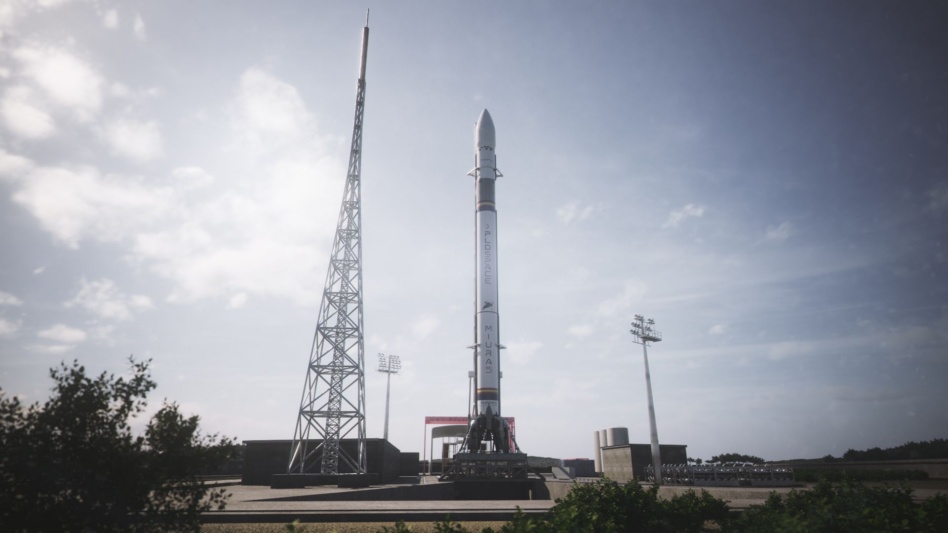
PLD Space just doubled its money. The Spanish launch startup announced a €180M ($209.5M) Series C round yesterday—putting the company’s total funding over €350M ($407.4M), and supporting its plans to rapidly grow launch cadence.
The round was led by Mitsubishi Electric. It included funds from the Spanish government—both from the Ministry of Science, Innovation, and Universities, and from the Spanish public funds management company COFIDES—as well as from Nazca Capital.
The new funds give PLD a huge boost in its effort to clear significant milestones this year.
30 and flirty: PLD is aiming to launch 30+ times per year by the end of the decade. To get there, Executive President Ezequiel Sánchez told Payload that the company has a few activities underway:
- PLD expects development of its commercial launch site at the Guiana Space Center in Kourou, French Guiana to wrap up by July.
- Once the pad is ready, the company expects to launch its first Miura 5 demonstration flight this year, with the second test planned to fly either this year or by Q1 2027, according to Sánchez.
- The two demo launches will help PLD gain access to launch insurance, to support commercial flights beginning in 2027, according to Sánchez.
- PLD is also working to hit “semi-serial” production rates of Miura 5, aiming to produce four rockets this year, and six next year. The company plans to move to a larger production facility in 2028 to increase output into the double digits.
Turning Japanese: Mitsubishi Electric’s support goes beyond funding. The Japanese company can secure access to a new supply of launch capabilities to support satellite deployments across Japan and Asia. Mitsubishi appears highly interested in these deployments, and also announced yesterday an MOU with Lockheed Martin ($LMT) to collaborate on GEO defense satellites.
For PLD, Mitsubishi’s backing provides a name-brand stamp of approval, and optional technical support from a company with decades of experience in scaled deep-tech manufacturing.
Sánchez said Mitsubishi’s willingness to commit to launches—at market prices—validated his company’s business plan without requiring any strategic concessions. It also helps PLD attract a more global customer base.
“We see a polarization of the market,” Sánchez told Payload. “Some players will be low-cadence and subsidized by governments, and very few commercial players will have the opportunity to compete at the global scale. We prefer to be at that [global] access.”
Further afield: Meanwhile, PLD is developing its upgraded launch vehicle—Miura Next—to meet milestones laid out in the European Launcher Challenge, namely to fly a flight test of a larger capacity rocket by 2028. PLD’s plan follows a similar trajectory as its upgrade from suborbital Miura 1 to Miura 5.
Miura 1 was built to develop 70-75% of the technologies used in its orbital successor, according to Sánchez.
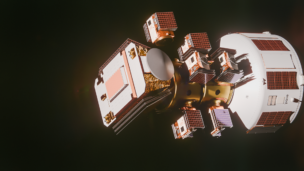
PAVE Space Raises $40M for In-Space Propulsion Tech
PAVE’s propulsion systems rely on a storable rocket bipropellant, which aims to make launch operations simpler and more cost-effective, compared with cryogenic fuels.
Inside Austria’s Small But Mighty Space Ecosystem
Austria’s space industry is in the midst of a renaissance, with bigger funding deals and more startup activity.

HyImpulse Signs Launch Agreement with SaxaVord
The second suborbital flight of HyImpulse’s SR75 is expected to lift off from SaxaVord no earlier than Q3 2026.
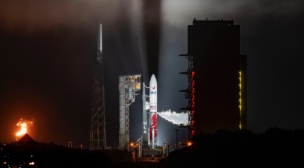
Modified Vulcan Expected to Launch This Summer
“There were some changes that we actually had in the works before the anomaly, just to improve margins in the nozzle and solid rocket booster,” Elbon said. “So we’re accelerating those, and focusing on getting those into place sooner.”

ICEYE just one-upped the Lorax. Instead of speaking for the trees, the SAR satellite manufacturer is letting the trees speak for themselves.
ICEYE announced the launch yesterday of a new deforestation monitoring tool, which uses SAR imaging to provide near-real-time insights into illegal deforestation of the world’s largest rainforests.
Going under cover: Traditional optical satellites have spotted the results of illegal deforestation from space for years, in places like the Amazon. Traditional optical EO capabilities, however, struggle to uncover deforestation while it’s in progress. Essentially, rainforests like the Amazon are so dense that they generate their own cloud cover. It’s estimated that the Amazon experiences cloud cover for about 66% of the year on average.
Keep reading