


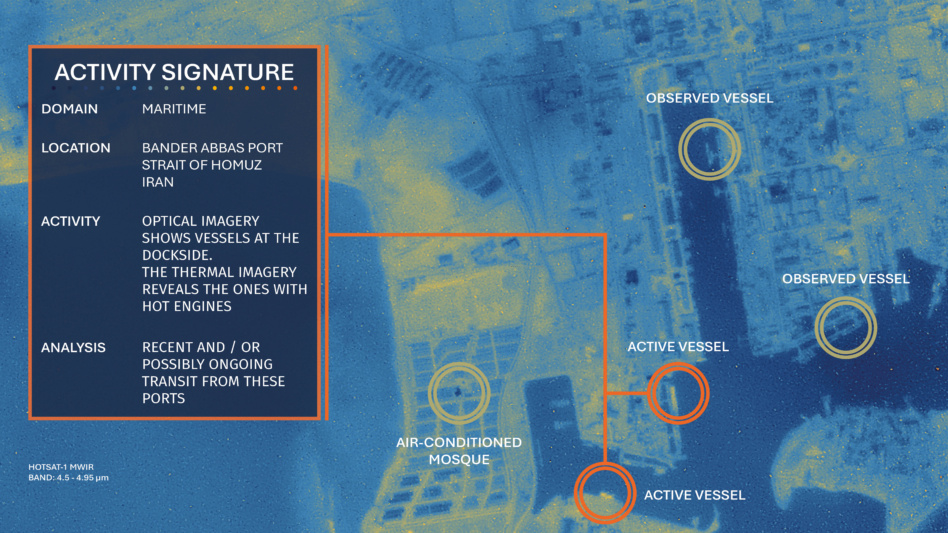
UK-based thermal imaging company SatVu announced yesterday that it raised £30M ($40.7M) to meet two goals: accelerating deployment of its HotSat constellation, and fulfilling demand from across the market.
The round included:
- New investor capital from the NATO Innovation Fund, the British Business Bank, Space Frontiers Fund II, and Presto Tech Horizons;
- Funds from existing investors such as Molten Ventures, Adara Ventures, Ridgeline Ventures, Noa, Lockheed Martin, Seraphim Space Fund, and Stellar Ventures.
The round brings SatVu’s total equity financing to £60M ($81.4M).
On fire: SatVu sent one satellite to orbit—called HotSat-1—in 2023. The satellite operated for about six months before suffering an on-orbit failure. Demand for thermal imagery has been so great, however, that SatVu is seizing the opportunity to not just get back to orbit, but to grow faster than originally planned, according to CEO Anthony Baker.
“We think we can be cash break-even, even with one or two satellites, by controlling our costs. So we’ve always been very, very careful with that,” Baker told Payload. “[But] we raised more money to accelerate that program…You never know when the funding gods will decide, ‘This is a bad year.’”
The company has two launches on the books for 2026.
- HotSat-2 is scheduled to fly on SpaceX’s Transporter-16 flight, which is targeting a launch no earlier than March 29;
- HotSat-3 may launch on another Transporter mission before the end of the year.
In the meantime, SatVu is using the new capital to buy up long lead-time components of its imaging payload, with the idea of funding future deployments with a mix of revenue and later funding rounds.
All eyes on: Lucky for SatVu, demand for its thermal images has pushed higher across the board. Baker explained that in every vertical—defense, economic monitoring, and climate applications—the need for high-resolution thermal imaging has only grown since HotSat-1 first launched.
Demand is soaring in part due to increasing adoption of the “tip-and-cue” method of EO acquisition, where customers are expected to use optical or SAR data to identify changes on the ground, and then task SatVu’s high-resolution cameras—down to 3.5 m—to take a closer look.
Astrobotic Wins Lunar Wheel Contract For Italian Habitat
The Pittsburgh, PA-based space firm won a contract of undisclosed value from Thales Alenia Space to contribute the wheels for Italy’s Multi-Purpose Habitation.

Seraphim Space Investment Trust Posts Record Results
Seraphim Space Investment Trust ($SSIT) announced its financial results for H2 2025, revealing a successful portfolio of global space businesses that have seen valuations buoyed by geopolitical trends.
Viasat and Space42 Share Strategy for Equatys JV
The two companies cancelled a key roundtable at the Mobile World Conference, but Viasat CEO Mark Dankberg gave Payload an exclusive rundown.
Sierra Space Closes $550M Series C
LuminArx Capital led the round, which valued the company at $8B.
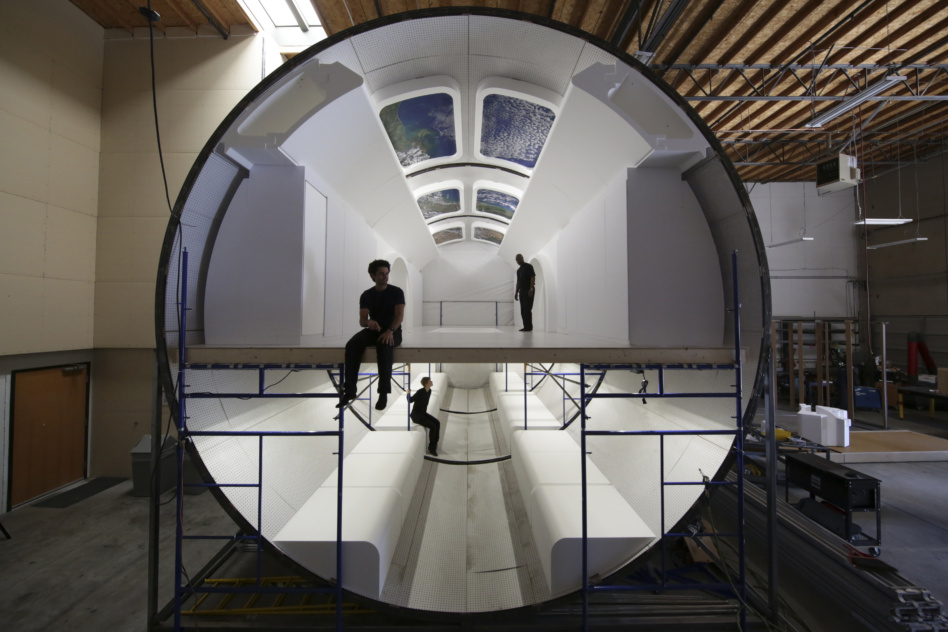
For decades, aerospace and defense programs followed a familiar pattern: define requirements, finalize designs, then validate at the end of the process. That model assumed time was available to manage surprises.
Today, that assumption no longer holds. Teague offers demonstrators—physical or digital representations of a system—which are used to test designs and decisions earlier and throughout a production process.
Across government and industry, the most common failure modes are well understood: late discovery, late rework, and loss of customer confidence. Programs miss schedules not because teams fail to ask hard questions, but because teams answer them too late—after cost, schedule, and technical commitments are already locked in.
Keep reading