

Scout Space closed an $18M Series A to fuel plans for expansion that include building a new satellite sensor factory outside DC, and nearly doubling Scout’s headcount in the next 18 months.
Washington Harbour Partners led the round, which included additional participation from Scout’s existing investors Noblis Ventures, Fusion Fund, Decisive Point, and the Virginia Innovation Partnership Corporation, among others.
The ramp up: Generally speaking, Scout has two business lines that contribute roughly equally to the company’s bottom line, CEO Josiah Gruber told Payload.
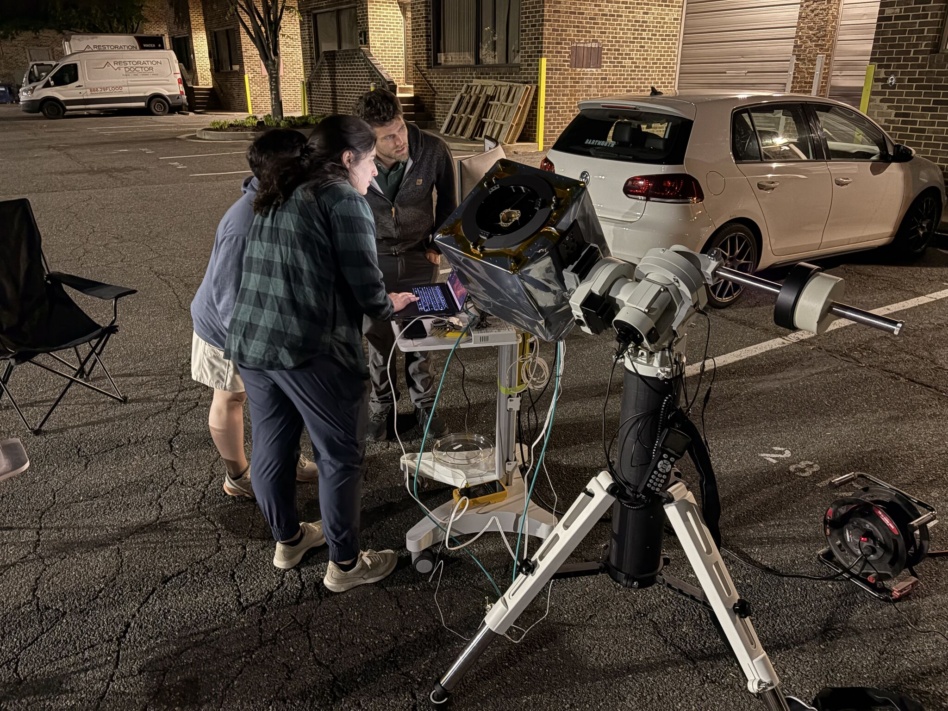
- The company develops and manufactures a range of SDA sensors to fly onboard customer satellites, from small cubesats to large GEO birds.
- Scout also uses the sensor data to help customers conduct RPO operations or avoid other objects in orbit..
Since its founding in 2019, Scout has flown four payloads to orbit, but the company has roughly a dozen more planned in the next two years—including on board Blue Origin’s Blue Ring spacecraft. These missions will not only give Scout’s hardware more flight heritage, but will also help to boost its software offering and coverage of the orbital freeways.
Like a mold: With the new capital, Scout plans to open a 2,600 sq. ft. manufacturing facility in Northern Virginia to ramp up its production of satellite sensors. Scout expects to grow its team from ~30 employees today to more than 50 in the next 18 months.
The growth strategy will allow Scout to support its contracted missions, as it aims to win potentially massive DoD contracts focused on bolstering US SDA capabilities. Examples include SSC’s Andromeda, and the Defense Innovation Unit’s’s Ghost Recon programs.
Long-term vision: Despite multiple projections showing the number of satellites on orbit are expected to balloon in the coming years, Gruber said industry manufacturing capacity for payloads and sensors is still lacking.
“If the space industry really thinks there’s going to be tens of thousands of spacecraft launched in the next few years, there’s going to be some large fraction of those that are going to require payloads on board to make sense of what’s around them,” Gruber said.
MP Space Raises AUD $23M to Scale Satellite Battery Manufacturing
MP Space’s batteries launched for the first time last week with an undisclosed customer on SpaceX’s Bandwagon-5 mission, and already the company has orders to support 500+ spacecraft.

Colare Raises $2.5M to Expand its Hardware-Focused Hiring Platform
Colare’s technical-assessment platform maps the requirements of a role, and recreates decisions future engineers could face on the job.

Exclusive: DoD Taps Orbital Operations for Cryogenic Spacecraft Demo
The Long Beach, CA, startup has won up to $35M from the DoD under a prototype Other Transaction Agreement to fly a full-scale, in-orbit demo of Astraeus—its cryogenic-maneuvering vehicle.

Inside Starburst’s First Flight, and Portal’s New Bothell Office
“I feel like 80% success now,” CEO Jeff Thurnburg said. “But honestly, to get this far this fast, I’m tempted to call it 100%.”

LiveEO, geospatial intelligence startup, today announced a €28M+ ($32.8M) funding round.
The German company will use the funds to scale its business, launch its own satellite constellation, and build the tech to meet the growing worldwide demand for EO data.
The round included investment from new investors HELANTIC, B2ventures and EIC as well as existing investors Nordic Ninjas, DTCF, Matterwave, MMC, Segenia, Greencode, and Andy von Bechtolsheim.
Keep reading