



The Space Development Agency awarded $3.5B in contracts on Friday to continue building the Proliferated Warfighter Space Architecture (PWSA)—a missile-tracking, military-supporting, multi-layer constellation that’s been several years in the making.
The contracts are for the third tranche for the constellation’s Tracking Layer, which is responsible for all sensing from space. Each of the companies are responsible for delivering 18 satellites for a grand total of 72 in the tranche.
Drumroll, please…the awardees are:
- Lockheed Martin ($LMT) with a $1.1B award
- Rocket Lab ($RKLB) with an $805M award
- Northrop Grumman ($NOC) with a $764M award
- L3Harris ($LHX) with an $843M award
These are all firm, fixed-price contracts, in line with the SDA’s contracting strategy to date for the PWSA.
“The addition of these satellites will achieve near-continuous global coverage for missile warning and tracking, along with payloads capable of generating fire control quality tracks for missile defense,” acting director of the SDA Gurpartap Sandhoo said in a release. “This is a prime example of spiral development: the ability to rapidly integrate the next generation of technologies, and to proliferate the most impactful capabilities for increased capacity and lethality.”
Move as a pack: The awardees for this step of the program are familiar names, and they’ve all been part of the PWSA before.
- L3Harris has participated in every tranche of the Tracking Layer so far.
- Northrop built satellites for tranche 1 of Tracking, as well as tranche 1 and 2 of Transport, which is responsible for transmitting the data collected by tracking across the PWSA and back down to Earth.
- Lockheed Martin won contracts for tranche 2 of Tracking and all three tranches of Transport awarded so far.
- Rocket Lab is new to the Tracking layer, but it was part of tranche 2 of Transport.
Sierra Space, which is building satellites for tranche 2 of Tracking, is absent from the list of winners this time around.
The state of deployment: The SDA is actively working on sending batches of satellites into space to make up the PWSA, but these contracts are part of a long-term strategy. So far, all of tranche 0 for both Transport and Tracking has been deployed, as well as part of tranche 1 of Transport. Launches will continue for Tranche 1 throughout 2026 and 2027, and initial warfighting capability is expected in 2027.
As for tranches 2 and 3, the agency is looking further ahead. The contractors for tranche 2 are working on those satellites, and the newly-awarded tranche 3 contracts are expected to launch no earlier than 2029.
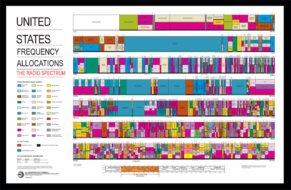
Airbase Emerges From Stealth With $5M to Automate Spectrum Allocation
As demand for spectrum grows alongside the rising number of missions in orbit, a new startup is looking to ease management of this precious, finite resource.

One-On-One With SDA’s GP Sandhoo
It’s been about six months since the SDA launched its first operational tranche of satellites—but troops still aren’t benefiting from the better comms tech because of a series of small issues that forced the agency to take a “strategic pause,” SDA Acting Director Gurpartap “GP” Sandhoo told Payload.

Ramon.Space, Ingrasys Aim To Fly Prototype Orbital Data Center In 2027
There’s another entry in the space-data-center race.
Contrivian Launches New Product Bundling Amazon Leo & Starlink
Customers looking for satellite connectivity are often forced to choose between one provider or another. Those days are over.

As space missions evolve beyond single-satellite deployments to multi-vehicle constellations, in-space servicing, and lunar exploration, the operational burden placed on engineering teams has grown exponentially. With that shift comes a new imperative: Mission operations software must be as advanced and agile as the hardware it supports.
Laura Crabtree, cofounder and CEO of Epsilon3, had a front-row seat to these shifts. As a former SpaceX mission operations lead, Crabtree now uses that experience to helm a team helping space and defense companies.
That team at Epsilon3 modernizes and scales their customer operations using secure, cloud-based tools. In a recent interview, she discussed what drives complexity in today’s missions—and how the right software can help teams stay compliant, safe, and synchronized.
Keep reading