



Seraphim Space Investment Trust ($SSIT) announced yesterday its financial results for H2 2025, revealing a successful portfolio of global space businesses that have seen valuations buoyed by geopolitical trends.
By the numbers:
- SSIT posted a 20% increase in net asset value over the period, totaling £337.5M (€388.3M);
- The fair value of the portfolio exceeded 200% of its cost for the first time (excluding FX losses);
- The top 10 holdings logged 79% year-over-year revenue growth;
- 85%+ of portfolio by fair value is projecting EBITDA profitability in 2026;
- 77% of portfolio has at least 12 months of cash runway;
- SSIT’s share price is up 160% YoY.
Friends in high places: Seraphim CEO Mark Boggett attributed the positive results, in large part, to national governments who have come to see space assets as vital to national security.
Global governments are investing in building fleets of spacecraft to tackle missions from sovereign comms to local EO and ISR capabilities. Increasingly, it’s the startups—not established A&D primes—that are winning these contracts.
“What’s happening in this period is that certain companies are becoming neo-primes,” Boggett told Payload. “They are demonstrating…best-in-class technology, the ability to be able to build and develop reliable products at low cost, and that they can provide a rapid delivery. All of the things that traditional primes have been challenged to do.”
To this end, Seraphim’s results highlighted a few major funding and defense wins that have impacted its portfolio:
- ICEYE formed a joint venture with Rheinmetall, which helped the JV secure a €1.7B contract from the German Bundeswehr.
- Tomorrow.io secured $175M (€151M) in equity funding, and signed a partnership to integrate its weather intel into Palantir’s platforms.
- HawkEye 360 closed a $150M Series E, and established a $100M+ RF data-access agreement with an unnamed strategic partner.
- SatVu received £30M (€34.5M), with backing from the NATO Innovation Fund and British Business Bank.
- A Pixxel-led consortium was selected to build India’s national EO constellation.
Boggett expects these deals to create a flywheel effect: As more government buyers turn to startups to build critical in-space infrastructure, the prominence of the startup scene will increase and in turn, breed more opportunities. And just as many nations are clamoring to build sovereign EO or communications constellations, Boggett expects demand to spread into new capabilities being built by world powers, such as missile warning, tracking, and defense, à la Golden Dome.
Where to now? While Seraphim’s results reflect a positive trend in the space industry, the company says it is still just getting started.
“What we’re demonstrating here are the early movers…there’s a juggernaut that’s coming behind all of this,” Boggett said. “There’s a new era upon us where mega launch closes the business case for some of these big infrastructure plays that we’ve just been quietly positioning ourselves in.”
Seraphim has multiple investments looking to capitalize on the entire value chain of a future ISAM economy, Boggett explained. The company has backed Voyager Technologies’ commercial space station plans and many of its future “tenants”—as well as ATMOS Space Cargo, which is building a return route for goods manufactured in-space.
“This is a bumper set of results, but it’s only the beginning of the process,” Boggett said.
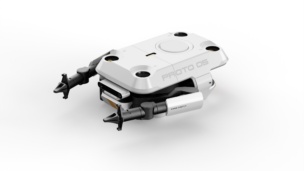
Voyager and Icarus Team Up on ISS Robotics Demo
The pages of the ISS manifest are starting to look a lot like those of a sci-fi novel.

Transporter-16 Sends 119 Payloads to Orbit
The latest cargo train to orbit has left the station.

Starcloud Raises $170M Series A at $1.1B Valuation
The fundraise highlights not only the overwhelming demand among investors to fund orbital-data-center ventures, but also Starcloud’s unique position as a data-center startup with flight heritage.
Xona Space Systems Raises $170M Series C to Scale Private GPS
Xona has spent the past few years building its ability to transmit PNT signals in LEO that are stronger, more accurate, and more secure than traditional GPS.

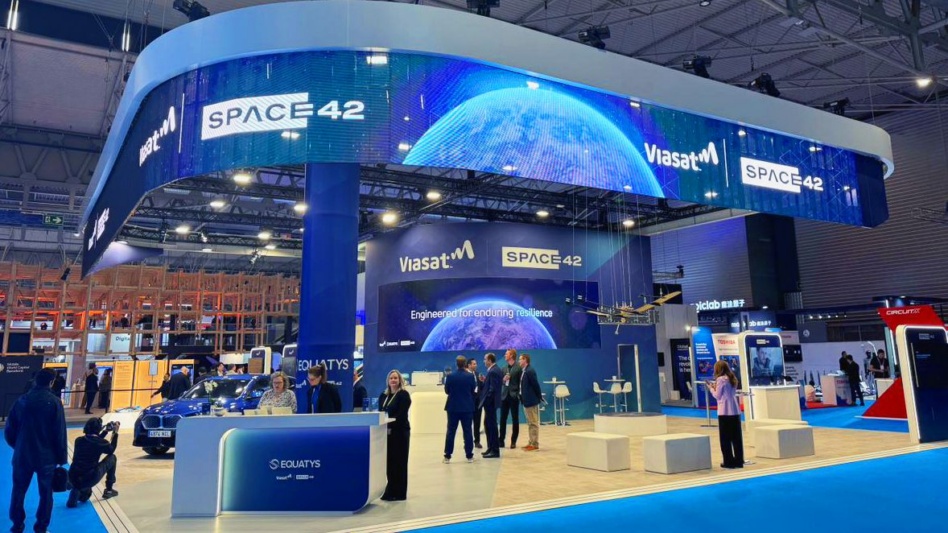
BARCELONA, Spain — Satellite operating giant Viasat ($VSAT) and its UAE-based partner Space42 ($SPACE42) have filings for a constellation of up to 2,800 sats to bring connectivity to billions of people with their Equatys joint venture, announced in September.
The two companies cancelled a media roundtable here at the Mobile World Conference following American strikes in Tehran, which stranded countless execs in Middle East airports due to the ripple effects on global air traffic. However, Viasat CEO Mark Dankberg still shared a rundown with Payload at the conference about the Equatys’ priorities.
“Equatys is establishing an industry-first tower company model that can deliver the lowest unit cost of satellite capacity, while preserving each partner’s spectrum rights and sovereign interests. What that means for people all over the world is ubiquitous, affordable, scalable mobility,” Dankberg told Payload. “The idea is that if we share the infrastructure, then the overall costs can go down.”
Keep reading