


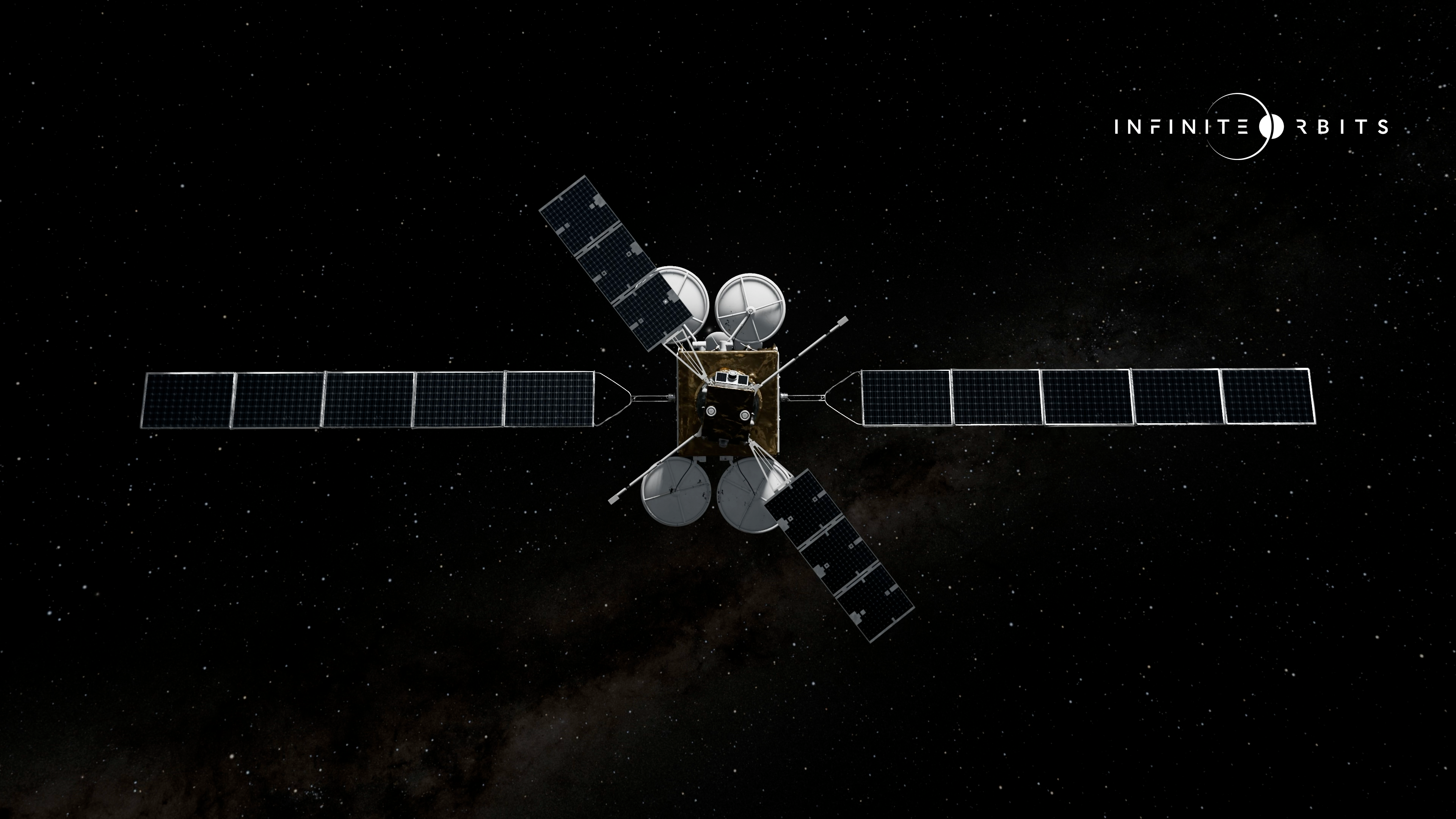
Just because something is old, doesn’t mean you throw it away. That’s the thinking, at least, behind a new mission from French in-space servicing company Infinite Orbits and Luxembourg-based satcom giant SES.
The two companies signed a contract to conduct Europe’s first commercial life extension mission in GEO, targeted to kick off in 2027.
The how: Under the agreement, Infinite Orbits’ Endurance spacecraft will launch, conduct an on-orbit demo, and then dock with an SES satellite in GEO using vision-based navigation tech. Once docked, Endurance will be tasked to perform life extension services, including “station keeping, pointing management, orbital relocation, and end-of-life disposal.”
The why: The mission was supported by the European Commission’s European Innovation Council and cofunded by the national government’s France 2030 program, which has a goal of making France competitive on the world stage.
While it’s not the first international life-extension mission (see: Intelsat and Northrop Grumman), the SES-Infinite Orbits partnership is more than just flag-planting for the French.
“Extending the operational life of our GEO satellites is important for delivering continued value to customers and optimizing satellite economics,” said SES CEO Adel Al-Saleh in a statement.
As Intelsat demonstrated through its two life extension missions, the benefits of longer satellite lifespans are often financial. GEO sats often burn up their fuel before their payloads and other vital components die off, meaning they could continue to generate revenue if only they had more juice.
Add to this equation the fact that European satellites in GEO are required to save enough fuel at the end of their life to fly themselves into deorbit trajectories or graveyard orbits, and the math becomes quite simple. By buying extra years from Infinite Orbits, SES can extend revenues well beyond the satellite operator’s initial expectations, and reduce or delay their investment into replacement sats.
PAVE Space Raises $40M for In-Space Propulsion Tech
PAVE’s propulsion systems rely on a storable rocket bipropellant, which aims to make launch operations simpler and more cost-effective, compared with cryogenic fuels.

Contrivian Launches New Product Bundling Amazon Leo & Starlink
Customers looking for satellite connectivity are often forced to choose between one provider or another. Those days are over.

Inside Austria’s Small But Mighty Space Ecosystem
Austria’s space industry is in the midst of a renaissance, with bigger funding deals and more startup activity.

HyImpulse Signs Launch Agreement with SaxaVord
The second suborbital flight of HyImpulse’s SR75 is expected to lift off from SaxaVord no earlier than Q3 2026.
Seamless, flexible and mission ready.
As satellite missions expand in scope and complexity, traditional communication systems are struggling to keep pace.
Advanced missions demand advanced space communications infrastructure. We must evolve from analog systems to software-defined systems that prioritise seamless, adaptable communications.
Keep reading