



French ground-station-as-a-service startup Skynopy won an award from the French government to integrate a ground antenna, owned and operated by the Kenya Space Agency (KSA), into its commercial network.
The SkyConnect Kenya award from the French Ministry of Economy, Finance, and Industrial and Digital Sovereignty—worth about €500K ($589.6K), according to Skynopy business development lead Nathan Juglard—is part of the government’s push to have French businesses help modernize strategic infrastructure in developing countries.
How it works: Skynopy’s ground-station-as-a-service model works by merging otherwise disconnected antennas into a cohesive network so satellites don’t need to worry about where they downlink their data.
For the Kenya integration, Skynopy will collaborate with Safran Space to deploy hardware in the next few weeks, according to Juglard.
- The companies are deploying modems and other digital infrastructure at KSA’s Nairobi ground station site.
- KSA operates a 4.5 m S- and X-band antenna in Nairobi that, today, connects to a single satellite—the agency’s Taifa-1, launched in 2023.
- KSA may use the partnership to connect Taifa-1 to the rest of Skynopy’s ground network, according to Juglard.
Once online, Skynopy will use the station’s extra capacity during long stretches of downtime to provide downlink services to its customers—and share revenue with KSA.
Built in a day: The award is the latest partnership Skynopy has used to increase its ground-station network without much heavy lifting.
- Less than three years after Skynopy’s founding, the company has integrated 17+ ground stations, a dozen of which came through the help of a partnership with Amazon AWS.
- In September, Skynopy announced an agreement to include 42 Eutelsat OneWeb ground stations in its network by 2028.
- Skynopy aims to grow to 100+ ground stations for near-real-time connectivity before the end of the decade—its network currently offers latencies as low as 20 minutes between ground stations.
“This first project with KSA will be a flagship project that will enable us to accelerate the growth,” Juglard said. “It’s really a model that is quite attractive for not only African space agencies—but also other emerging countries, like in Southeast Asia or Latin America—that have invested a lot on ground stations, [but] are most of the time underoptimized.”
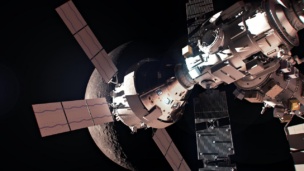
With Artemis Changes, Europe is Left Holding the Bag
ESA and European space primes were developing many of the key components of the planned lunar orbiting station.
Arkadia Space Secures €14.5M to Develop New Biprop Engine
Spanish propulsion startup Arkadia Space just secured a stamp of approval from the European Investment Council.
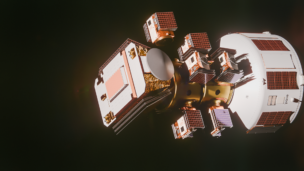
PAVE Space Raises $40M for In-Space Propulsion Tech
PAVE’s propulsion systems rely on a storable rocket bipropellant, which aims to make launch operations simpler and more cost-effective, compared with cryogenic fuels.
Ramon.Space, Ingrasys Aim To Fly Prototype Orbital Data Center In 2027
There’s another entry in the space-data-center race.

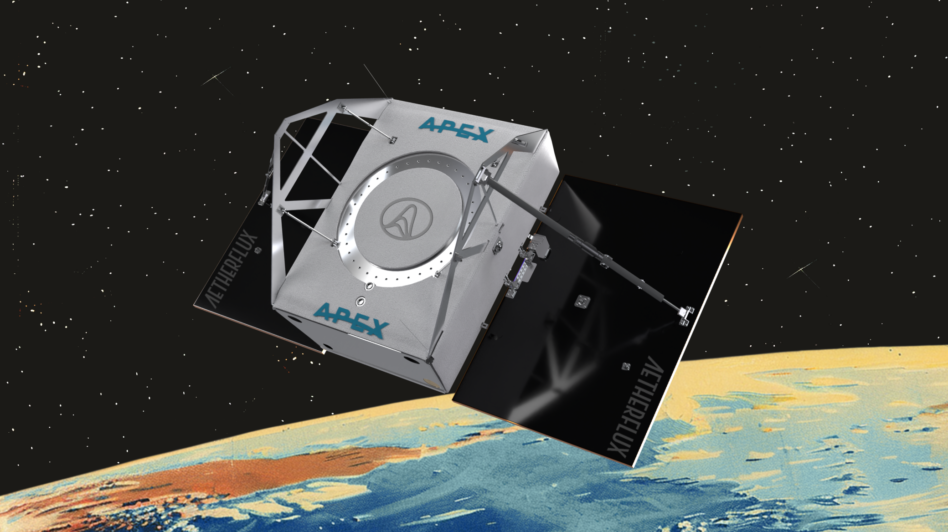
The face of space-based solar power (SBSP) is changing due to surging interest in in-space industry and data centers. While some companies are racing toward these new opportunities, others are sticking with the technology’s original goal of powering life on Earth.
“Using space for power purposes has fundamentally changed, just in the past few years. It went from pie-in-the-sky science fiction…to now, when there’s not only a resurgence of interest in beaming power down to the ground from space, but now putting the actual load up in space,” Marc Berte, founder and CEO of space solar startup Overview Energy, told Payload.
Some of the largest US tech companies are exploring space-based data centers.
Keep reading