


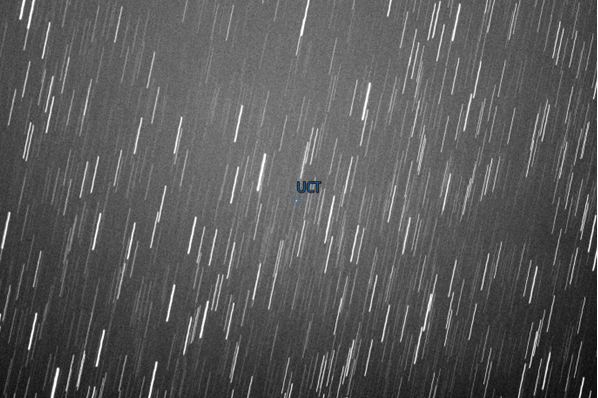
A Russian sat spent five weeks in MEO without the US public SDA database knowing its whereabouts. Slingshot Aerospace found it after just a few hours of looking.
The achievement highlights how adept SDA companies have become at finding uncataloged things in orbit. So what does it look like when astrodynamicists go hunting for a Russian sat missing in US records?
Lost & found: On Sept. 13, Russia launched its Soyuz-2.1b rocket carrying two satellites: a GLONASS sat, part of Russia’s nav system; and Mozhayets-6, an experimental satellite built by Russia’s Mozhaisky Military Space Academy.
Shortly after launch, the US public catalog of orbital objects listed the upper stage of the Soyuz rocket, as well as the GLONASS payload operating in MEO 19,100 km above Earth. Mozhayets-6, however, was unaccounted for.
This didn’t sit right with the team at Slingshot, who have an imperative to maintain “the most accurate, comprehensive and complete space object catalog,” according to Audrey Schaffer, Slingshot’s SVP of global policy and government strategy.
The process to find the missing sat went as follows:
- Intel gathering: Slingshot had a starting point. On Sept. 14, Swiss SSA company s2a systems posted a picture on X of the GLONASS payload being trailed by a fainter, tumbling object. Using Seradata, Slingshot’s database for satellite information, astrodynamicists determined that Mozhayets-6 was around 100 kg—such is the power of the Seradata scraping tool that Slingshot couldn’t immediately tell Payload where this insight originated.
- Theorizing: With those nuggets, Slingshot estimated the expected brightness of the missing sat, as well as the maximum distance it could be from its last location. The company now knew what it was looking for, and generally, where it needed to look.
- Tasking: Slingshot’s Global Sensor Network (SGSN)—which has more than 200 sensors across 20+ locations—began the search, and spotted an object that fit the bill within a few hours.
- Tracking: Slingshot was able to form an initial orbit determination using Slingshot’s Multiple Frame Assignment Space Tracker (MFAST), which is software that fuses together data from all of the company’s sensors. Slingshot added Mozhayets-6 to its catalog, allowing additional SGSN sensors to continue tracking the object going forward.
The bottom line: Geopolitical tensions are heating up in orbit. In response, Western governments—including the US, UK, France and Germany—have increased their space defense budgets, and SDA companies like Slingshot are leaning more heavily on AI to keep an all-seeing eye on orbit.
As time goes on, Slingshot officials expect AI to become even more ingrained in the satellite operations.
“We’re increasingly looking at…how do we use that AI to really improve space safety and make recommendations,” Schaffer said. “And this is where we get into space traffic management, operations and training—helping a whole wide range of space operators make smart operational decisions, to keep their fleet safe in an increasingly congested and contested environment.”

Advanced Navigation Raises $110M Series C
Not many space companies want to reduce the world’s reliance on satellite infrastructure, but that’s the pitch that landed Australia-based Advanced Navigation a $110M Series C.
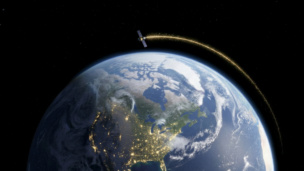
Nvidia Unveils New Hardware to Unlock Orbital Data Centers
Orbital data centers may be just over the horizon, but we’re starting to get a better picture of what they’ll look like when they arrive.
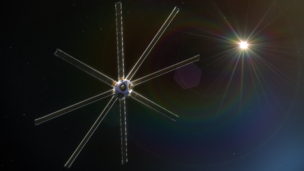
Mantis Space Emerges from Stealth with $10M Seed
Mantis Space is aiming to bring power into the light—and now it has the money to do so.
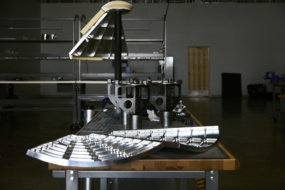
Lux Aeterna Closes $10M Seed to Build Reusable Sats
Everybody loves a reusable rocket—so why has the rest of space hardware remained stubbornly single-use?

The Space Force is plotting for a complex future in Earth’s orbit, and that takes a lot of big-picture thinking and coordination. To set the stage for that future, the branch released a new type of strategic guidance document on Friday, which it’s dubbed Vector 2025.
The document includes guidance for each of the Space Force’s four service activities: Force Design, Force Development, Force Generation, and Force Employment. The goal? To give servicemembers clarity on the service’s big picture mission and organization so that they can do their jobs more effectively.
“If every Guardian can internalize the concepts contained herein, I am confident that we will accelerate our transformation into a warfighting service; a service that embodies warrior ethos, outpaces our adversaries, and protects our Joint Force and our nation from space-enabled attack,” Chief of Space Operations Gen. Chance Saltzman said in the document’s foreword.
Keep reading