


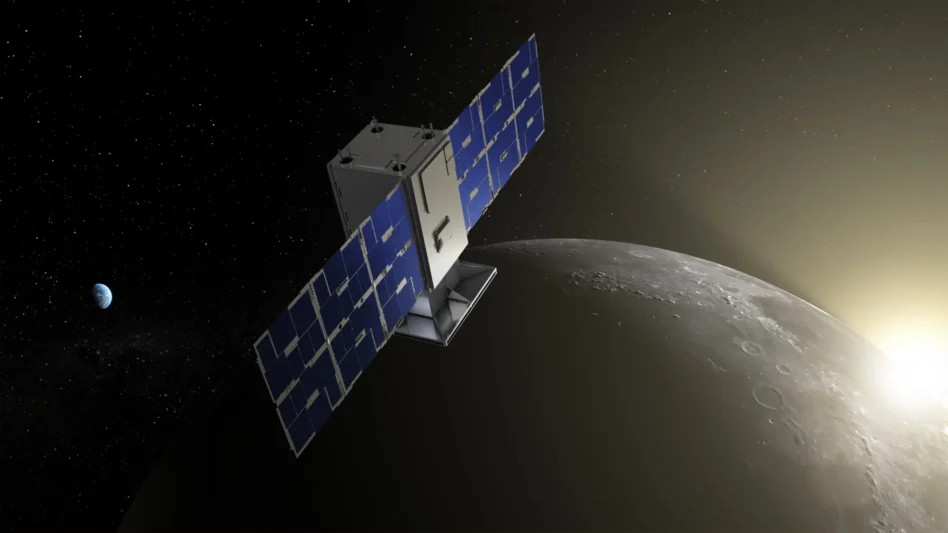
SALT LAKE CITY—Using smallsats could help keep planetary science missions going in the current tight budget environment, according to one researcher using the platforms to study Mars.
“The allure of more science per dollar with a tolerance of losing one out of every, say, five [missions] is the way to thrive in a lower budget environment,” said Rob Lillis, the principal investigator of the ESCAPADE mission and the associate director for planetary science at University of California, Berkeley. “A much larger fraction of science missions [using] this kind of higher risk tolerance approach would bring taxpayers better value for their science dollars.”
The administration’s request would cut nearly 25% of NASA’s budget in fiscal 2026, including $3.4B from the agency’s science portfolio alone. While Congress seems on track to approve a higher budget for the agency, NASA still likely will have to get creative to contend with shrinking budgets and competing priorities from the government.
Past is precedent: Small satellites have historically mainly made their homes in LEO, but more and more operators are shrinking the size of the platforms they send to GEO—and beyond, to the Moon and Mars.
NASA has worked on two prominent examples that suggest size shouldn’t matter when it comes to exploring the solar system.
- CAPSTONE (Cislunar Autonomous Positioning System Technology Operations and Navigation Experiment): This cubesat studying navigation tech, and halo-shaped orbits around the Moon, launched in 2022.
- ESCAPADE (Escape and Plasma Acceleration and Dynamics Explorers): This pair of smallsats are expected to launch this fall, and will be tasked with studying how space weather interacts with the Martian atmosphere.
Risky business: Lillis was careful to note that NASA shouldn’t rely on smallsats for every planetary science mission, since failure is a real risk when keeping budgets low.
It’s a lesson learned all too well by Bradley Cheetham, the cofounder and CEO of Advanced Space. Cheetham faced a pandemic, a problem with a thruster, and a communications anomaly on the path to get CAPSTONE to the Moon.
“Small-spacecraft missions are not the kinds of things where you get to invest all your money in up front risk reduction,” he said. “It doesn’t look like anything like what you think it’s going to look like, and you have to be very stubborn to get there.”
NASA Outlines the Details of Artemis III and IV Missions
NASA still wants to return US astronauts to the Moon in 2028. Today, officials shared a progress update on their efforts, as well as the finer details of the mission plans for Artemis III and IV, targeting flights in 2027 and 2028, respectively. Long story short: NASA remains confident it can meet the timeline for…
National Academies Rank Nonpolar Moon Sites
A new report from the National Academies ranks the top four non-polar sites for future crewed lunar missions.

UKSA Taps ClearSpace for Country’s First Debris Removal Mission
The UK Space Agency is dressing up as a waste-management company for Halloween.

NASA Signs Space Nuclear Pact, Says Moon Base Is Ahead of Schedule
Isaacman gave updates at the White House’s “Science: A New Golden Age Summit.”

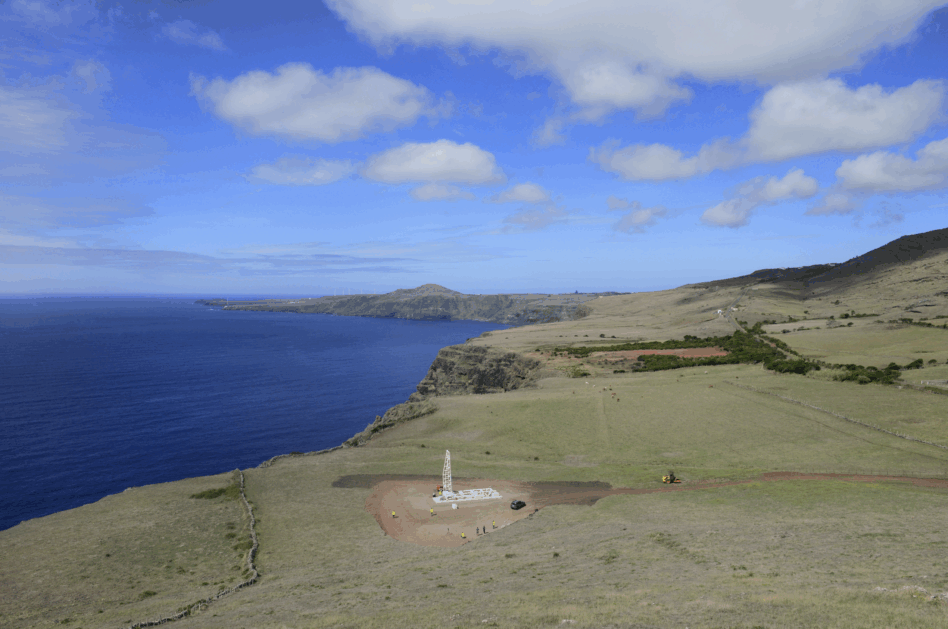
The Azores are a great spot for a getaway. Just a few hours by plane from Europe, the archipelago boasts sandy beaches, a tropical climate, and soon, a shiny new spaceport.
The Atlantic Spaceport Consortium (ASC) secured a five-year license from Portugal’s space authority this week to build and operate a launch center on the island of Santa Maria. The license increases the pool of available spaceports in Europe at a time when multiple launch companies are rushing towards their first liftoff attempts next year.
“Europe is clearly in need of strengthening its autonomous access to space, especially as new launchers are being developed across the continent,” Ricardo Conde, president of the Portuguese Space Agency, told Payload via email. “[Santa Maria] is a complementary option that enhances European launch capacity, promotes competition, and increases operational resilience.”
Keep reading