


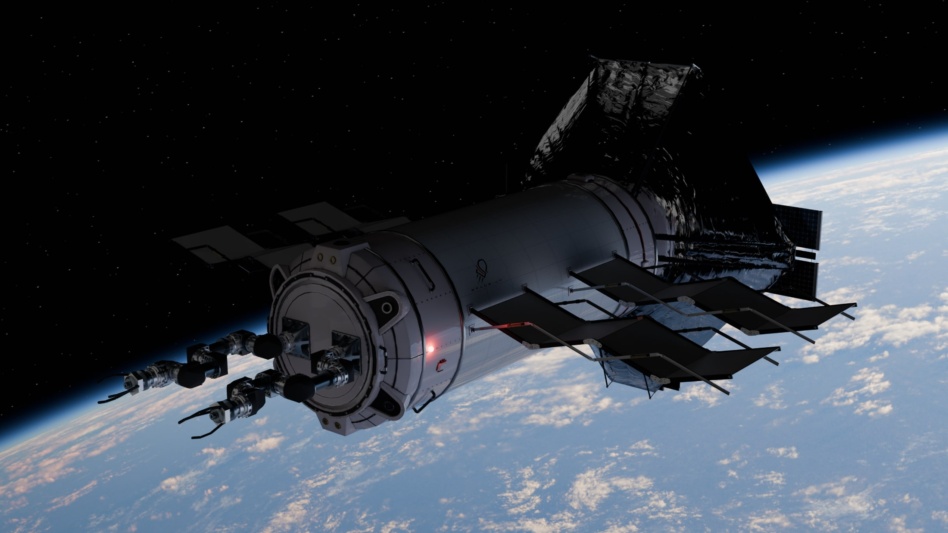
Robots can defuse bombs, do some surgeries, and clean those pesky crumbs the kids left behind after lunch. But getting a bot to work precisely in orbit raises challenges not faced on the kitchen counter.
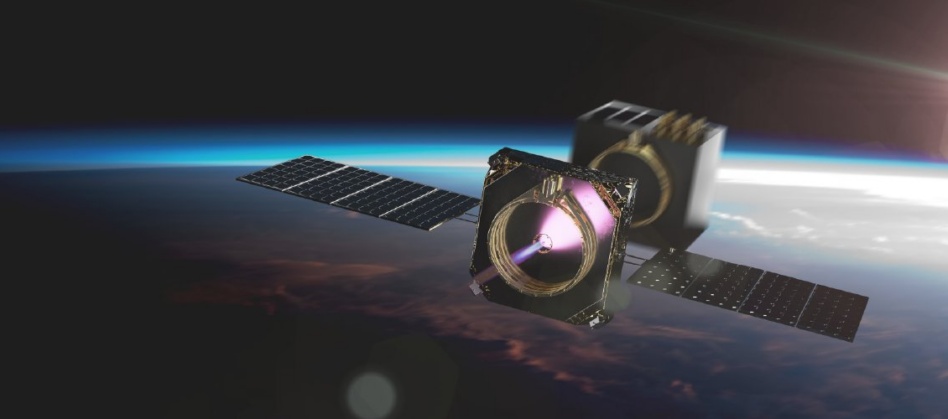
Spacecium recently showed it can defy space’s swinging temperatures and high radiation. Their recent in-space demo, announced on Tuesday, aimed to prove the next gen of space robot arms won’t just build things, but fuel things.
Diesel droid: Spaceium emphasized that their demo “wasn’t a concept or a ground test.” However, it should be seen as a small step in space fueling. They flew an actuator on SpaceX’s Transporter-15 mission in November that—when tested in orbit—achieved a 0.003-degree rotation accuracy.
“When paired with a robotic arm the size of those already used in space today, that level of precision would translate to less than a millimeter of movement at the far end,” Spaceium officials said in a blog post.
Actuators contain and direct the small movements of robots—and the test shows it may be possible for Spaceium’s tech to deal with finicky fueling operations in space.
Classical gas: Future missions by Spaceium arms will aim to demonstrate fuel transfers in space, eventually using a full-scale refueling system. But the company is far from the first to think about ways of gassing up.
NASA, MDA Space, and DARPA all considered refueling schemes in past decades. Several companies today are filling up in orbit, and not necessarily with robot arms.
- Northrop Grumman’s Mission Extension Vehicle-1 (MEV-1) concept used a fueled-up, add-on spacecraft to successfully dock with and maneuver the Intelsat 901 GEO sat between 2020 and 2025. MEV-2 is providing the same service to Intelsat 10-02.
- Astroscale US is planning two refueling operations of DoD GEO sats in 2026, using a spacecraft equipped with Orbit Fab refueling interfaces.
Infinite Orbits Expands into the UK with Lúnasa Acquisition
French in-orbit servicing startup Infinite Orbits is on a buying streak.
Momentus and NASA Will Collab on RPO Demo
The mission will test technologies including multispectral satellite inspection, formation flying, and WiFi-based inter-satellite links.
UK to Invest Nearly £1M In In-Orbit Manufacturing
UKSA awarded contracts to three companies worth a combined $1.1M+ to advance in-orbit manufacturing.

Starfish Wins SDA Deorbit-As-A-Service Contract
Starfish says this marks the first contracted mission for end-of-life satellite disposal services, in comparison to typical missions that treat disposal as a one-off or a demo.

Momentus Inc. ($MNTS) announced yesterday that it signed a Space Act Agreement with NASA to conduct an RPO demo mission on SpaceX’s upcoming Transporter-16 flight, which is expected to launch no earlier than March.
The agreement is designed to prepare for future in-space servicing missions, and will validate a handful of technologies, including multispectral satellite inspection, formation flying, and WiFi-based inter-satellite links.
I spy: The mission will begin with NASA’s R5-S10 cubesat hitching a ride to orbit alongside other hosted payloads, onboard Momentus’ Vigoride 7 Orbital Service Vehicle.
Keep reading