


Stoke Space had enough capital at the end of last year to fund the first few flights of its Nova rocket—and now, it has even more.
Yesterday, the Washington-based launcher announced the closing of a $350M extension round, on top of the $510M Series D it announced in October. The addition brings Stoke’s total funding to $1.34B.
While the company did not disclose the investors in the latest round, previous backers include US Innovation Technology fund, which focuses investment on technologies tied to national defense.
Hit orbit running: The company is aiming to fly its Nova rocket on its an inaugural mission this year.
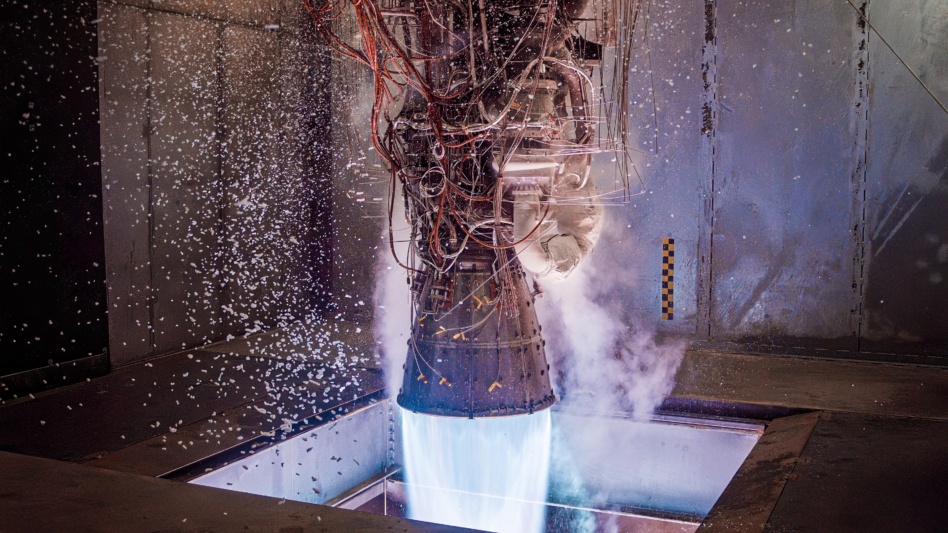
- Since October, Stoke has put its Zenith first stage engine through its paces, including gimbal tests, and demos pushing the limits of its turbomachinery.
- Stoke also appears to have finished refurbishing LC-14 at KSC—the historic location of John Glenn’s flight to orbit in 1962—setting the stage for flight one.
Stoke is laying the groundwork to make a big splash with its first Nova flight. CEO Andy Lapsa told Everyday Astronaut last year that the inaugural mission is aiming to reach beyond orbit.
“We’ll basically go out of orbit on flight one,” Lapsa said. “Part of the reason we did that was to just make no question about it, we want to first of all show that we can do those high-energy trajectories with this vehicle, even though it’s relatively small.”
Reusability: From the beginning, Stoke designed Nova to be reusable, betting that “aircraft-like frequency,” will be pivotal to competing with more established launchers, Lapsa said.
The pathway to reusability follows a familiar crawl-walk-run trajectory, and the feat will be developed through multiple demonstration flights.
“The focus for the team, which is still very, very small, is get to orbit,” Lapsa said. “Just like a Falcon 9…you’ll see a similar progression: we’ll reenter, we’ll relight the engines, we’ll target a position in the ocean, we’ll hover, and then we’ll go put things in harm’s way.”
Xona Space Systems Raises $170M Series C to Scale Private GPS
Xona has spent the past few years building its ability to transmit PNT signals in LEO that are stronger, more accurate, and more secure than traditional GPS.
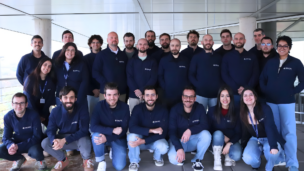
Arkadia Space Secures €14.5M to Develop New Biprop Engine
Spanish propulsion startup Arkadia Space just secured a stamp of approval from the European Investment Council.
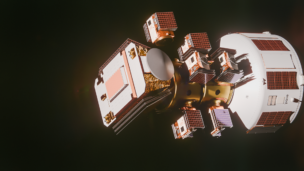
PAVE Space Raises $40M for In-Space Propulsion Tech
PAVE’s propulsion systems rely on a storable rocket bipropellant, which aims to make launch operations simpler and more cost-effective, compared with cryogenic fuels.

Airbase Emerges From Stealth With $5M to Automate Spectrum Allocation
As demand for spectrum grows alongside the rising number of missions in orbit, a new startup is looking to ease management of this precious, finite resource.


One of Rep. Mike Haridopolos’ (R-FL) top priorities for the space subcommittee in 2026 is making sure robust cooperation between the public and private space sectors continues.
“We don’t have the budgetary ability to do everything and now—unlike 10 years ago—there is a business case to be made,” he said. “It was once exclusively a government operation, and there was no business sense to it. That has changed dramatically. “
The chair of the House space subcommittee told Payload that NASA and the commercial space industry have different strengths and weaknesses—and he’s hoping greater partnerships can help both sides learn from each other.
Keep reading