



Everyone wants their own eyes in space—and the EO industry is benefiting from it.
The wars in Ukraine and Iran have proven that EO data is incredibly valuable—especially in times of conflict. As global relationships are strained and alliances shift, nations are standing up their own EO capabilities, rather than relying on sharing data with allies. This has a twofold benefit for nations: they get guaranteed access to answers from space—and the national pride that comes from a sat sporting their flag in orbit.
“The No. 1 change in the industry has been the drive in the international community to have sovereign services versus just shared information,” Dan Smoot, the CEO of Vantor, told Payload. “This has driven true capability development at a country level that I don’t think the industry has ever seen.”
Payload spoke with seven C-suite executives in the EO industry—from Vantor, Hawkeye 360, Wyvern Space, ICEYE US, Planet Labs, SkyFi, and BlackSky—about the biggest trends and challenges they’re seeing in the industry in 2026.
Yes, and: The industry has announced some big money international deals this year with unnamed international customers. Here are some examples:
- BlackSky announced two seven-figure deals and one eight-figure deal with international customers, over a span of just two weeks in February.
- Vantor announced three contracts worth a combined $204.7M, with customers in the Middle East and Africa.
- Vantor also inked a multi-million-dollar contract with a South Asian government.
Companies are seeing countries look to buy one or two sats, to dip their toe into the EO industry. While that’s not enough hardware to move the needle, countries typically also buy commercial tasking and imagery to augment their sovereign sats. That gives countries the security that they own their own assets, while also giving them the benefit of the rapid revisit offered by industry.
“All the deals we’ve seen include sovereign hardware and software bundled with commercial data,” BlackSky CEO Brian O’Toole told Payload.
And the demand, O’Toole said, is global—from Europe, to the Middle East, to the Asia-Pacific, to South America., All sectors of the globe have a need for an overhead view, and a drive to boost their independence.
‘One Piece of the Puzzle’
Some countries have their sats and their commercial imagery—but still can’t make sense of the data they’re getting to get the answers they need. Considering EO, SAR, and hyperspectral imagery individually in a silo only provides “one piece of the puzzle” to countries looking for a complete solution, according to Luke Fischer, cofounder and CEO of SkyFi.
“They’re missing the analytic suites, the combined imagery,” he said. “It’s very common to see some of these nations starting to buy constellations from one or two providers…but then it’s the so what? They’re like, ‘Great, now I have some satellites. How do I get the data? How do I use the data? How do I put it in warfighters’ hands?’ That’s a big gap that we hear over and over.”
I spy, AI: Company leaders say international customers are looking to buy from true end-to-end providers that can help them get from tasking in orbit, to answers for troops quickly. To meet that demand, industry is selling services such as tasking automation, and AI-driven analysis alongside its spacecraft and commercial imagery.
The EO industry is focused on allowing customers to get the answers they want without being experts in imagery analysis, and without sifting through a lot of data, according to Planet Chief Space Officer James Mason.
“AI is bridging both of those,” he said. “We’ve been talking about it for 10 years, but AI tools are finally reaching a point where they can take massive data sets to compress and simplify down. That’s the inflection point we’re at as an industry.”
With great power comes great responsibility: Company leaders emphasized that the industry’s successful use of AI relies on having good foundational data—and that straying from that requirement can quickly breed trust issues in the tech that’s key to broader adoption of EO tech.
“EO has been plagued by trust issues for the last 15 to 20 years,” Chris Robson, the CEO and cofounder of Wyvern, told Payload. “If you talk to any farmers who were promised something they could do with EO or a drone, you’ll see right away how much trust has been lost. So it’s really fragile with commercial partners, and intelligence, and the defense community. There’s already a sense of, ‘Can we trust this data?’”
CEOs worried about deepfakes in EO imagery—and noted how quickly trust can erode from customers and the public if companies don’t maintain a high bar.
“AI can be disruptive in the wrong way if we’re not addressing it from a market perspective,” Smoot said.
When Disruption Becomes Chaos
While American EO companies ramp up their sales to overseas customers looking for sovereign solutions, the US government still remains a top buyer for the industry. However, US government work has come with a side of volatility over the past year, according to Patrick Zeitouni, Hawkeye 360’s chief strategy officer.
Here’s the good, the bad, and the ugly of what companies selling to the US government have dealt with over the past year:
- More opportunities as the government looks to work with new industry partners;
- Challenges getting contracts done, because contracting staff have been laid off;
- The longest government shutdown in US history, plus continuing resolutions;
- Launch bottlenecks, including issues going through launch integrators that already bought up most capacity on the ever-popular SpaceX, according to Zeitouni;
- A months-long lapse of the SBIR/STTR programs.
“We do want disruption…but there is such a thing as too much disruption,” Zeitouni said. “If you have so much disruption, at some point it just becomes chaos….I don’t think we’ve tipped over into too much disruption…It was a series of unfortunate events that all compounded on each other, not a systemic thing. But it’s been a bit of a brutal six months.”
Despite that, Congress and the White House have shifted more government projects to relying on commercial EO providers—which is the right idea, according to ICEYE US CEO Eric Jensen. Still, he said the changes aren’t trickling down to an operational level fast enough.
“Old habits often die hard, especially in EO, because we have such a legacy as a nation of building really complex systems,” he said. “Bureaucracy doesn’t change over a year, but we need to move faster.”
Others, however, argue that rapid change by the administration is a fair price to pay for the opportunities offered to commercial customers.
“It is chaotic, but the chaos has actual purpose,” Smoot said. “Yes, I think that there is a new way of doing business with this new administration. But I think that at the end of the day, if you’re accomplishing the goals that they want to accomplish, there’s a lot of upside with this new administration, too.”
The State of Satcom 2026
With SpaceX and Amazon storming into the satcom market, traditional players and startups alike are realizing they can’t compete directly with these growing giants—and are pivoting to find creative new ways to play in the crowded market.

ICEYE Smashes Its Own Revenue Projections
ICEYE’s results reveal a massively successful year for a business in the right place at the right time.

Planet Labs Extends Middle East Space Imagery Restrictions
Planet Labs just proved that dual use doesn’t necessarily mean equal priority.
ICEYE Launches New Deforestation Monitoring Tool
ICEYE just one-upped the Lorax. Instead of speaking for the trees, the SAR satellite manufacturer is letting the trees speak for themselves.
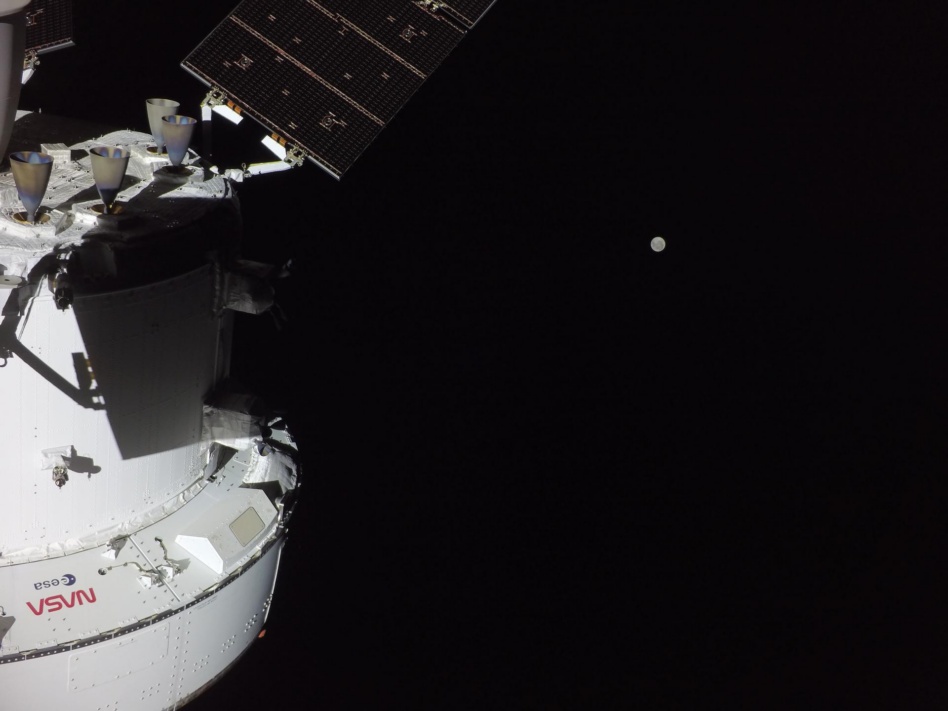
The US is bringing people back to the Moon—but this time, those of us stuck on Earth will get a better view.
Redwire has built 11 cameras that are installed around the inside and outside of the Orion capsule, Kaylee Geidel, a senior systems engineer at Redwire, told Payload.
Dual use: Anyone who has seen the Earthrise image snapped during Apollo 8 in 1968 knows firsthand the value of space imagery. A generation of people were inspired by the photographs that came out of the Apollo program—and there’s hope that pics collected by Redwire’s hardware will do the same for the Artemis generation.
Keep reading