


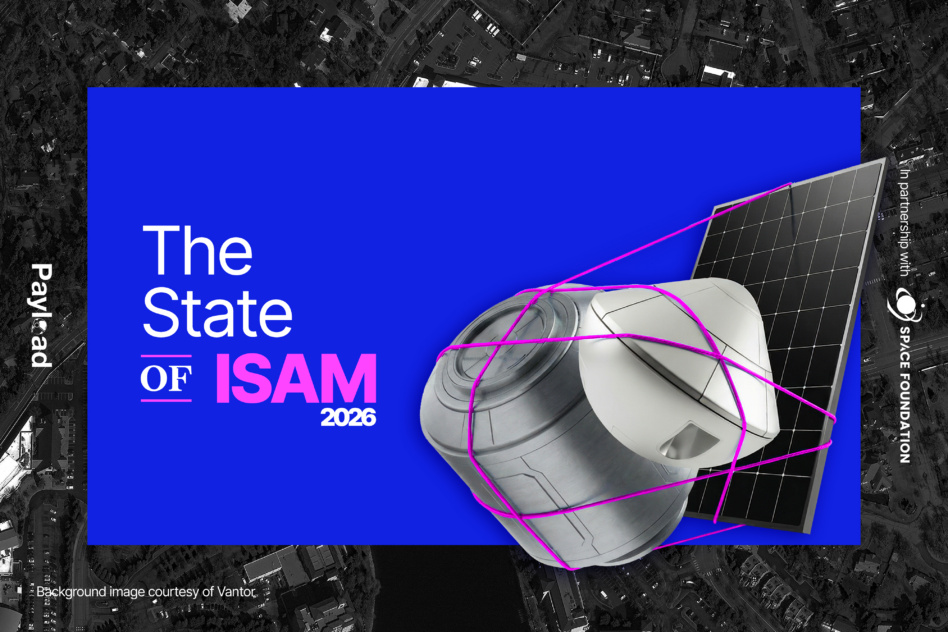
It’s becoming increasingly impossible to cover ISAM as a single idea. As a subsector of the space economy, in-space servicing, assembly, and manufacturing encapsulates a massive pool of businesses—A&D primes and startups alike—each working on their own pathway to operationalize a disparate set of competencies.
Each capability is at a vastly different development stage.
- In-space servicing is starting to log some early wins, with spacecraft regularly launching to image and inspect other satellites. Many companies have also begun demonstrating RPO.
- Assembly is perhaps the furthest away from reality. There are some missions on the docket to push forward the possibility of building large structures in space, but as of yet, everything that flies in orbit has to fit inside a rocket fairing.
- Manufacturing is building into a real marketplace. Multiple reentry vehicles have shown how they can return manufactured material from space, and (despite change afoot at NASA) commercial LEO destinations (CLD) are on the precipice of launch.
Payload spoke with officials from nearly a dozen ISAM-related businesses, each of whom described a similar pathway to graduate from one-off government-led providers to regular commercial operators.
Thank You For Your Service
Servicing is still overwhelmingly driven by government and defense buyers. While some demonstration missions have already flown, even more are on their way in the year ahead. With each new mission, the reliability of in-space servicing grows, and the boom in commercial opportunities could be just around the corner, according to multiple officials.
“They’re all still pretty much bespoke, one-off contracts for all of us in the sector. No one is putting in for a five-mission servicing [contract] to GEO…that’s, of course, what investors want to see,” Astroscale COO Chris Blackerby told Payload. “It’s something of a critical time, where we have to prove ourselves. We—writ large—have to prove that we can do this, and that this is a viable mission line.”
Everything in the servicing world hinges on making RPO an everyday task. In-orbit refueling, satellite inspection, and up-close repair and replacement missions all depend on companies first mastering getting close and making contact safely.
It’s the space industry’s latest chicken-and-egg problem—but once the problem can be cracked, Starfish Space Chief Growth Officer Michael Madrid predicts commercial demand will follow soon after.
“When we go and talk to GEO operators, they understand what life extension is. They’ve thought through the business case, and now you go and compete on whether you can do it on a relevant timeline—or do it at a price point that closes the business case,” Madrid told Payload.
For the most part, in-space servicing is constrained to life-extension missions and remote-satellite-inspection services, but the foundations are being laid to aim for more robust offerings in the future.
- Astroscale and Orbit Fab, the in-space refueling startup, plan to launch their first refueling mission in GEO for the US Space Force this year.
- Astroscale also has a de-orbit mission—ELSA-M—scheduled to launch on an Isar Aerospace flight NET May 2027.
- Northrop Grumman is planning to launch its MRV servicing vehicle this year. MRV is equipped with robotic arms to perform more involved servicing and repair capabilities in the future.
The progress, for the most part, is streaming out of the government sector, as nations look to increase their in-space capabilities to further defense applications. The commercial future, however, is looking brighter than ever. As companies begin to launch larger satellites, and new applications such as in-orbit data centers come online, the possibility that satellites will want to be upgraded and serviced in the years ahead stands to grow.
“China has been demonstrating very aggressive uses of RPO in space,” Katalyst Space Technologies CEO Ghonhee Lee told Payload. “The US is very concerned…so that pacing challenge is forcing national-security leaders to say, ‘We need to be pushing this thing forward—the set of capabilities—and we’re willing to take on risk in that deployment.’”
Assembling a Dream
The assembly piece of ISAM is in a much different position. While there have been a few missions focused on building structures in orbit, with more on the way, the idea is still a far cry from the other ISAM capabilities that are beginning regular demo flights.
There’s widespread agreement about the need to assemble large structures in space. NASA’s Ignition announcement last month highlighted the agency’s appetite for building a lunar base. The promise of power-beaming technologies and orbital data centers all hinge on the ability to operate vehicles larger than the size constraints of rocket fairings.
Officials at ISAM-focused companies even point to assembly as being the glue that will one day tie the ISAM term back together.
“Imagine the possibility of grabbing defunct satellites, or all the garbage that [is] both in LEO or in GEO, and moving them into a recycling station in orbit,” D-Orbit CEO Luca Rossettini told Payload. “This recycled material will become raw material that in-orbit manufacturing stations can use in order to develop new [satellites] …This is what we’re building now.”
Perhaps one day.
Manufactured Reality
In-space manufacturing is perhaps the closest to becoming a commercially viable industry. Companies have proved the technical viability of a wide range of in-space manufacturing applications, from pharmaceuticals to semiconductor precursors, and companies argue a vibrant in-space manufacturing economy is rapidly forming.
“We are either at that tipping point, or we will look back a year or two from now as having already crossed it in early 2026,” Varda Chief Revenue Officer Eric Lasker told Payload.
On the payload side, companies argue their ability to manufacture things in space has been viable for years, principally through ISS demonstrations. NASA recently changed up its approach to commercial LEO destination (CLD) space stations that would have hosted such manufacturing after the ISS retires, however, by proposing:
- To eliminate the CLD program, with NASA arguing the commercial business case can not yet support the cost of supporting a station;
- To extend the ISS operations another two years to 2032, allowing time to procure a newly announced core module onto which companies could dock their own modules.
If all goes to plan, the core and commercial modules would then form a free-flying entity when the ISS retires.
On the commercial side, however, industry said it is getting the manufacturing space they need to increase their output.
- The market for reentry vehicles is expanding rapidly, and startups from the US and Europe are emerging from stealth in droves, many with demo missions on the docket for the next few years.
- Established reentry companies, like Varda and Orbital Paradigm, are also projecting larger vehicles or higher-cadence flights, to provide commercial-grade supply.
While NASA and the commercial sector seem to disagree on the future of the LEO economy, demand is already being demonstrated. For instance, Voyager Technologies said this year that all of the commercial rack space on the multi-company Starlab Space station has been sold out.
In general, prospects are rising in reverse correlation to launch costs, and many in the industry are looking ahead to the emergence of commercial flights on SpaceX’s Starship before the end of the decade as the watershed moment that will make in-space manufacturing of terrestrial products commercially viable.
“As we get lower launch costs, more people look at what is the actual production that we can do on orbit,” Ryan Reel, Outpost VP of commercial partnerships and product strategy, told Payload. “It makes things that were historically not cost effective for development and high scale deployment [possible].”
Starfish Closes $100M+ Series B
Point72 Ventures led the round, which was also co-led by Activate Capital and Shield Capital.

The State of EO 2026
Everyone wants their own eyes in space—and the EO industry is benefiting from it.

The State of Satcom 2026
With SpaceX and Amazon storming into the satcom market, traditional players and startups alike are realizing they can’t compete directly with these growing giants—and are pivoting to find creative new ways to play in the crowded market.
Exclusive: In-Orbit Manufacturing Startup Dispatch Emerges from Stealth
Dispatch emerged from stealth this week with $500,000 in funding to build an uncrewed space station that will host manufacturing infrastructure on orbit


When the Artemis II astronauts left LEO, they were the first in more than 50 years to brave the radiation of cislunar space.
Czech company ADVACAM has six chips flying on the mission to measure how cosmic radiation effects the astronauts—and the electronics on Orion. The aim is to verify radiation shielding on Orion is working as designed, using tech that has already gotten a test drive aboard the ISS.
HERA comes the sun: The chips are embedded in a radiation-sensing instrument called HERA, or Hybrid Electronic Radiation Assessor. With the sun at solar maximum, HERA serves as an instant warning system if a solar flare emerges. To minimize radiation exposure, the crew would move to the storage (central) area of their spacecraft and surround themselves with stowage bags.
Keep reading