



UKSA awarded contracts to three companies worth a combined $1.1M+ to advance in-orbit manufacturing.
Details of the contracts include:
- £300,000 ($410,000) to Cardiff-based Space Forge, which wants to manufacture novel semiconductors in space;
- £295,000 ($404,000) to London-based OrbiSky, and its space-grown optical fiber research;
- £250,000 ($342,000) to BioOrbit, also from London, which experiments with made-in-space pharmaceuticals.
“By backing these innovative companies to explore manufacturing in orbit, we’re positioning the UK to capture new markets and bring tangible benefits back to Earth—from better medicines, to more efficient electronics,” UKSA CEO Paul Bate said in a statement.
Zero-G benefits: In-orbit manufacturing experiments have shown that crystalline materials grow better in microgravity, forming larger and more regular structures that improve the material’s performance. The vacuum of space also exceeds what’s possible in the best vacuum chambers on Earth, resulting in fewer crystal impurities prone to spoiling the crystals’ growth.
For example, semiconductors made of space-grown materials could boost thermal performance, reducing the need for cooling but also offering increases in computing power. Space Forge, which has plans to grow semiconductor seed crystals in space, recently tested its orbiting demo factory, producing a stream of super-hot plasma in space for the first time.
Company specifics: It’s not exactly clear what the new funding will go towards for Space Forge, but the company plans to launch its next satellite in 2027, with the aim to return its first batch of space-grown semiconductors to Earth later that year.
OrbiSky will use the funding to design a payload to grow optical fiber crystals in microgravity, to potentially make strides for the telecommunications and medical imaging industries. The company is focusing on the production of ZBLAN fibers.
- ZBLAN fibers are a heavy metal fluoride glass alloy that transmit optical signals better than conventional silica-based fibers.
- Manufacturing ZBLAN on Earth has been difficult due to gravity-induced breakage.
- OrbiSky thinks that made-in-space ZBLAN could transmit light up to 100 times better than conventional optical fibers.
BioOrbit intends to design an end-to-end mission to test the production of new pharmaceuticals. The company says the superior quality of space-grown crystals could enable researchers to create novel drugs, or to improve the efficiency of existing ones.
PAVE Space Raises $40M for In-Space Propulsion Tech
PAVE’s propulsion systems rely on a storable rocket bipropellant, which aims to make launch operations simpler and more cost-effective, compared with cryogenic fuels.

Inside Austria’s Small But Mighty Space Ecosystem
Austria’s space industry is in the midst of a renaissance, with bigger funding deals and more startup activity.

HyImpulse Signs Launch Agreement with SaxaVord
The second suborbital flight of HyImpulse’s SR75 is expected to lift off from SaxaVord no earlier than Q3 2026.

NanoAvionics Lands Korean National Security Deal
For NanoAvionics, the deal represents the latest win in a strategy of global expansion— which has found an eager and willing partner in the South Korean space industry.

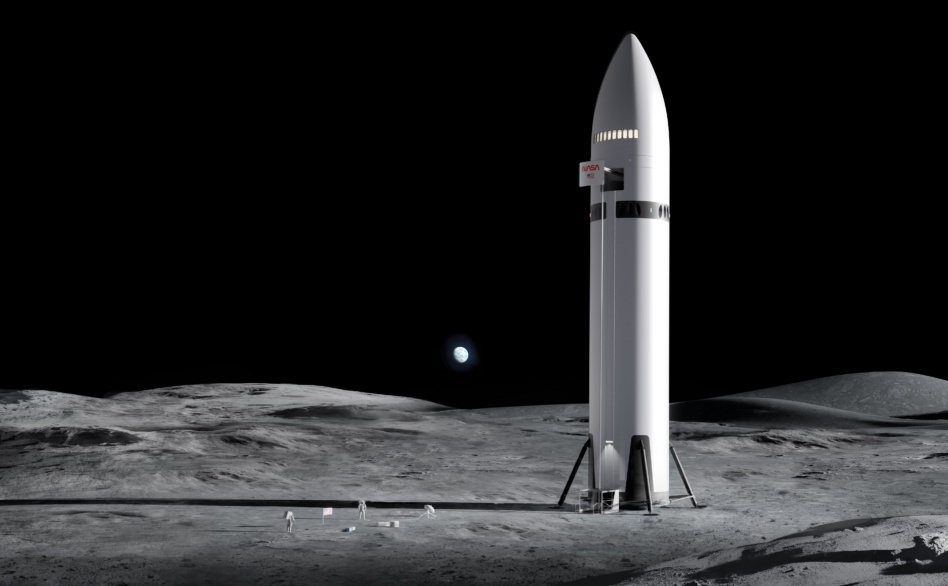
SpaceX told investors last week that it would place journeys to Mars on the back burner while it prioritizes lunar missions, according to reporting by the Wall Street Journal. The company is now targeting an uncrewed landing on the Moon as early as 2027—a first step towards future crewed landings.
The update is an about-face from previous comments made by SpaceX CEO Elon Musk, who called the Moon a “distraction” in January 2025, and suggested that the company was fully focused on making regular Mars flights possible.
Musk explains: In a post on X, Musk said the shift is driven by a few factors—the speed at which SpaceX can build on the off world real estate and the orbital mechanics of deep space launch.
Keep reading