



In 2025, Golden Dome captured the attention of the space industry. It drove hundreds of millions in venture funding, sparked the creation of new hardware (or at least new marketing specifically targeting the program), and secured $25B from Congress.
A year ago, it didn’t exist.
How we got here: Golden Dome entered our collective consciousness on Jan. 27, when President Donald Trump signed an executive order calling for “the Iron Dome for America.” While the program was later renamed, the broad outline has remained the same, including:
- A missile defense shield, to defend the US from ballistic and hypersonic weapons.
- A sensor layer, to track threats and spot incoming weapons.
- A constellation of space-based interceptors, to take out missiles during the boost phase.
A lot of this may sound familiar. SDA’s Proliferated Warfighter Space Architecture—which predates the Trump administration—has been working on building a constellation of sats that includes missile warning and tracking capabilities.
But Trump’s executive order put the effort on a national stage, with a uniting name. And the space industry wasted no time in jumping onboard.
All in: When looking at who is throwing their hats into the ring to win a piece of the program, it’d be easier to name the companies who haven’t made a Golden Dome-centered announcement this year. A non-complete list of the biggest announcements include:
- Apex Space, which raised two $200M rounds in back-to-back quarters, intending to demonstrate space-based interceptor tech in-orbit last year (and unveiling a bigger bus to better meet Golden Dome’s needs).
- Blue Canyon Technologies unveiling a new sat bus, which it explicitly said was well-suited for the program.
- Quantum Space hiring a senior leader of the business expressly to go after Golden Dome dollars (and acquiring propulsion tech to better compete for the program).
- Portal Space Systems announcing a new maneuverable spacecraft that can “perform everything from Golden Dome type missions, to other things out there for the Defense Department.”
This is just a small sampling of the announcements made as companies jockey to compete for the program. It doesn’t even include the hundreds (thousands?) of press releases capitalizing on the buzzword, or the rebranding of existing tech with the Golden Dome moniker.
“As soon as it was announced, I think industry pivoted in…space or munitions or radar—any kind of technology company that could possibly play in any architecture of Golden Dome that might be conceived, they pretty much pivoted and started running in that direction,” Todd Harrison, a senior fellow at the American Enterprise Institute, told Payload.
Hold your spacecraft: Is industry making a smart bet? Analysts are split.
Industry can bank on a few guarantees. Congress has appropriated $25B to be spent on the program through 2029. But there are big questions about funding for the rest of the program. Trump said in May that it would cost $175B, but some estimates have put the price tag much higher. There are also questions about whether the Trump-backed project will survive politically into the next administration, especially with some Democrats worrying that it will launch an arms race.
“Companies may be betting a little too heavily on this actually happening,” Harrison said. “Smaller VC-backed companies are raising money on the promise that they can build the tech. That’s a little premature, because we don’t have an architecture.”
Others, however, argue that Golden Dome is here to stay, with or without Trump, because the missile threats to the US homeland transcend any administration.
“Even though the term is new, the ideas about it are not that new,” said Patrick Binning, a space systems engineering and space security instructor at Johns Hopkins University. “The timing of the threats, [the] industry preparedness, and an admin who wants to push it is why 2025 makes it a great time for Golden Dome to move forward.”
The administration has taken some steps to cement the program this year, including tapping Gen. Michael Guetlein to lead the program. On Capitol Hill, lawmakers have established a Golden Dome caucus, to ensure the program has vocal opponents in Congress.
Open questions: But ultimately, a lot of questions still remain—including sharing public details of the program’s scope and architecture.
“People can claim that anything is related to Golden Dome, because Golden Dome isn’t yet defined,” Harrison said. “Until they define the basics of that architecture, or even just the objectives of the system and what is it trying to do…no one can say anything is in support of Golden Dome.”
Sharing more about the program has benefits beyond public perception, however. Binning argued that it’s time to change the way threats in space are often handled—behind closed doors.
“I think it’s a mistake,” he said of how little has been shared publicly. “If our competitors don’t know what our deterrence approach is, I don’t see how it is a deterrence. The more we talk about it, the more it can act as a deterrent.”
What’s next: 2026 is the year analysts are hoping to get some answers. In November, the Space Force awarded multiple prototype contracts for space-based interceptors that will be at the heart of Golden Dome (although the service declined to share the value of the contracts, or who won them.)
Binning wants an update in the new year on what progress companies are making on those contracts. In addition, he wants to see a solid plan and timeline for the DoD to hold a space-based interceptor test in the next three years—which he calls a “realistic goal.”
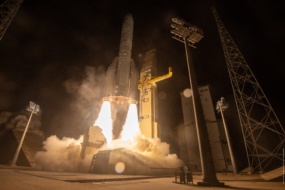
2025 Europe in Review
We built a word cloud based on the 100+ stories Payload ran on the European space industry this year, and one theme jumped out immediately: a lot of forward-looking language.

Reentry: 2025 Wrapped
In a magic trick, making something disappear is only part of the act—bringing it back is what earns the applause.

Common Sense: Avoiding Single-Source Dependency in Government Contracts
Today, as the U.S. Department of War increasingly relies on critical space assets—from satellite communications to reconnaissance platforms—officials should heed Paine’s timeless advice: apply common sense. Entrusting national security capabilities to a single commercial provider contradicts that wisdom, creating vulnerabilities where strategic stability depends on private agendas or individual personalities. Avoiding single-source dependency is not just a strategic choice—it’s a national security imperative.
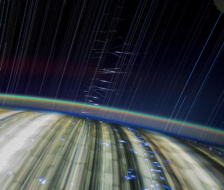
CLDs: 2025 Wrapped
The space community has long known that the ISS agreement has a 2030 expiration date. But this year, headlines about the end of the station—and debates about America’s presence in LEO—have shifted the focus beyond 2030 to the companies building Commercial LEO Destinations (CLD) vying to be the station’s successor.
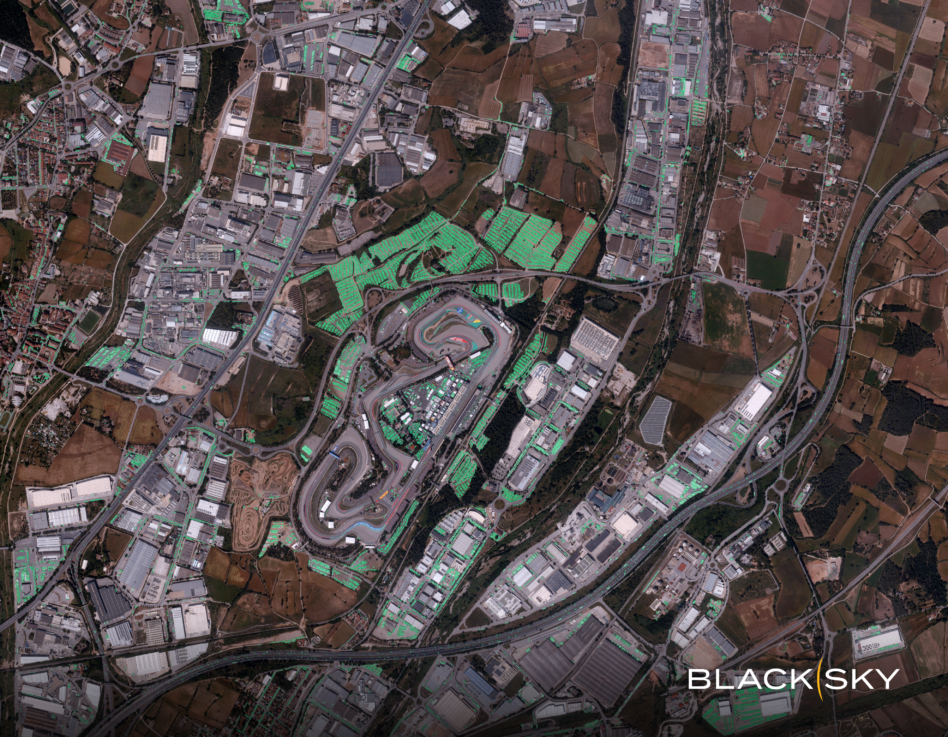
Artificial intelligence (AI) is transforming how industries operate across the globe, and the space-based intelligence sector is no exception. Many space and intelligence companies are integrating AI into their operations. At BlackSky, AI has powered us from the start.
When BlackSky was founded in 2014, we set out with a clear vision: full automation across our analytics products and workflows. AI has been essential in realizing that vision, driving how we plan missions, process data and deliver insights at record speed. It is not new to us. It is in our DNA.
What “full automation” really means
Keep reading